
Reviewed · ACROPOLIS & ACROPOLIS MUSEUM TOURS
Acropolis of Athens and Acropolis Museum Tour
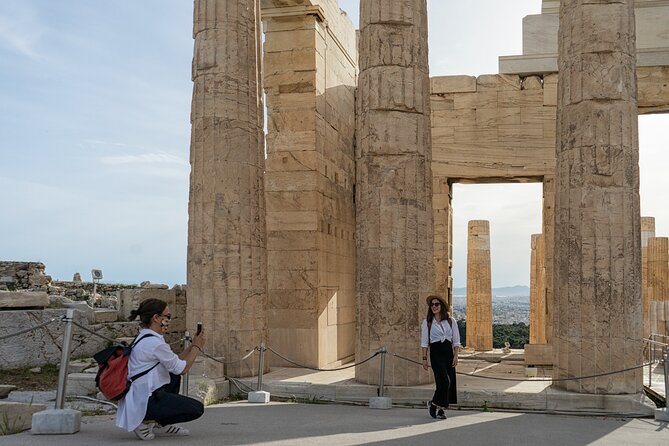
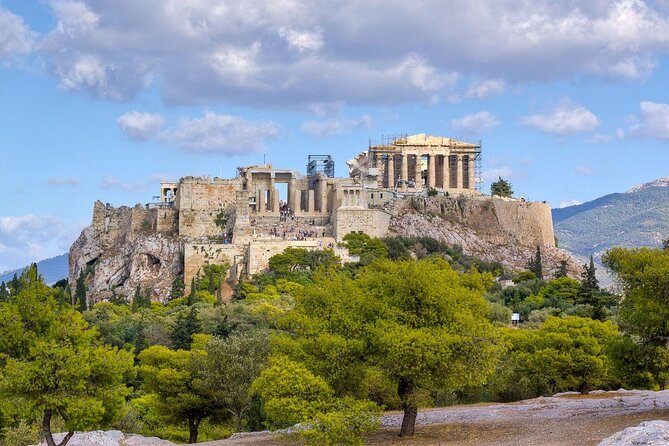
The best part of this tour is the link between the stones on the hill and the original sculptures now displayed below in the Acropolis Museum. You see the Theater of Dionysus, Propylaea, Temple of Athena Nike, Erechtheion, and Parthenon first, then your guide shows how the museum preserves and explains what you have just seen.
I like the mythology and clear storytelling, which guides such as Dimitris, Margarita, Rina, Maria, and Niobe use to make the ruins easier to understand. I also like the headsets, early start options, and built-in rest pauses. The main drawback is the physical effort: steep, uneven marble can be slippery, and the open hill offers little shade in hot weather.
In This Review
- Key points to know before booking
- Why the Acropolis makes a guided visit worthwhile
- Starting near Dionysiou Areopagitou Street
- The climb to the Acropolis summit
- Theater of Dionysus: where the tour begins its story
- Odeon of Herodes Atticus and the Propylaea
- Temple of Athena Nike and the Erechtheion
- The Parthenon and the view across Athens
- The Acropolis Museum connects the missing pieces
- Price, tickets, and the real value
- Heat, rain, crowds, and physical effort
- Who will get the most from this tour
- Should you book the Acropolis and museum tour?
- FAQ
- How long does the Acropolis and museum tour last?
- What language is the tour offered in?
- Are Acropolis and museum tickets included?
- Does the ticket upgrade guarantee no waiting?
- Where does the tour begin?
- Where does the tour end?
- How large is the group?
- What should I wear and bring?
- Are strollers and backpacks allowed?
- Is the tour suitable for people with mobility issues?
Key points to know before booking
- Two major sights in one morning: Visit the Acropolis archaeological site, then spend about 90 minutes with the museum’s key pieces.
- Prepaid tickets are worth considering: The base price is $56.84, but entry fees are extra unless you select the ticket option.
- The early start matters: An 8:00 or 8:30 a.m. departure can mean cooler conditions and fewer people than late morning.
- Expect a real uphill walk: Good shoes, water, a hat, and sunscreen are essential.
- Headsets keep the guide audible: You can move a little away for photos and still follow the commentary.
- This is a small-group tour, but not a private one: The maximum group size is 24 people.
Why the Acropolis makes a guided visit worthwhile
You can walk around the Acropolis on your own, but the bare columns and broken foundations do not always explain themselves. A good guide gives each place a purpose. Instead of seeing a collection of marble fragments, you begin to understand how worship, theater, politics, warfare, and daily life fit together.
This tour is especially useful if you want the major stories without spending an entire day reading every sign. Guides have different styles. Margarita and Dimitris received praise for lively mythological storytelling, while Rina and Maria were noted for patience and careful pacing. One guide may offer more anecdotes than another, so the experience can vary slightly from group to group.
The audio equipment is a practical advantage. Each person receives an earpiece, allowing you to hear the guide in a crowded courtyard or while standing a short distance away to take a photograph. You can usually use your own earphones if they have the older-style plug. The system also lets you pause at the edge of the group without losing the thread of the explanation.
The tour normally lasts about three and a half hours, though some departures have taken closer to four or four and a half hours. That extra time can be useful, but you should not plan a tight appointment immediately afterward.
More Museum Tours in Athens
- Athens: Acropolis, Parthenon & Acropolis Museum Guided Tour
★ 4.8 · 9,316 reviews - Athens: Mythology of Delphi, Museum and Arachova Guided Tour
★ 4.6 · 4,008 reviews - Athens: Acropolis, Parthenon & Acropolis Museum Guided Tour
★ 4.8 · 3,579 reviews
Starting near Dionysiou Areopagitou Street
The meeting point is at Dionysiou Areopagitou 3, a short walk from the Acropolis. Look carefully for the tour representative and signage near the coffee shop patio. The meeting spot has been hard for some people to identify, so arrive early and have the exact address open on your phone.
You will check in, receive your audio device, and join the guide before walking toward the entrance. The tour uses a side entrance and follows a fixed Acropolis entry time. Late arrivals cannot be held, and missed entry does not qualify for a refund, so build in extra time for finding the meeting point.
If you arrive from Piraeus by cruise ship, the X80 bus is one stated option. From Terminal B, the stop is across the road, and the bus goes toward Athens. The Acropolis stop places you close to the meeting point. The supplied information gives a return fare of €4.10 per person and says buses run about every 40 minutes, though you should check current schedules before relying on this connection.
The climb to the Acropolis summit
The route takes you up the sacred hill toward the main monuments. The climb is broken into pauses, and guides commonly stop at useful viewpoints or shaded areas to explain what you are seeing. This makes the uphill walk easier than tackling it as one long push, though it remains a proper walk with stairs and uneven ground.
The Acropolis is exposed. In summer, temperatures can reach the upper 90s or even 100s Fahrenheit, and there is little shade on the summit. Carry water before entering. Some water may be available near the site, but you should not count on finding regular refreshments during the walk.
Wear shoes with a firm, grippy sole. Smooth marble becomes especially slick in rain, and the stones can be uneven even on a dry day. The tour operates in wet weather, and rain gear has been provided on some rainy departures, but you still need to move carefully on the slopes and steps.
Theater of Dionysus: where the tour begins its story
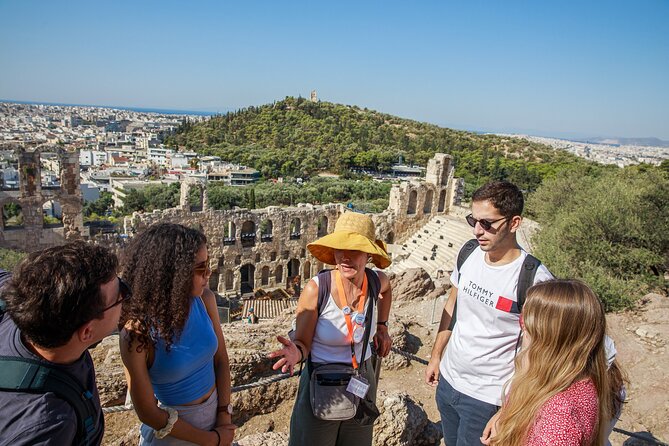
The Theater of Dionysus sits on the south slope of the Acropolis. Its stone seating curves into the hillside, giving you a direct sense of how ancient audiences watched tragedies and comedies below.
The stop is brief, about 15 minutes, but it gives the tour a useful opening. The Acropolis was not only a collection of temples. This theater points to the public, artistic, and religious life of ancient Athens.
The guide’s explanation is the real value here. Without context, the worn rows can look simple. With a clear account of how the theater worked, the shape of the hillside becomes much easier to read.
More Athens museums and collections:
- Acropolis monuments & Parthenon Walking Tour with Optional Acropolis Museum
★ 5.0 · 2,678 reviews - Athens All Included: Acropolis and Museum Guided Tour with Ticket
★ 4.5 · 2,673 reviews - Athens: Acropolis Museum Ticket with optional Audio Guide
★ 4.4 · 2,652 reviews - From Athens: Small-Group Delphi, Museum & Arachova Day Trip
★ 4.8 · 2,476 reviews
Odeon of Herodes Atticus and the Propylaea
The route continues past the Odeon of Herodes Atticus, a Roman-era theater built into the south side of the hill. It remains a performance venue, so you are looking at an ancient structure that still has a role in Athens’ cultural life.
The stop lasts about 10 minutes. You may not enter the theater during this visit, but the exterior view is memorable, particularly when your guide explains how music and performances still return to the site.
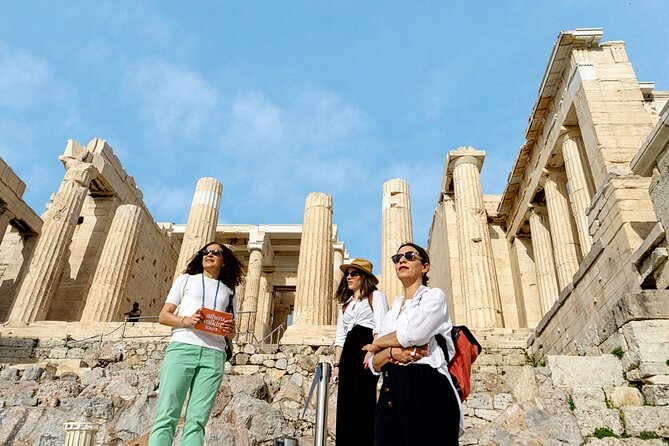
Next comes the Propylaea, the monumental gateway to the Acropolis. It is the entrance you pass through before the summit opens up. The gateway’s scale helps explain the sense of ceremony built into the approach. This was not a casual walk into a neighborhood temple.
Crowds can gather at this part of the route, especially later in the day. Listen through the earpiece and stay alert on the steps. People often stop suddenly for photographs, making it easy to lose your footing or bump into someone.
Temple of Athena Nike and the Erechtheion
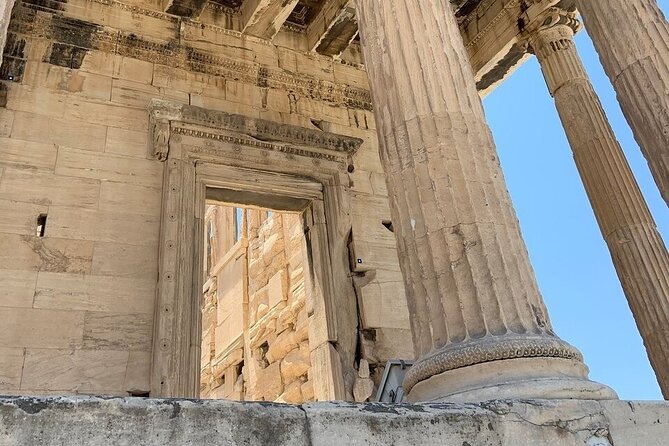
The small Temple of Athena Nike is one of the most elegant stops. Its Ionic design, friezes, and position near the entrance make it easy to appreciate even among the larger buildings around it. The temple honors Athena as the goddess of victory, and its high perch also gives you broad views across Athens.
The stop is about 10 minutes. Your guide can point out details that are easy to miss from ground level, especially on a busy day when the crowd moves quickly.
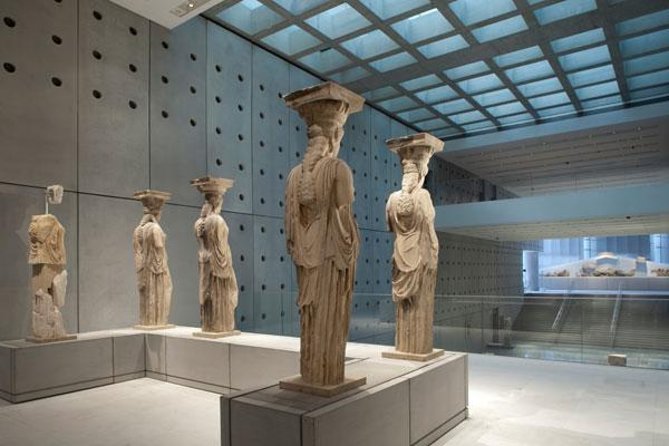
The Erechtheion requires more time, about 15 minutes. This unusual temple is tied to several Athenian myths and is famous for its Caryatids, the sculpted female figures used as architectural supports. The figures on the Acropolis are replicas, while original Caryatids and other important pieces are protected in the museum.
This is one of the clearest examples of why the two-part format works. The guide can show you the building on the hill, then explain the preserved originals inside the museum. You do not have to guess which pieces are original or why some are no longer exposed outdoors.
The Parthenon and the view across Athens
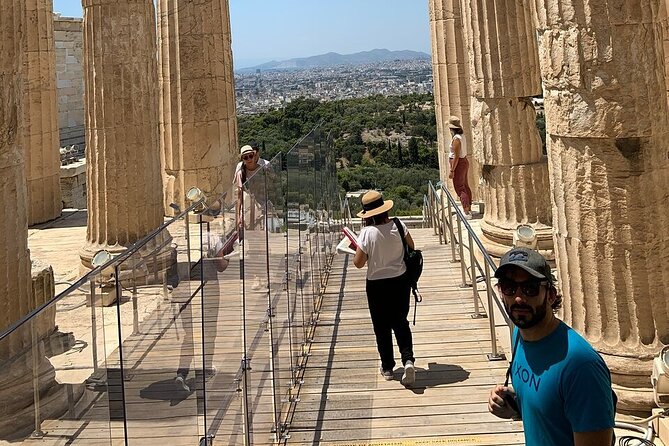
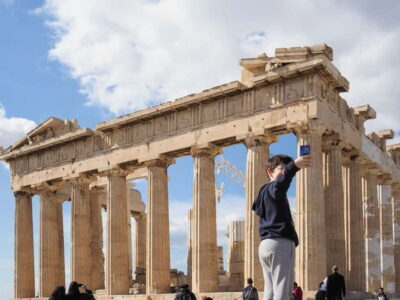
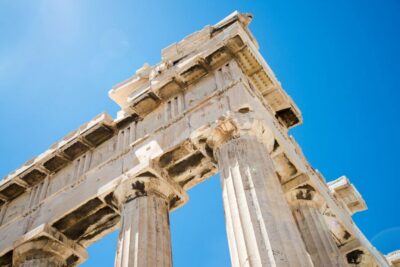
The Parthenon receives about 20 minutes of focused attention, though the entire Acropolis portion lasts longer than the listed monument stops. You will see its Doric columns, sculptural decoration, and the continuing conservation work that shapes much of the site today.
Do not expect to walk through the temple interior. The experience is about viewing the exterior, understanding its design and purpose, and seeing how it dominates the summit. Your guide will explain the building’s role in ancient Athens and point out details in the friezes and structure.
You also get time for photographs and the famous view over Athens. The city spreads far beyond the hill, and this is the moment to pause rather than hurry from fact to fact. Several guides have been praised for allowing rest and photo breaks, but one or two comments also point to a fixed pace and too much commentary for some tastes.
That difference matters. If you want a fast visit with lots of free time, a self-guided entry may suit you better. If you want the Parthenon explained while you are looking at it, the guided format earns its place.
The Acropolis Museum connects the missing pieces
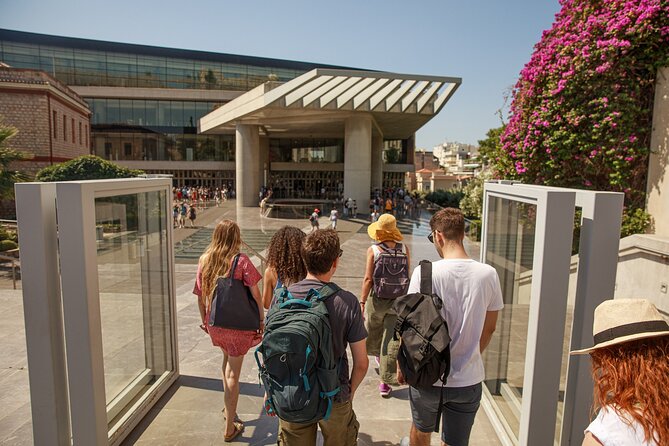
After descending from the hill, the group walks to the Acropolis Museum at Dionysiou Areopagitou 15. The museum portion lasts about 90 minutes and focuses on the main highlights rather than every gallery.
The collection follows Athenian history in a broadly chronological way. You will see artifacts found on and around the Acropolis, including sculpture and architectural elements that help fill in what the hill itself can no longer show.
The top floor is especially important. It presents the Parthenon sculptures in relation to the temple’s original layout, making it easier to understand how the frieze and other decorations worked as a whole. A guide can connect the museum pieces with the buildings you visited only minutes earlier. That connection is far more useful than seeing isolated statues with no sense of their original setting.
The museum is large enough to occupy most of a day if you explore every room. This tour gives you an organized first pass. At the end, you can leave with the group or remain inside and continue on your own. If you want more museum time, choose a departure that does not force you into another appointment.
Price, tickets, and the real value
The advertised price is $56.84 per person, but check the option carefully. The standard arrangement does not include the Acropolis admission fee of €30 or the museum admission fee of €20 unless you select the ticket-inclusive upgrade.
The ticket option costs more, yet it is often the simpler choice. You avoid arranging two separate admissions, and prepaid entry can reduce waiting at the ticket desk. It does not remove every delay. All visitors still pass through airport-style security, and peak-season waits can reach 30 minutes or more.
Strict entry times also mean that the value of prepaid tickets depends on arriving early and at the correct place. If you miss the time slot, the ticket does not solve the problem.
For many people, the strongest value comes from combining the guide, admissions, and museum visit in one morning. You receive historical context, an audio device, a city map, and an Athens guide magazine. The tour costs more than simply entering the site, but it can prevent a rushed or poorly understood visit.
Heat, rain, crowds, and physical effort
The Acropolis is not a gentle museum visit. You will walk uphill, climb steps, cross uneven marble, and stand outdoors. The tour requires a moderate level of fitness and is not suitable for wheelchair users because the route uses an entrance that does not offer the wheelchair-accessible path.
Baby strollers are not allowed on the Acropolis or archaeological site. There is no cloakroom at the side entrance, so a baby pouch is recommended instead. Backpacks are also not allowed, which means you should pack lightly and avoid arriving with a large bag.
Heat is the biggest practical challenge. Choose the earliest departure you can, bring a full bottle of water, wear a hat, and apply sunscreen before you start. A small fan can help during a July heatwave, but shade remains limited and seating is not always available.
Rain creates a different problem. The marble becomes slippery, and the open spaces offer little shelter. The tour runs rain or shine, though a cancellation for poor weather can lead to another date or a full refund. Comfortable clothes and shoes matter in every season.
Who will get the most from this tour
I would choose this tour if you are visiting Athens for the first time and want the Acropolis explained rather than simply photographed. It is also a strong fit if you want the museum and hill handled together, or if you prefer an early, structured start.
The tour works well for families with older children who can manage the walking. Guides use myths and questions to keep the subject moving, and the headsets help children hear without standing shoulder to shoulder with the guide. During extreme heat, however, young children may struggle with the long periods outdoors.
Older adults can manage the route if they are comfortable with hills and steps. Guides such as Rina and Niobe have been praised for patient pacing and regular pauses, but you should be honest about knee, balance, or stamina concerns before booking.
I would skip it if you want complete freedom to linger at every statue, move quickly between monuments, or avoid group pacing. A group of up to 24 is manageable, but it cannot offer the same flexibility as a private guide.
Should you book the Acropolis and museum tour?
Book it if you want the major monuments, the Parthenon, and the museum’s best pieces in one well-organized visit. Choose the ticket-inclusive option if you value convenience and want to reduce ticket-line time, then book the earliest departure available.
Bring water, sun protection, grippy shoes, and only a small bag. Arrive well before the meeting time, especially if you are coming from Piraeus. For a first visit, the guide’s explanations and the connection between the hill and museum make the added cost worthwhile.
FAQ
How long does the Acropolis and museum tour last?
The tour is scheduled for about 3 hours and 30 minutes. Some departures have lasted four to four and a half hours, so avoid booking a tight appointment afterward.
What language is the tour offered in?
The tour is offered in English with an English-speaking professional guide.
Are Acropolis and museum tickets included?
Tickets are not included in the base option. The Acropolis ticket is listed at €30 per person and the museum ticket at €20 per person, unless you select the option that includes them.
Does the ticket upgrade guarantee no waiting?
No. The upgrade provides prepaid admission and skip-the-ticket-line service, but all visitors still pass through security. Peak-season security waits can reach 30 minutes or more.
Where does the tour begin?
The meeting point is at Dionysiou Areopagitou 3, Athens 117 42, Greece. It is a short walk from the Acropolis.
Where does the tour end?
The tour ends at the Acropolis Museum at Dionysiou Areopagitou 15. You can leave with the group or stay inside the museum to continue exploring.
How large is the group?
The tour can have a maximum of 24 people. It is a small-group experience, but it is not private.
What should I wear and bring?
Wear comfortable clothing and shoes with good grip. Bring a hat, sunscreen, and a bottle of water. A small fan can be useful in very hot weather.
Are strollers and backpacks allowed?
Baby strollers are not allowed on the Acropolis or archaeological site, and the side entrance has no cloakroom. A baby pouch is recommended. Backpacks are also not allowed.
Is the tour suitable for people with mobility issues?
The tour requires moderate physical fitness, with uphill walking, steps, and uneven or slippery marble. It cannot accommodate wheelchair users because the route uses an entrance different from the wheelchair-accessible entrance.
Recently reviewed around Athens
- Small-Group Women History in Ancient Greece Walking Tour★ 5.0 · 38 reviews
- Ceramic and Pottery Creative Workshop with Two Local Artists★ 4.0 · 57 reviews
- Athens: Wine Workshop Create your Own Wine under the Acropolis★ 5.0 · 77 reviews
- Athens: Greek Wines Tasting with Sommelier and Acropolis Views★ 5.0 · 88 reviews
- Wine Trails Private Tour/ Nemea visit 3 wineries from Athens or Nafplion (10 h)★ 5.0 · 44 reviews
- Hydra Private Day Trip by Ferry from Athens with Transfers★ 4.0 · 30 reviews
- Small-Group Wine Tour in Athens with Tasting★ 5.0 · 33 reviews
- Private Athens Transfer Airport/Port -Greek Tours-Hourly service★ 5.0 · 88 reviews
Acropolis & Acropolis Museum Tours, compared.
Acropolis & up to 5 Archaeological Sites Combo Pass
Read our review →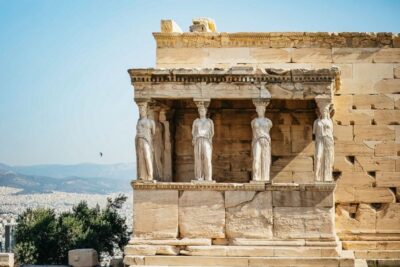
Acropolis, Parthenon & Acropolis Museum Guided Tour
Read our review →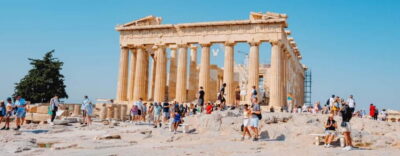
Acropolis, Parthenon & Acropolis Museum Guided Tour
Read our review →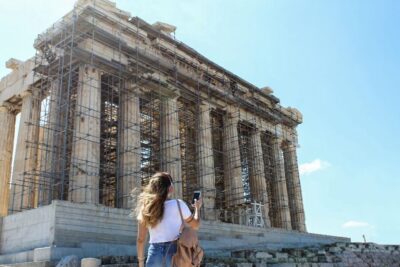


Acropolis monuments & Parthenon Walking Tour with Optional Acropolis Museum
Read our review →Browse the lists this tour appears in