
Reviewed · ACROPOLIS & ACROPOLIS MUSEUM TOURS
Acropolis, Parthenon and Plaka, Monastiraki Guided tour
The best part of this Athens walk is the contrast. You begin among the grand stones of the Acropolis, then move through Plaka’s old lanes and finish amid the cafes, street art, and shops of Psirri. Ancient temples and everyday city life share the same few blocks.
I like the pre-booked Acropolis ticket, which saves you from standing in the ticket queue, and I like the bougatsa stop because it adds a small, local food moment to a history-heavy morning. The main drawback is the walking: steep ground, stairs, sun, and uneven paving make this a poor fit for wheelchair users or anyone hoping for an easy stroll.
In This Review
- Key points at a glance
- Why this 3.5-hour Athens walk works well
- Meeting at Porinou 5 near the Acropolis
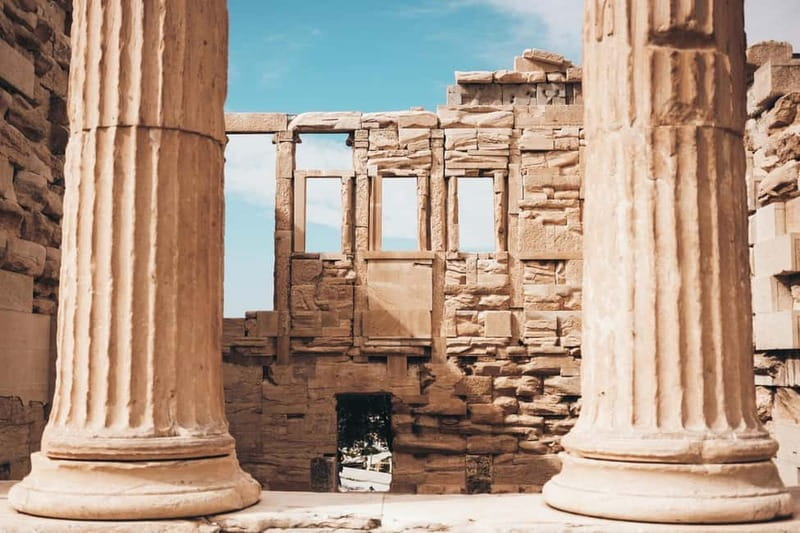
- Entering the Acropolis and meeting the Parthenon
- Plaka, where Athens turns into a village
- A bougatsa break with a local taste
- Monastiraki and the meeting of old and new Athens
- Psirri, street art, cafes, and modern city life
- What the guide adds to the ancient sites
- Walking conditions, weather, and accessibility
- Who should book this Athens tour?
- Should you book it?
- FAQ
- How long does the Acropolis, Parthenon and Plaka, Monastiraki Guided tour last?
- Where does the tour meet?
- Does the tour include Acropolis entrance tickets?
- What language is the tour conducted in?
- Is food included?
- Does the tour include hotel pickup and drop-off?
- Is the tour suitable for wheelchair users?
Key points at a glance
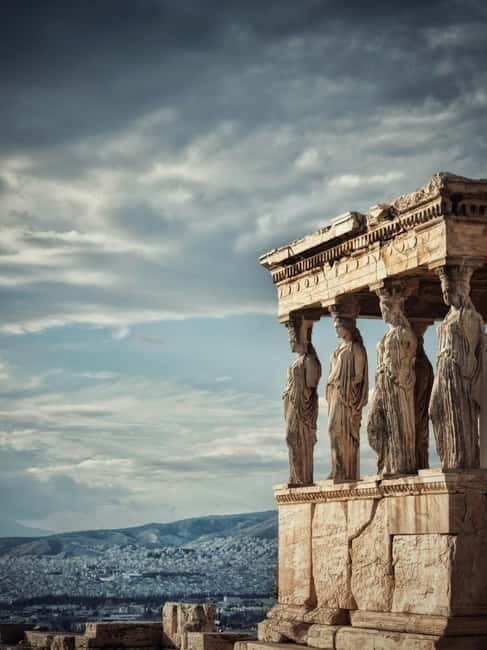
- Parthenon and Acropolis access: Enter with a pre-booked ticket and see the Parthenon, Erechtheion, and Theater of Dionysus.
- Plaka’s old lanes: Walk past neoclassical buildings, small chapels, colorful homes, and tucked-away courtyards.
- A real Greek snack: Stop at a local bakery for bougatsa, either sweet or savory.
- Three different Athens districts: Connect the ancient hill with Plaka, Monastiraki, and Psirri in one guided route.
- Guides who shape the experience: Ana, Anna, Artemis, Kostas, and Marisa are among the guides associated with this tour.
- Useful city advice: Guides can add modern Athens context and practical suggestions for meals and things to do afterward.
Why this 3.5-hour Athens walk works well
This tour gives you a fast, sensible introduction to central Athens. It is not only an Acropolis visit, and it is not only an old-town stroll. You get the city’s major ancient sight first, then several neighborhoods that show how Athens feels today.
That order matters. The Acropolis can seem like a collection of famous names if you arrive without context. A good guide turns the Parthenon, Erechtheion, and Theater of Dionysus into connected parts of the city’s story, from democracy and philosophy to drama, religion, and civic life.
The second half helps you place the ruins in a living city. Plaka’s lanes, Monastiraki’s busy market area, and Psirri’s cafes and street art are not museum pieces. They are working neighborhoods where ancient fragments sit beside modern shops, food stalls, and apartment buildings.
At $85 per person, the price is fair if you want the ticket, a licensed English-speaking guide, and a structured introduction in one booking. It is less attractive if you already know the Acropolis well or prefer to wander alone. You are paying for interpretation and route planning as much as for admission.
More Athens trips worth a second look
- Athens: Acropolis & up to 5 Archaeological Sites Combo Pass
★ 4.4 · 12,619 reviews - Athens: Acropolis Ticket with Optional Audio or Live Guide
★ 4.2 · 11,055 reviews - Athens: Acropolis, Parthenon & Acropolis Museum Guided Tour
★ 4.8 · 9,316 reviews
Meeting at Porinou 5 near the Acropolis
You meet inside the Athens Walks tour office at Porinou 5, 11742. There is no hotel pickup, so you need to make your own way to the office before the selected starting time.
This central meeting point is useful because the tour begins in the Acropolis area rather than spending time collecting people from hotels. It also means you should plan your route carefully and arrive with enough time to find the office.
The activity lasts 3.5 hours. Starting times vary, so check the available departure when booking. Since the route includes the Acropolis, old lanes, hills, stairs, and several districts, comfortable sports shoes are more than a polite suggestion.
In summer, bring a hat. You will be outdoors for much of the experience, and the ancient hill offers little shade in some areas. Large bags and luggage are not allowed, and pets cannot join the tour.
Entering the Acropolis and meeting the Parthenon
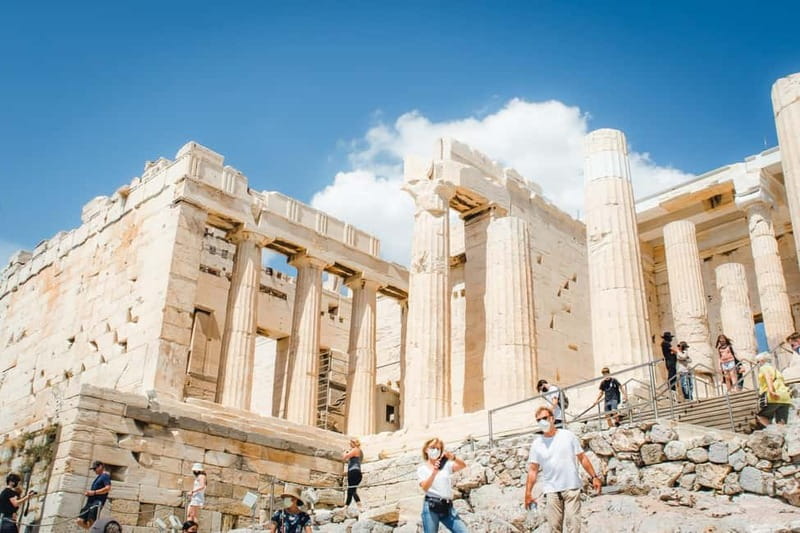
The Acropolis is the tour’s main event. With your entrance ticket pre-booked, you avoid the regular ticket-purchase line. This does not mean you should expect to walk through every part of the site without any waiting, but it removes one common delay and keeps the visit moving.
Your guide introduces the major monuments, beginning with the Parthenon. This is the temple most people picture when they think of Athens, but the value of a guided visit is learning to look beyond its fame. The building reflects the power and ambition of classical Athens, while its damaged columns and missing sculpture also tell the story of later changes and losses.
You also visit the Erechtheion, known for its unusual design and the famous Caryatid figures. Your guide can help you understand why the Acropolis is not just one temple, but a sacred complex with different buildings and purposes.
The Theater of Dionysus adds another useful piece to the story. It connects the hill with the development of drama and public performance. The wider lesson is that Athens was not simply a place of temples. It was a city where religion, politics, theater, art, and public debate overlapped.
The views from the Acropolis are a major reward, though the surface underfoot can be demanding. Expect stone paths, slopes, steps, and exposed areas. Wear shoes with a solid grip, and take care around uneven ground.
The guide’s role makes a real difference here. Ana and Anna are praised for lively explanations of Acropolis history and mythology. Artemis is described as interesting and well informed, while Kostas is noted for his conversation and personal recommendations. Marisa is especially attentive to the people in her group and brings modern Athens into the discussion instead of focusing only on ancient dates.
The exact guide depends on the departure. Still, the experience is clearly designed around live explanation rather than an audio recording or a simple walk behind a flag.
Plaka, where Athens turns into a village

After the Acropolis, you head into Plaka, Athens’ old quarter. The mood changes quickly. Instead of broad ancient spaces, you get narrow cobbled lanes, neoclassical buildings, colorful houses, and small courtyards.
Plaka is often called the prettiest part of central Athens, and it earns that reputation through atmosphere rather than one single sight. A guide helps you notice details you could easily pass without understanding, including medieval chapels and the oldest church of the city.
The small religious buildings are especially valuable because they show a different layer of Athens. The Acropolis presents the city at its most monumental. Plaka gives you a closer look at its medieval and later identity, where modest churches and homes sit along lanes shaped by centuries of change.
This is also where the walking tour becomes less about checking off famous monuments. You may pause for architectural details, local stories, and views through side streets. One guide, Marisa, is praised for discussing modern Athens as well as ancient history, which is exactly the balance Plaka needs.
Do not expect every lane to be quiet or untouched. Plaka is a popular area, with shops, restaurants, and foot traffic. Its appeal is the mix of old buildings and daily city life, not total isolation from tourism.
The route is not a long free period for shopping. You remain with the guide and follow the planned walk. If you want time to browse independently, ask about the ending arrangements before leaving the group.
A different kind of day out, same corner of Greece:
- Athens: Cape Sounion & Poseidon Temple Sunset Half-Day Trip
★ 4.8 · 8,241 reviews - Athens: Acropolis and Parthenon Guided Walking Tour
★ 4.6 · 5,882 reviews - All Day Cruise -3 Islands to Agistri,Moni, Aegina with lunch and drinks included
★ 5.0 · 4,958 reviews - Athens, Piraeus, and Coastline: Blue Hop-On Hop-Off Bus
★ 3.9 · 4,849 reviews
A bougatsa break with a local taste
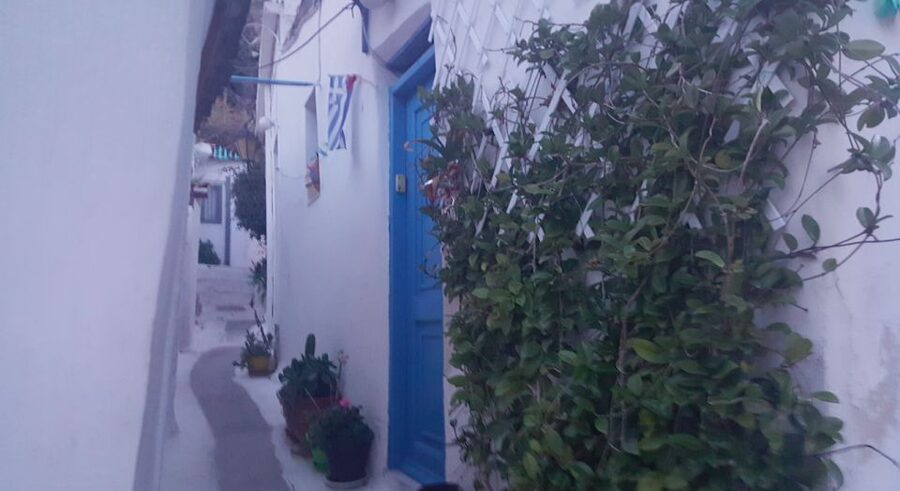
The included bougatsa stop is a small feature, but it improves the tour. Bougatsa is a Greek pastry that can be sweet or savory, and you taste it at a local bakery during the walk.
Food stops are most useful when they fit naturally into a route, and this one does. After several monuments and layers of history, a warm pastry gives you a short sensory connection to present-day Athens. It also lets you try something that many first-time visitors might overlook while chasing the major sights.
Artemis is praised for taking the group to a little place making Greek pies, and the stop is described as both tasty and memorable. You should not book this as a food tour, though. The bougatsa is one snack, not a series of tastings or a full meal.
If you choose savory pastry, it can work as a light bite. A sweet version is better suited to a quick treat. The supplied details do not specify the exact bakery or which filling will be available, so consider the stop a pleasant local sample rather than a guaranteed menu choice.
Monastiraki and the meeting of old and new Athens
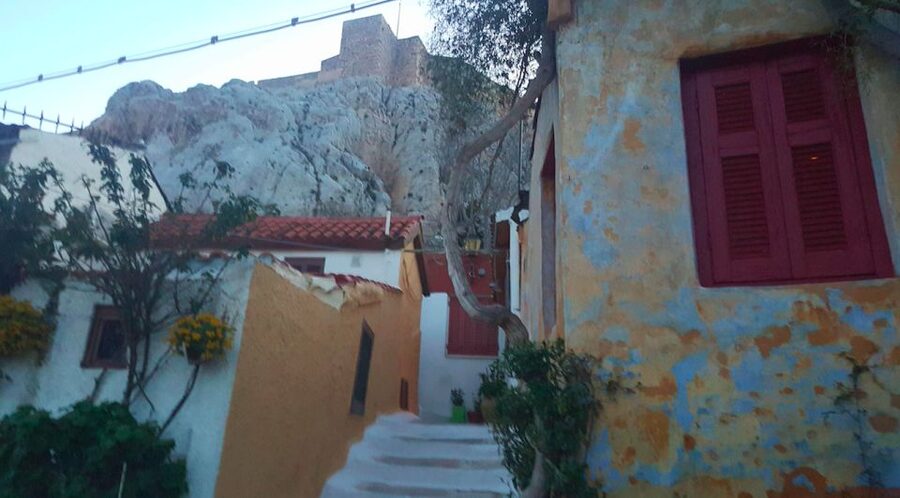
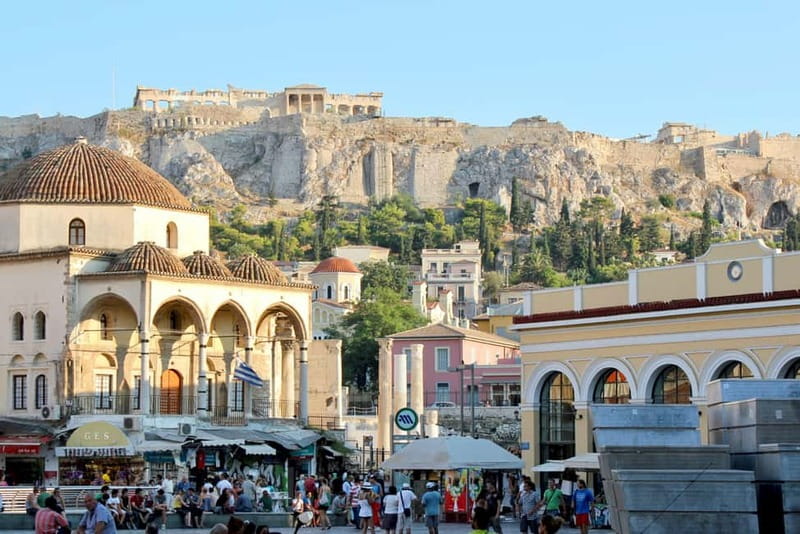
The walk continues toward Monastiraki, one of central Athens’ most energetic areas. This district is known for its flea market, street food, and views where ancient ruins meet modern city life.
Monastiraki is a good place to see Athens without a formal boundary between past and present. You might look toward an ancient site, then turn toward a shop selling clothes, souvenirs, or household goods. The area can be crowded and noisy, but that is part of its character.
The guide points out more than the obvious market streets. The aim is to show you the district’s atmosphere and some less noticeable corners, rather than simply escorting you from the Acropolis to a shopping area.
This section may be the most useful if you want help getting your bearings during a short stay. You can ask about food and what to do after the tour. Kostas, in particular, is praised for giving practical suggestions for the rest of the day, while Artemis is noted for offering good dinner ideas.
You should still expect the route to remain a walking tour, not a restaurant crawl. Street food is part of the setting, but the only specifically included food item is the bougatsa.
Psirri, street art, cafes, and modern city life
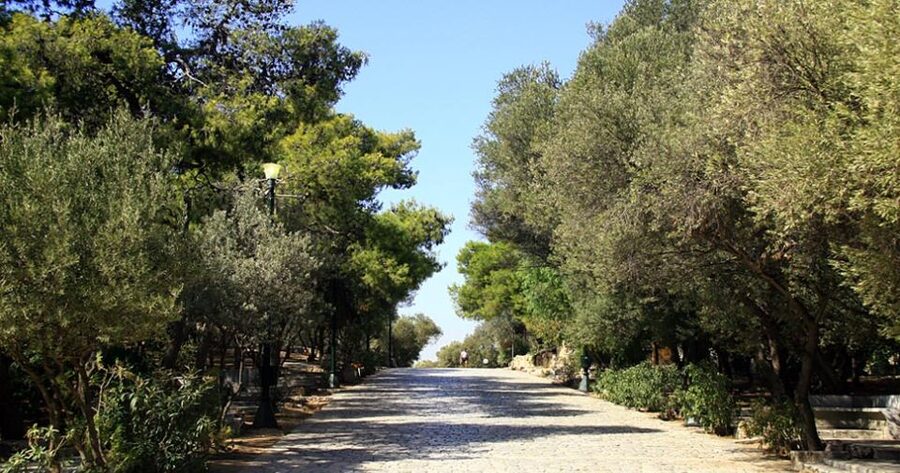
The route includes Psirri, an area known for street art, cafes, and local culture. It is a fitting final chapter because it moves you farther from the formal ancient monuments and closer to the social side of Athens.
Psirri helps show that central Athens is not frozen in its classical past. Painted walls, small cafes, and busy streets give the walk a more current feel. If the Acropolis explains why Athens became famous, Psirri helps you see how the city spends its evenings and builds its present identity.
The activity information says the walk ends back at the meeting point, while the route description presents Psirri as the final neighborhood. Confirm the exact return arrangement with the tour office, particularly if you have dinner plans or a timed reservation afterward.
A guide’s recommendations can be valuable here. You will already have seen several districts, so advice on where to eat or continue walking is more useful than a generic list made before you arrived.
What the guide adds to the ancient sites
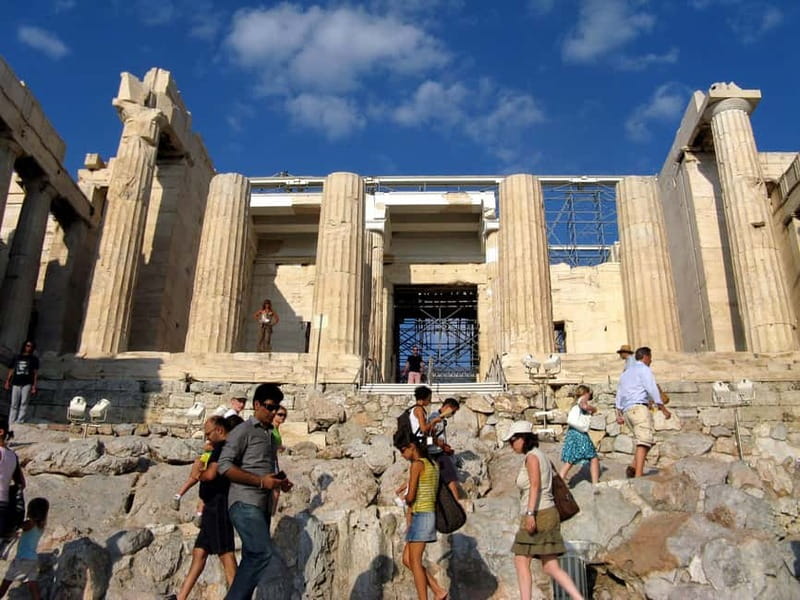
The strongest feature of this experience is the human explanation. The Acropolis has plenty of information available, but a live guide can connect the stones to the political, religious, and cultural life of Athens in a way that feels easier to follow.
Ana is praised for giving a large amount of information about the sights. Anna is praised for lively explanations of history and mythology. These comments point to an experience that suits you if you want more than a quick photo stop.
The guides also appear willing to adjust their approach. Kostas is described as conversational and able to tailor the day to personal interests, even in heavy rain. Marisa is praised for caring for the group and for bringing modern Athens into the discussion.
That said, a walking tour depends partly on the group. One account notes that the amount of stair and hill climbing was reduced because of the group’s composition. If you want a physically demanding route with every possible rise and viewpoint, the guide may adapt the pace instead.
This flexibility is usually a benefit, especially for mixed-age groups. It does mean the exact rhythm can vary from one departure to another.
Walking conditions, weather, and accessibility
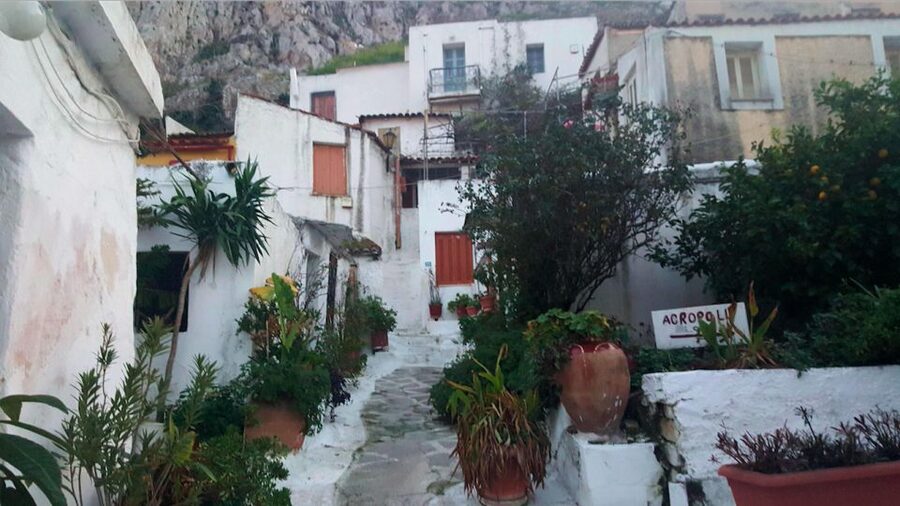
You should prepare for a proper city walk. The Acropolis includes uneven ancient surfaces, and Plaka and the other central districts involve cobbled lanes and ordinary city streets. The tour is not suitable for wheelchair users.
Good walking shoes are essential. A hat is useful in summer, and you should think carefully about heat because the tour spends substantial time outside.
Weather can affect comfort, but the walk may continue in wet conditions. Kostas is praised for making the experience work in pouring rain and tailoring the visit to the group. Still, bring suitable rain protection if the forecast looks poor.
Leave luggage at your accommodation or another secure location. Large bags are not allowed, and carrying unnecessary weight will only make the hills and stairs harder.
Who should book this Athens tour?
I would recommend this experience to a first-time visitor who has half a day and wants a guided introduction to central Athens. It suits you especially well if you want the Acropolis explained properly, then want help understanding Plaka, Monastiraki, and Psirri instead of wandering those areas without context.
It is also a good choice for couples or small groups with limited time. One couple used the tour during a single day in Athens and found the guide’s recommendations useful after the walk. The route gives you a practical sense of where to return for food, shopping, and further exploring.
Families with older children may appreciate the mix of mythology, temples, food, and street life. The walking conditions still require stamina and sensible footwear.
I would look elsewhere if you want hotel transportation, a seated sightseeing option, a wheelchair-accessible route, or a food-focused experience. You may also prefer an independent visit if you already know the Acropolis and want to set your own pace.
Free cancellation up to 24 hours before the tour and the reserve-now, pay-later option make the $85 commitment easier to manage. Check the selected departure, language, and meeting instructions before you book.
Should you book it?
Book this tour if you want one well-organized morning that links the Parthenon with the everyday character of Athens. The pre-booked entrance, licensed guide, bougatsa, and neighborhood walk make the price reasonable for a first visit.
I would book it for the combination rather than for any one stop. The Acropolis is the headline, but Plaka’s chapels, Monastiraki’s market streets, and Psirri’s street art give you a fuller sense of the city.
Skip it if you dislike hills, stairs, or group pacing. For everyone else, this is a useful first look at Athens, especially when you want history, food, and practical local advice in the same 3.5-hour walk.
FAQ
How long does the Acropolis, Parthenon and Plaka, Monastiraki Guided tour last?
The tour lasts 3.5 hours. Starting times vary, so check availability for the date you want.
Where does the tour meet?
Meet inside the Athens Walks tour office at Porinou 5, 11742, in Athens.
Does the tour include Acropolis entrance tickets?
Yes. Entrance tickets for the Acropolis and Parthenon are included, with pre-booked access to help you avoid the regular ticket line.
What language is the tour conducted in?
The tour is conducted in English with a live licensed guide.
Is food included?
Yes. You receive a Greek bougatsa snack at a local bakery. It may be sweet or savory.
Does the tour include hotel pickup and drop-off?
No. Hotel pickup and drop-off are not included. The activity information says the tour ends back at the meeting point.
Is the tour suitable for wheelchair users?
No. The tour is not suitable for wheelchair users, and comfortable sports shoes are recommended because the route includes walking on uneven ground.
Recently reviewed around Athens
- Ceramic and Pottery Creative Workshop with Two Local Artists★ 4.0 · 57 reviews
- Small-Group Women History in Ancient Greece Walking Tour★ 5.0 · 38 reviews
- Athens: Wine Workshop Create your Own Wine under the Acropolis★ 5.0 · 77 reviews
- Athens: Greek Wines Tasting with Sommelier and Acropolis Views★ 5.0 · 88 reviews
- Hydra Private Day Trip by Ferry from Athens with Transfers★ 4.0 · 30 reviews
- Small-Group Wine Tour in Athens with Tasting★ 5.0 · 33 reviews
- Wine Trails Private Tour/ Nemea visit 3 wineries from Athens or Nafplion (10 h)★ 5.0 · 44 reviews
- Private Athens Transfer Airport/Port -Greek Tours-Hourly service★ 5.0 · 88 reviews
Acropolis & Acropolis Museum Tours, compared.

Acropolis & up to 5 Archaeological Sites Combo Pass
Read our review →

Acropolis, Parthenon & Acropolis Museum Guided Tour
Read our review →
Acropolis, Parthenon & Acropolis Museum Guided Tour
Read our review →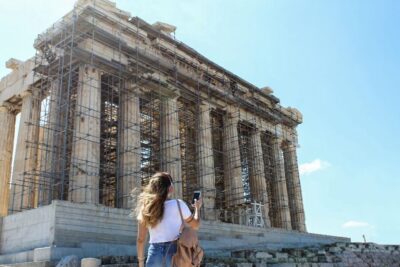


Acropolis monuments & Parthenon Walking Tour with Optional Acropolis Museum
Read our review →Browse the lists this tour appears in