
Reviewed · MUSEUMS
Ancient Olympia: Archaeological Site and Museum Entry Ticket
Ancient Olympia is more than a field of broken columns. It is the place where athletic contests, religious ceremony, sculpture, architecture, and politics met for centuries. With this ticket, you can walk the birthplace of the Olympic Games, then study the statues and objects that help explain what once stood here.
I like the freedom to explore the archaeological site anytime on your booked date, and I like having entry to three major sights covered by one reservation. The English audio guide is useful if you want context without joining a group.
The catch is the Archaeological Museum’s fixed time slot. You must arrive at the right time, and the ticket cannot be changed or refunded. The site and Olympic Games Museum are more flexible, but only on that same date.
In This Review
- Key points to know before you go
- Why Ancient Olympia still feels powerful
- Walking the Temple of Zeus and Temple of Hera
- Finding the stadium where the contests took place
- What you see in the Archaeological Museum
- The Museum of the History of the Olympic Games
- How the audio guide works in practice
- Is $30 a fair price?
- Timing, access, and who will enjoy it most
- Should you book Ancient Olympia with this ticket?
- FAQ
- How long is the Ancient Olympia ticket valid?
- Can I enter the archaeological site at any time?
- Does the Archaeological Museum require a timed entry?
- Can I visit the Olympic Games Museum whenever I want?
- Is a live guide included?
- Is an audio guide included?
- Can I change my booking date or receive a refund?
Key points to know before you go
- Walk through the original Olympic setting: See the stadium, training areas, Temple of Zeus, and Temple of Hera.
- Use your day wisely: The archaeological site and Olympic Games Museum allow entry anytime on your booked date.
- Watch the museum time: The Archaeological Museum is tied to the exact slot you select.
- Bring your own listening gear: Audio content is in English, but a physical device and earphones are not included.
- Expect a self-guided visit: You set the pace, with no live guide or hotel transfer.
- Prepare for summer heat: Water, an umbrella, and a wet cloth around your neck can make a major difference.
Why Ancient Olympia still feels powerful
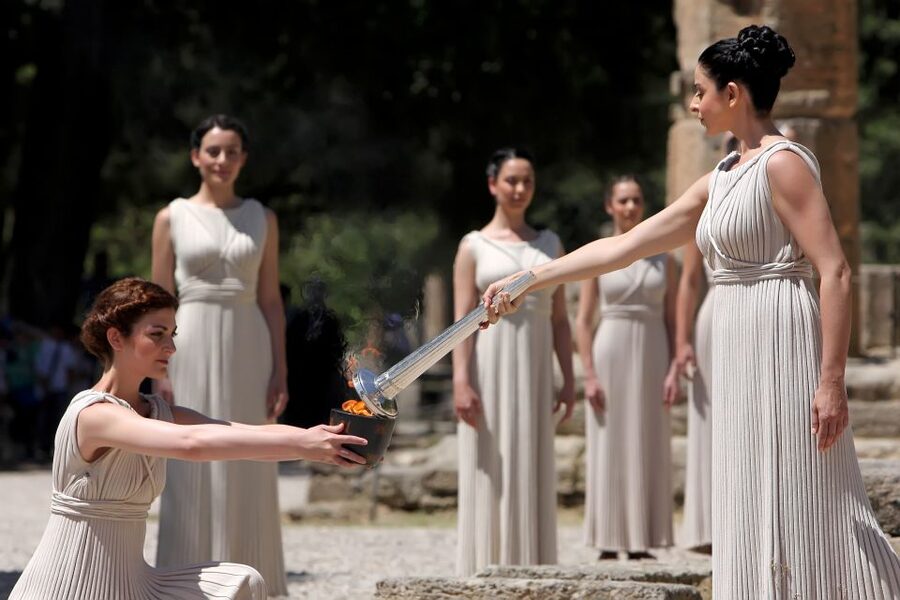
The first Olympic Games were held here in honor of Zeus, and the setting helps you understand that these contests were never just sport. Olympia was a sanctuary, a place of worship, competition, art, and public display. Athletes trained here, competed here, and took part in ceremonies connected to the gods.
Today, much of the site is made up of foundations, scattered stones, standing columns, and reconstructed details. That can be hard to picture at first. The scale, however, is still striking. You can walk along the same broad area where athletes trained and compete with the ruins of temples nearby.
I find Olympia most rewarding when you resist the urge to treat it as a quick photo stop. Take time to look at the plan of the sanctuary. Notice how the temples, athletic buildings, and open spaces fit together. The remains are not as complete as those at some Greek sites, but the setting gives you a clear sense of how a major sacred and sporting center worked.
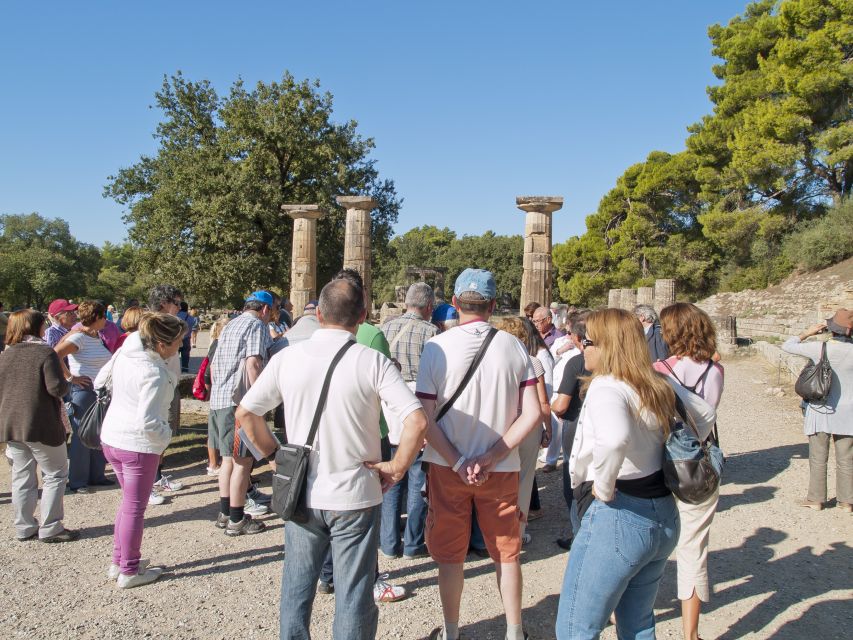
The visit is fully self-guided. That is good news if you prefer freedom and quiet thought, but less helpful if you want a historian to explain every stone. The audio option can supply that missing structure, though its stops have been arranged in a way that some people may find out of order. Use the map and do not assume the audio stops will lead you around in a neat circle.
More Peloponnese museums and collections:
- Athens: Acropolis, Parthenon & Acropolis Museum Guided Tour
★ 4.8 · 9,316 reviews - Athens: Mythology of Delphi, Museum and Arachova Guided Tour
★ 4.6 · 4,008 reviews - Athens: Acropolis, Parthenon & Acropolis Museum Guided Tour
★ 4.8 · 3,579 reviews
Walking the Temple of Zeus and Temple of Hera
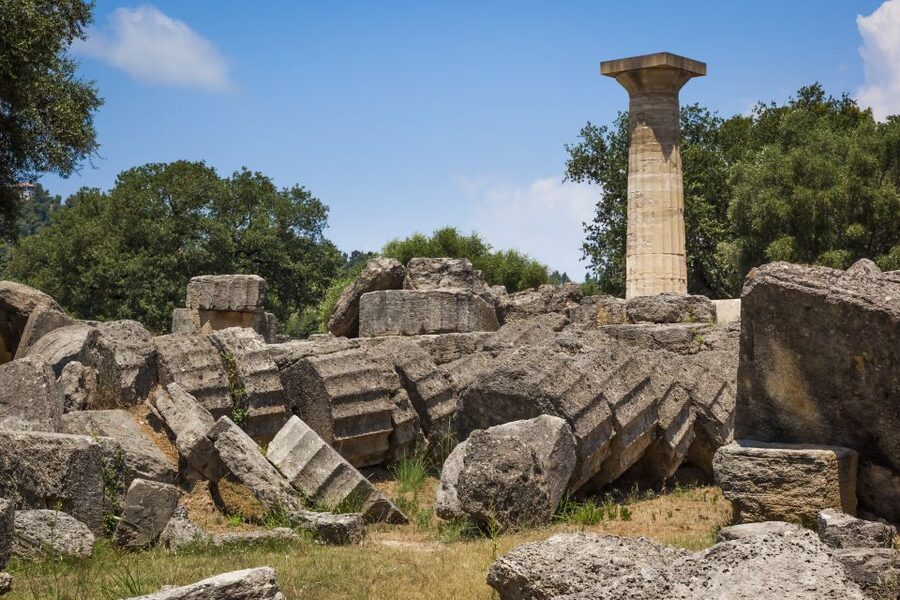
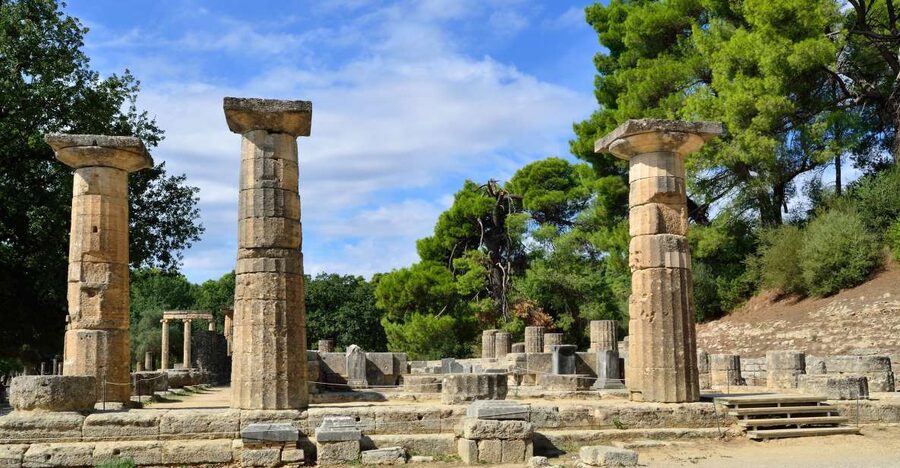
The Temple of Zeus is the main architectural prize. It was the largest temple in the Peloponnese and was built in the Doric style, known for its sturdy columns and restrained decoration. Much of the building has fallen, but the remaining blocks and columns show its former size.
You will not see a complete temple waiting for you. Instead, you see the footprint, fallen drums, fragments, and enough surviving structure to make the proportions clear. Look closely at the huge pieces of stone. They bring home the labor involved in building a sanctuary on this scale long before modern machinery.
The temple was dedicated to Zeus, the central god of the sanctuary. The nearby archaeological museum helps you understand how the sculpture and decorative elements once worked with the building. Visiting the ruins first, then seeing the surviving art indoors, is a sensible order if your schedule allows it.
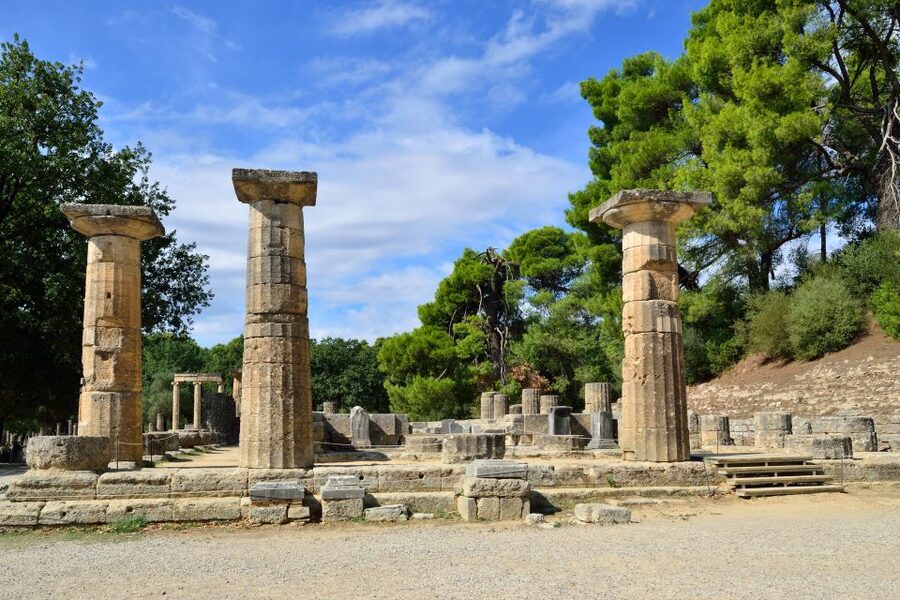
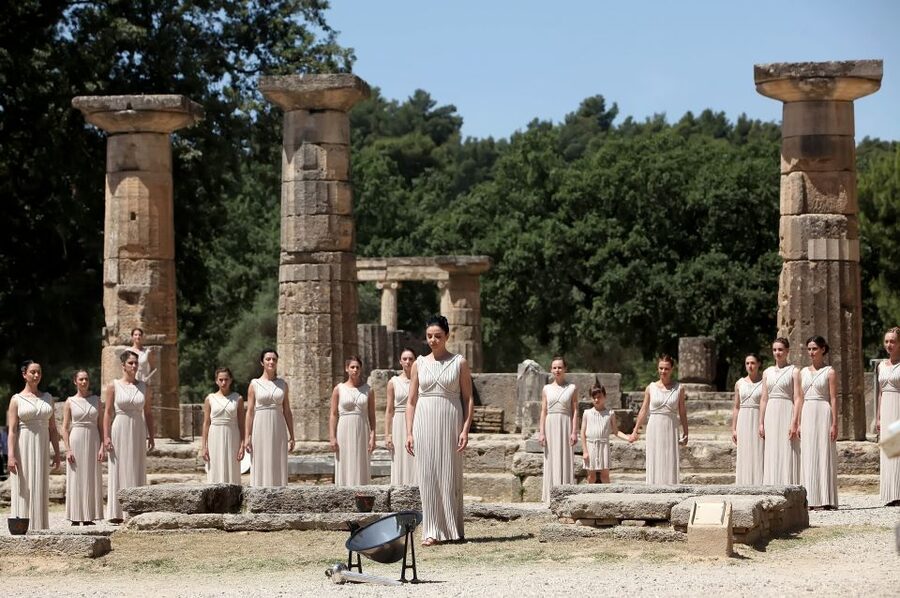
The Temple of Hera is older and has a different feel. It was one of the earliest monumental temples in Greece, and its remains help show the development of Greek temple design. The building is less imposing than the Temple of Zeus, but its age makes it especially important.
The two temples are worth seeing together. Zeus gives you scale and power. Hera gives you a glimpse into an earlier stage of monumental Greek architecture. Allow your eyes to adjust to the fact that the site is made of partial remains. Olympia rewards patience more than speed.
Finding the stadium where the contests took place
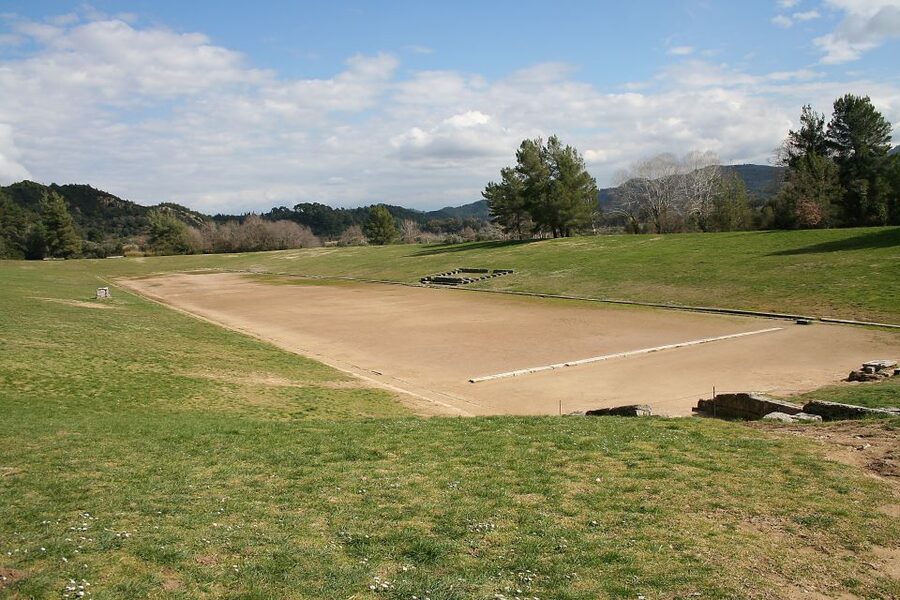
The stadium is one of the most memorable parts of the visit because its purpose is easy to understand. You can stand on the long racing ground and picture athletes competing before spectators gathered along the sides.
The stadium is not a modern sports arena. There are no grand stands or elaborate seating structures. Its simplicity is part of the appeal. The open track makes the original athletic setting easier to imagine than some of the more damaged buildings.
The ancient games included footraces and other contests, and Olympia also had facilities for wrestling and training. The wrestling school and gymnasium show that athletes needed dedicated spaces to prepare, not just a ceremonial field for the final event.
The hippodrome was used for horse and chariot events. Its remains are less easy to read than the stadium, so this is where an audio guide can be particularly useful. If you have a strong interest in sport, the athletic buildings will likely be a major reason to visit. If sport is not your main interest, the temples and museum collections may hold your attention longer.
One practical point: the site is spread out, and the summer sun can be severe. Olympia is in the Peloponnese, where high temperatures can make an open-air visit tiring. Bring water, consider an umbrella for shade, and carry a facecloth that you can wet and place around your neck. Comfortable walking shoes are sensible, although the activity information specifically confirms wheelchair access.
What you see in the Archaeological Museum
The Archaeological Museum of Ancient Olympia is not an optional extra in spirit, even though the site can be visited on its own. The ruins show you foundations and fragments. The museum gives those fragments form, surface, and human detail.
Its collection presents finds from the excavations in the sacred precinct of the Altis, the central area of the sanctuary of Zeus. You can expect sculptures, architectural pieces, and other objects connected with the long life of Olympia. The museum also includes prehistoric finds, adding an earlier layer to the story of the area.
The museum is where the artistic quality of Olympia becomes clearest. Broken temples can be difficult to read, but a statue or carved architectural element can communicate the skill of its maker immediately. Details in stone, the scale of sculpture, and the remains of painted or decorated work help you picture a sanctuary that was far more visually powerful than the ruins alone suggest.
Plan this stop carefully. Only the Archaeological Museum requires a specific date and time slot. Entrance is allowed at the selected time, or up to 15 minutes before or after. The ticket is valid only on the date you chose, and the time cannot be amended.
This is the most important planning detail in the entire visit. You may enter the archaeological site anytime on that date, but you cannot simply arrive at the museum whenever convenient. If you are visiting during a busy period, do not leave the museum until the last part of the day unless your selected slot allows it.
More Peloponnese trips worth a second look
- Sea Kayak in Kardamili
★ 5.0 · 438 reviews - Sailing Cruise in Nafplio | with Local Treats
★ 5.0 · 247 reviews - Epidaurus: Temple of Asclepius & Theatre with optional audio
★ 4.2 · 241 reviews - Sea Kayak Epidavros – Ancient Sunken City Tour
★ 5.0 · 213 reviews
The Museum of the History of the Olympic Games
The Museum of the History of the Olympic Games in Olympia focuses on the ancient games and the period in which they took place. It is a useful final stop because it brings together the sporting side of the visit after you have seen the sanctuary and its training grounds.
The archaeological site can leave you with questions. What did athletes do here? How did the games fit into religious life? What objects were connected with competition? This museum helps organize those ideas.
Entry is included and can be used anytime on the selected date. That flexibility makes it a good place to visit after the Archaeological Museum or after a break. The included self-guided audio tour is in English and applies to the Olympic Games Museum with all ticket options.
You should not expect a live presentation or a guide leading you from room to room. Instead, you can move at your own pace and spend extra time on subjects that interest you. Families may find this format easier than a formal tour, since you can pause or move on without holding up a group.
How the audio guide works in practice
The activity includes English audio content, but it does not include a physical audio device or earphones. You need to use your own compatible equipment if required by the audio format. Check your booking instructions before arrival so you are not caught without the necessary listening gear.
The Olympic Games Museum audio tour is included with all options. The archaeological-site audio tour is included only if you choose the option that offers it. That distinction matters when you compare prices and ticket types.
Audio is especially useful at Olympia because the site contains many partial structures and limited information boards. One drawback is navigation. The stops may appear in a random order rather than following a clean route, so keep a map in hand and use the audio as a collection of explanations rather than a strict walking itinerary.
If you prefer reading and looking quietly, you can skip the audio and still see the main monuments. If you want help imagining the vanished buildings, the audio option is worth considering. It is also a good compromise if a live guide is not available or you do not want to stay with a group.
Is $30 a fair price?
At $30 per person, this is a reasonable choice if you plan to visit all three included sights. You are paying for entry to the archaeological site, the Archaeological Museum, and the Museum of the History of the Olympic Games, plus the English self-guided audio at the specified sites.
The value is partly about convenience. Pre-booking can let you go directly to the entrance instead of waiting at the ticket office. That benefit matters most when tour groups arrive or when the weather is hot. Some people may find the official Greek government ticket site harder to use, so the extra cost over a government price, if there is one, may feel worthwhile for a simpler booking process.
It is less attractive if you only want a quick look at the ruins. The ticket is built for a full day, and the museum visits add much of the historical and artistic context. If you are not interested in ancient sport, sculpture, or archaeology, you may not feel you received full value from all three entries.
There is no reduced-admission option with this ticket. Everyone using it pays the regular adult price, regardless of age. From April 1, 2025, EU citizens under 25 and non-EU citizens under 18 can receive free admission by showing identification at the ticket booth. People with disabilities can also receive free admission by presenting a Disability Certificate at the ticket booth.
That means you should compare your eligibility before paying $30. The offer itself does not provide reduced admission, so eligible visitors may need to use the relevant process at the ticket booth instead.
Timing, access, and who will enjoy it most
You have one day of validity, but the date is fixed. The archaeological site and Olympic Games Museum can be entered anytime during that date. The Archaeological Museum is the exception, with its selected time slot controlling your visit.
I would plan around the museum appointment first, then fit the ruins around it. Arriving near opening time can help you avoid the largest crowds and the worst heat, especially in summer. At the same time, do not arrive so early that you miss the museum slot later. Write down the time and build your day around it.
The experience is wheelchair accessible, though the site contains ancient ruins and open grounds rather than modern, level floors throughout. The supplied information confirms accessibility, but it does not describe every route or surface, so anyone needing detailed access information should check before booking.
This ticket suits you best if:
- You want to explore without a live guide.
- You value pre-booked entry and dislike waiting at ticket counters.
- You are visiting from a cruise stop or have a tightly planned day.
- You want both the ruins and museum collections.
- You are interested in ancient athletics, Greek temples, sculpture, or archaeology.
It may not suit you if you need transportation from a hotel or cruise terminal. Transfers are not included, and one review specifically wished for a bus connection from a cruise terminal. You must arrange your own way to the site.
Should you book Ancient Olympia with this ticket?
Book it if you want an independent day at Olympia and plan to visit the ruins, Archaeological Museum, and Olympic Games Museum. The biggest strengths are simple: pre-booked entry, flexible access to two sights, and useful English audio without the limits of a group schedule.
Before paying, check your admission status. The regular adult-only pricing is not ideal for visitors who qualify for free entry. Also confirm the Archaeological Museum time slot, since that is the one detail most likely to disrupt your day.
I would choose this ticket for a cruise visit, a family outing, or a self-guided archaeology day. Bring water, shade, your own earphones, and a map. If you do that, the $30 cost buys more than entry to some ruins. It gives you a clear way to connect the temples, athletic grounds, sculptures, and ancient games.
FAQ
How long is the Ancient Olympia ticket valid?
The ticket is valid for one day, on the selected date of booking.
Can I enter the archaeological site at any time?
Yes. You can enter the archaeological site anytime on the selected date of your booking.
Does the Archaeological Museum require a timed entry?
Yes. You must choose a specific date and time slot for the Archaeological Museum. Entry is permitted at that time or up to 15 minutes before or after.
Can I visit the Olympic Games Museum whenever I want?
Yes. You can enter the Museum of the History of the Olympic Games anytime on the selected date.
Is a live guide included?
No. This is a self-guided experience. There is no live guide or hotel transfer included.
Is an audio guide included?
An English self-guided audio tour of the Olympic Games Museum is included with all options. An audio tour for the archaeological site is included only with the option that specifically offers it. A physical audio device and earphones are not included.
Can I change my booking date or receive a refund?
No. The activity is non-refundable, and the travel date and entry time slot cannot be amended.
Recently reviewed around Peloponnese
- Rafting Lousios river★ 5.0 · 36 reviews
- Explore Mani by boat – rent a boat in Kardamili (no licence)★ 5.0 · 27 reviews
- Organic Olive Grove tour & Olive oil tasting & lunch in Kalamata!★ 5.0 · 61 reviews
- Traditional Food tour, Olive oil Tasting with Lunch in Kalamata, Messinia!★ 5.0 · 30 reviews
- Rock Climbing at Kardamili- West Mani★ 5.0 · 192 reviews
- Boat Tour with Snorkeling in Kardamili – Mani★ 5.0 · 30 reviews
- Savor Nafplio Cooking Class★ 5.0 · 68 reviews
- Epidavros sea kayak at the Ancient sunken city tour, small ancient theater★ 5.0 · 96 reviews
Museums, compared.
Acropolis, Parthenon & Acropolis Museum Guided Tour
Read our review →
Mythology of Delphi, Museum and Arachova Guided Tour
Read our review →Acropolis, Parthenon & Acropolis Museum Guided Tour
Read our review →
Acropolis monuments & Parthenon Walking Tour with Optional Acropolis Museum
Read our review →
Athens All Included: Acropolis and Museum Guided Tour with Ticket
Read our review →
Acropolis Museum Ticket with optional Audio Guide
Read our review →
Small-Group Delphi, Museum & Arachova Day Trip
Read our review →
Parthenon & Acropolis Museum with Audio or Live Tour Option
Read our review →Browse the lists this tour appears in