
Reviewed · ACROPOLIS & ACROPOLIS MUSEUM TOURS
Athens: Acropolis and Mythology Highlights Small Group Tour
Athens makes more sense when its ruins are tied to the stories people once told about them. This small-group walk connects Athena, Zeus, the city’s Golden Age, and the political life of ancient Athens as you move from Hadrian’s Arch to the Acropolis and, with the right ticket option, the Ancient Agora.
I like the mythology-first approach, which gives you more than a list of dates and broken columns. I also like the small groups and the way guides such as Antonia, Alex, Danae, Athina, and Stellios use humor, visual aids, and time for questions. The main drawback is the physical setting: steep, uneven paths, heat, crowds, and restrictions on backpacks and strollers can make the walk demanding.
In This Review
- Key points to know before you book
- Why the mythology focus works so well at the Acropolis
- Meeting under Hadrian’s Arch
- The Temple of Olympian Zeus from outside
- Climbing toward the Acropolis
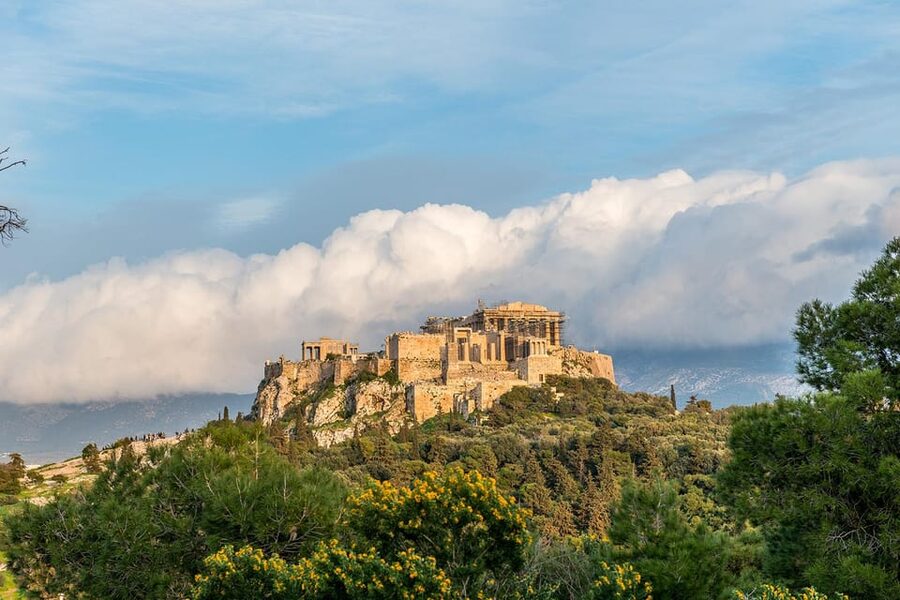
- The Acropolis: a guided walk through Athens’ symbolic center
- The Erechtheion and the city’s competing sacred stories
- The Parthenon, with more than a postcard view
- Walking down to the Ancient Agora
- The Temple of Hephaestus and the final ancient-city lesson
- Group size, guide quality, and the pace of the walk
- Price, tickets, and what you really receive for $53
- Heat, clothing, bags, and family planning
- Who should book this Acropolis tour?
- FAQ
- Where does the tour meet?
- How long does the tour last?
- Which languages are available?
- Does the price include Acropolis entry?
- Can I visit the Ancient Agora on this tour?
- What should I bring?
- Can I cancel or pay later?
Key points to know before you book
- Myths are linked to real places: Learn how gods, legends, and ancient civic life connect at the Acropolis.
- The Parthenon is only part of the story: The route also covers the Theatre of Dionysus, Temple of Athena Nike, Erechtheion, and Sanctuary of Asclepius.
- Small groups make a real difference: Groups may be as small as two people, with some departures reported at around seven.
- The Ancient Agora depends on your ticket choice: Select the Acropolis and Ancient Agora entry option if you want both sites included.
- Early visits help with crowds and heat: A winter morning can be calm, while summer requires water, shade, and sensible shoes.
- Bring identification, not bulky luggage: EU citizens under 25 and non-EU citizens under 18 may receive free entry with valid identification.
Why the mythology focus works so well at the Acropolis
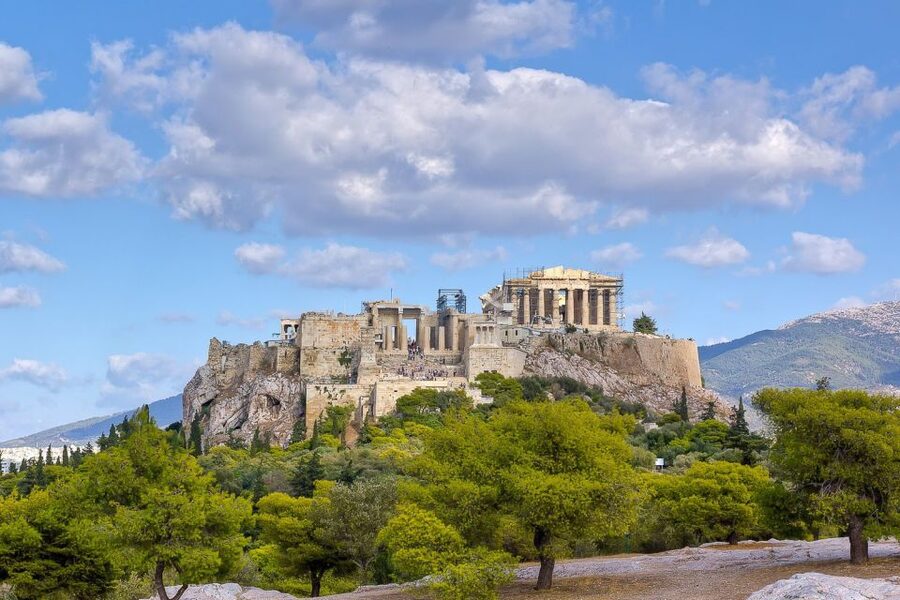
You can walk around the Acropolis alone and admire the view, but the stones do not explain themselves. A guide gives the monuments a human frame: why Athens honored Athena, how religious buildings shaped civic identity, and how myths reflected the way ancient Greeks tried to explain the world.
This tour treats mythology as more than a collection of entertaining tales. The stories are used to explain names, symbols, buildings, and social ideas. That approach helps you understand why a temple was placed in a certain spot and why particular gods mattered to the city.
The strongest guides make the subject easy to follow without turning it into a school lecture. Antonia has been praised for making myths fun and clear, while Danae used images of the original buildings and a family tree of the gods to help visual learners. Alex has been particularly effective with mixed-age groups, keeping children interested while giving adults enough detail to feel the visit has real substance.
If you arrive with only a passing interest in Greek mythology, you should still be able to follow the stories. If you already know your Olympian gods, the historical setting gives familiar tales a more useful context.
More Athens trips worth a second look
- Athens: Acropolis & up to 5 Archaeological Sites Combo Pass
★ 4.4 · 12,619 reviews - Athens: Acropolis Ticket with Optional Audio or Live Guide
★ 4.2 · 11,055 reviews - Athens: Acropolis, Parthenon & Acropolis Museum Guided Tour
★ 4.8 · 9,316 reviews
Meeting under Hadrian’s Arch
The tour begins beneath the Arch of Hadrian on Leof. Vasilisis Amalias 50, beside the Acropolis. Look for the guide holding an Alternative Athens sign. The Acropolis metro station is the closest stop, followed by a walk of about five minutes.
This is a practical meeting point because Hadrian’s Arch introduces an important theme before you even reach the Acropolis: Athens was not one single historical moment. The city grew through different eras, and Roman Athens added its own monuments to the older Greek city.
The opening also gives the guide a chance to explain the birth of Athens, its rise to power, its Golden Age, and its later defeat by Sparta. That wider timeline matters. Without it, the Acropolis can seem like an isolated hill covered in famous ruins. With it, you begin to see the hill as the symbolic center of a city that changed through war, politics, religion, and empire.
The Temple of Olympian Zeus from outside
The first major stop is the Temple of Olympian Zeus, viewed from outside for roughly 15 minutes. The scale is the main point here. Even in ruin, the remaining columns hint at how enormous the finished temple must have appeared.
Your guide uses Zeus to connect the monument with the wider Greek religious world, then places the temple within the long story of Athens. The visit is brief, so do not expect an interior exploration or a long stop among the columns.
This outside viewpoint is useful if you want the main idea without adding another full archaeological site to an already active walking route. If seeing the temple up close is one of your top priorities, note that this tour does not present it as a separate extended visit.
Climbing toward the Acropolis
The route then moves on foot toward the Acropolis, with about 15 minutes spent walking before the main guided visit. Wear shoes with a firm grip. The tour covers ancient paths, slopes, and uneven surfaces, and the high summer sun can make even a short climb feel harder than expected.
The guide keeps the group moving, but the pace is not simply a race to the Parthenon. Several guides have been praised for adding water breaks, finding shade, and adjusting the pace for older participants and children. That care is important in Athens, especially during hot months.
Crowds also affect the climb. Early departures are the best choice if you want a calmer start and shorter waits. One family found an early winter visit especially manageable with children. By contrast, busy days can slow the route, and crowded paths may make it harder to hear unless the group is supplied with audio equipment.
A different kind of day out, same corner of Greece:
- Athens: Cape Sounion & Poseidon Temple Sunset Half-Day Trip
★ 4.8 · 8,241 reviews - Athens: Acropolis and Parthenon Guided Walking Tour
★ 4.6 · 5,882 reviews - All Day Cruise -3 Islands to Agistri,Moni, Aegina with lunch and drinks included
★ 5.0 · 4,958 reviews - Athens, Piraeus, and Coastline: Blue Hop-On Hop-Off Bus
★ 3.9 · 4,849 reviews
The Acropolis: a guided walk through Athens’ symbolic center
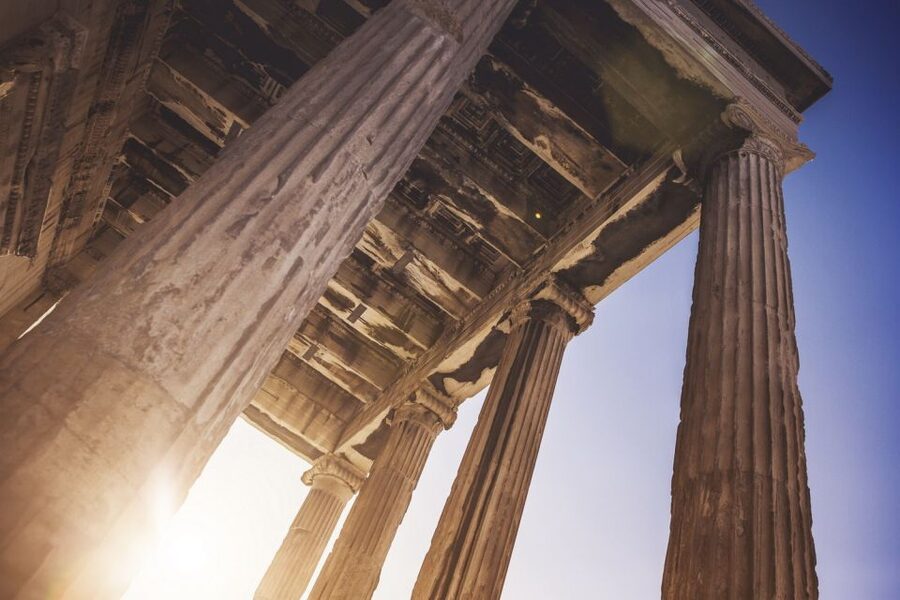
The main Acropolis visit lasts about an hour and a half. This is where the tour earns its price. A licensed guide explains not just what each building is called, but why it mattered to the people who built and used it.
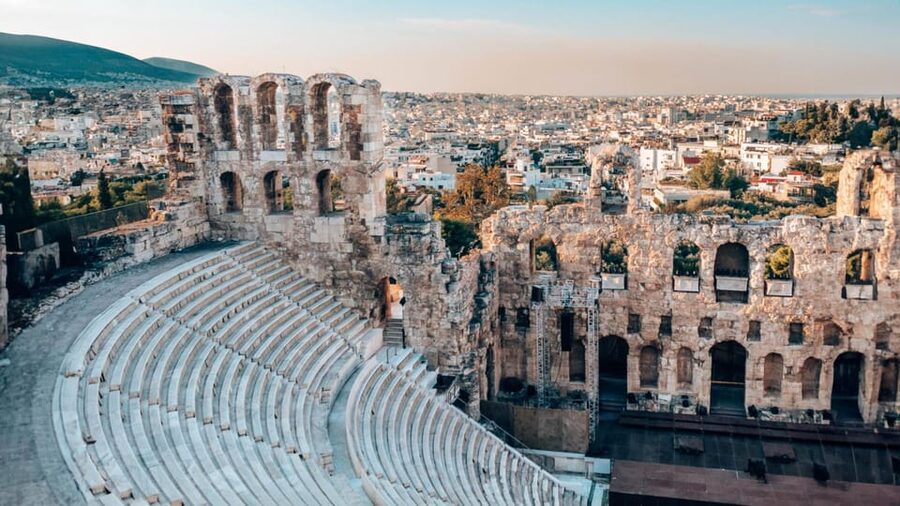
You will see the Theatre of Dionysus Eleuthereus, often linked with the birth of large-scale Greek drama. The theater gives the tour a welcome change of pace from temples and columns. It reminds you that the Acropolis was connected to performance, festivals, public life, and shared stories, not just worship.
You will also see the Temple of Athena Nike, a smaller monument with a major symbolic role. The name links Athens’ patron goddess with victory, and the guide uses the temple to explain how religion and civic ambition overlapped. Ancient Athenians did not separate spiritual hopes from military and political concerns in the modern way.
The Sanctuary of Asclepius adds another layer. Asclepius was associated with healing, so this stop helps you see the Acropolis as a place connected to ordinary needs as well as grand public ideals. Myths here become a window into health, fear, hope, and the daily concerns of ancient people.
The Erechtheion and the city’s competing sacred stories

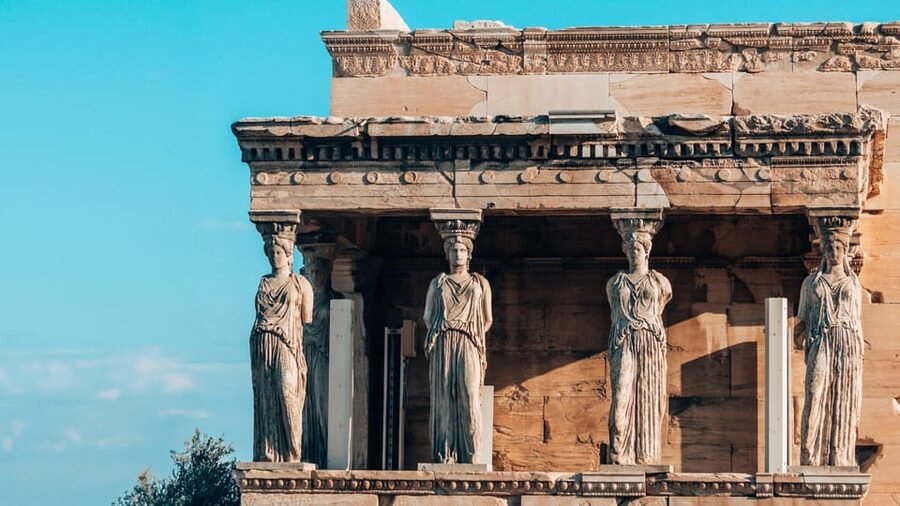
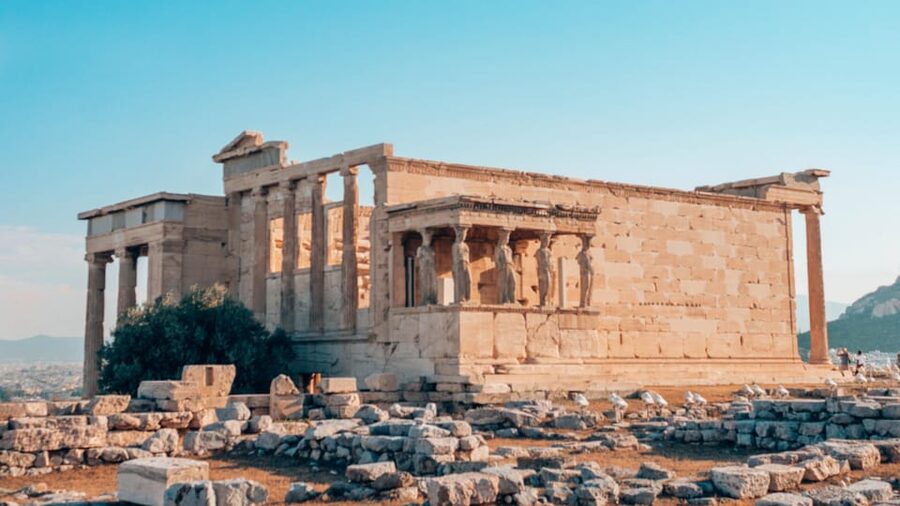
The Erechtheion is one of the most interesting stops because it is not as visually straightforward as the Parthenon. Its unusual design reflects several religious traditions sharing one sacred area.
The ruins of the Temple of Athena Polias and the Erechtheion allow the guide to explain the rivalry between Athena and Poseidon for control of Athens. This is one of the tour’s best examples of myth being tied to place. The story is not presented as a detached fairy tale. It helps explain why Athena became so central to the city and why the Acropolis carried such importance.
The famous porch associated with the Caryatids is a highlight, but the guide’s explanation is more valuable than a quick photograph. You learn how the building’s different sacred associations shaped its form and why the site could hold several layers of meaning at once.
Expect to pause for photographs, but do not count on having a completely empty view. The Acropolis is one of Athens’ busiest sights, and the group must share space with other visitors.
The Parthenon, with more than a postcard view
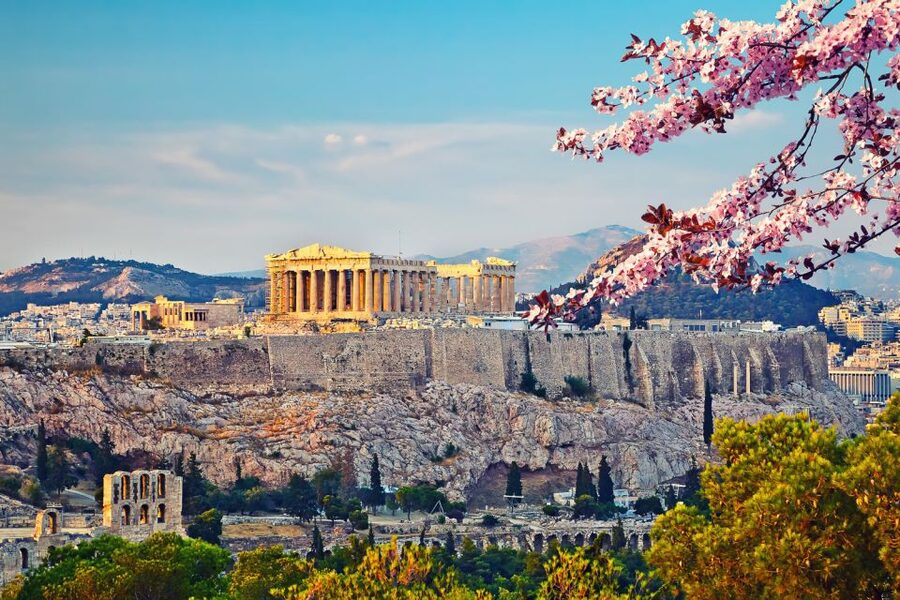
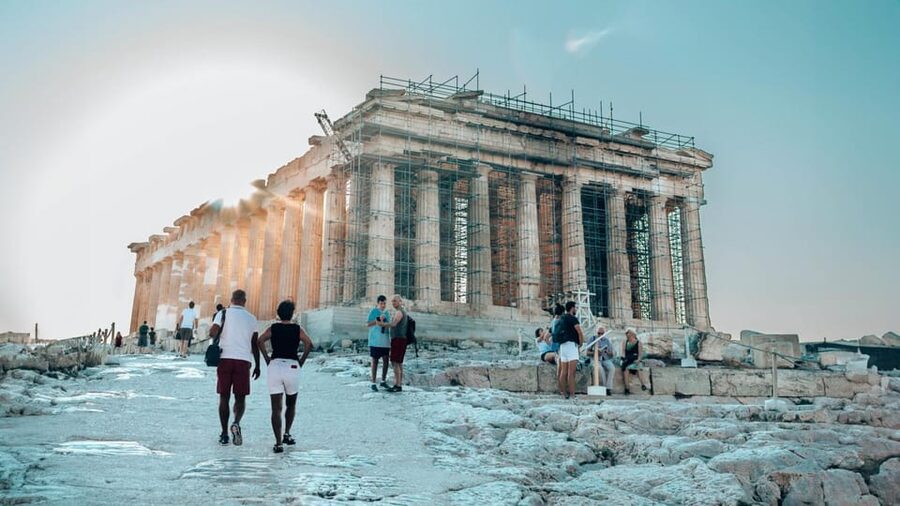
The Parthenon receives about 30 minutes of guided attention. Most people arrive knowing the name, but fewer understand the building’s purpose and the ideas it expressed.
The guide explains the temple’s link with Athena and the city’s power during its Golden Age. You will hear about the monument’s design, its religious role, and the way Athenians connected their success with divine favor and civic achievement.
This is also where a strong guide can keep the experience grounded. The Parthenon is often reduced to a symbol of Western civilization, but the tour brings the focus back to ancient Athens: its citizens, its gods, its political life, and its confidence at the height of its power.
The Acropolis visit includes time for photos and moments to take in the views, but this is a guided walk rather than a free-form visit. You need to stay with the group and keep moving between stops. If you want long stretches of quiet contemplation at one monument, you may prefer to return alone afterward.
Some departures provide headsets or earpieces, which can make a big difference in crowded conditions. Still, sound can be difficult when many groups gather in the same area. Stay near the guide, and tell them if you cannot hear.
Walking down to the Ancient Agora
The route continues toward the Ancient Agora, with about 30 minutes of walking. This transition helps you understand how religious monuments related to the working city below.
The Agora was not simply a market. It was a center of public life, politics, discussion, trade, and civic business. After the grand religious buildings of the Acropolis, the Agora feels more connected to how people actually lived and governed.
The atmosphere can also change. The Acropolis is the headline sight, while the Agora often gives you more room to consider the remains. The tour uses this part of the route to explain Athenian society and why Athens became such an influential center.
Be careful when comparing ticket options at booking. The basic choice may cover Acropolis entry, while another option includes both the Acropolis and Ancient Agora. Entry fees are not refundable or exchangeable, so choose the combined option if the Agora is important to you.
The Temple of Hephaestus and the final ancient-city lesson
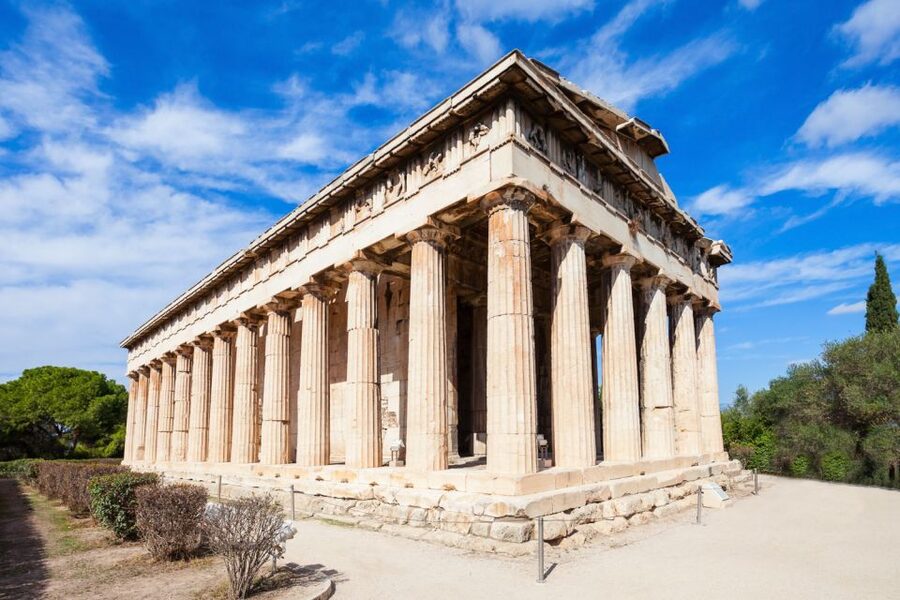
The Temple of Hephaestus receives about 30 minutes of guided attention. It is a fitting final stop because Hephaestus was linked with craftsmanship, fire, and metalworking, giving the guide another way to discuss the skills behind ancient construction.
The temple also helps balance the Parthenon. You see a different expression of Greek temple design and learn how ancient religious buildings were tied to particular gods and civic needs. The stop is less about checking off one more ruin and more about bringing the tour’s themes together.
By this point, the route has connected gods, theater, healing, politics, craftsmanship, warfare, and city identity. That is the real value of the experience. You leave with a clearer picture of Athens as a functioning society, not just a collection of famous monuments.
Group size, guide quality, and the pace of the walk
The tour is promoted as the smallest group experience in Athens, and the group size is one of its strongest practical features. Departures can be very small, including tours with only two participants, while another group had seven people.
A small group makes it easier to hear, ask questions, and keep the guide’s attention. It also allows the pace to feel less rigid. Several guides have taken extra care with children, older participants, heat, rain, and route changes caused by crowds.
Guide quality will always vary by departure, but the named guides receiving especially warm praise include Antonia, Alex, Danae, Stellios, Athina, Vicky, Christina, Sophia, Maria, Chrysa, and Irene. The common strength is clear explanation with a human touch. Some guides are archaeologists, and several are especially skilled at connecting myths with everyday life.
The experience is offered in English and French. If you need a very quiet, slow, or highly private tour, confirm the group details and route before booking. The standard experience is active and information-packed, even when the guide builds in breaks.
Price, tickets, and what you really receive for $53
At $53 per person, this tour sits in a sensible range for a guided Acropolis visit. The value depends on your ticket selection and on how much you want explanation rather than simple entry.
You are paying for a licensed guide, a walking tour, an Ancient Athens city map, and either Acropolis tickets or combined Acropolis and Ancient Agora entry, depending on the option selected. Food and drinks are not included. If entry tickets are not included in your chosen option, the provider can pre-purchase them if you ask.
I consider the price fair for first-time visitors who want the Acropolis placed in context. The tour can save you from wandering among ruins without knowing what you are seeing, and it gives you a usable framework for exploring more of Athens afterward.
The value is lower if you already have strong archaeological knowledge and prefer to read at your own pace. In that case, you may want a shorter guided introduction, then return independently to the areas that interest you most.
Heat, clothing, bags, and family planning
Wear comfortable clothes and sturdy walking shoes. Bring a passport or ID card because age-based entry rules require valid identification.
Baby strollers, backpacks, and large bags are not allowed at the Acropolis and should not be brought along. Pets are also not allowed, except for assistance dogs. Pack lightly and keep what you carry small and practical.
Families can enjoy this tour, especially children who already like Greek myths or Percy Jackson. Guides have successfully kept tweens, younger children, and adults involved, but remember that the route is outdoors and includes walking over uneven ground.
Summer heat deserves serious attention. Choose an early start when possible, carry water, and take advantage of shaded pauses. Spring, autumn, and winter may offer a more comfortable walking temperature, though conditions and crowd levels can still vary.
Free cancellation is available up to 24 hours before the start, and you can reserve now and pay later. Those policies are useful if your Athens plans may change, but remember that archaeological entry fees are non-refundable and non-exchangeable.
Who should book this Acropolis tour?
I would choose this experience if you are visiting Athens for the first time, care about Greek mythology, or want the Acropolis and ancient civic life explained in one walk. It is also a good fit for families, mixed-age groups, and anyone who likes stories tied to real places.
I would be more cautious if you dislike group pacing, struggle with hills, or want a long, quiet visit at each monument. The route covers a lot in two to four hours, so it is active rather than leisurely.
If you book, choose the combined ticket option for the Ancient Agora, aim for an early departure, bring identification and water, and leave the backpack at your accommodation. The strongest reason to go is not simply seeing the Parthenon. It is learning how gods, politics, theater, healing, war, and daily life shaped the city around it.
FAQ
Where does the tour meet?
The meeting point is under Hadrian’s Arch at Hadrian’s Gate, on Leof. Vasilisis Amalias 50. The guide will hold an Alternative Athens sign.
How long does the tour last?
The stated duration is between two and four hours, depending on the selected option and schedule.
Which languages are available?
The tour is available in English and French.
Does the price include Acropolis entry?
Acropolis tickets are included if you select the ticket option that includes them. A separate option includes entry to both the Acropolis and Ancient Agora. Confirm your selected option when booking.
Can I visit the Ancient Agora on this tour?
Yes, the route includes a walk to the Ancient Agora and a guided visit to the Temple of Hephaestus when the relevant Ancient Agora entry option is selected.
What should I bring?
Bring a passport or ID card, comfortable shoes, and comfortable clothing. Avoid backpacks, large bags, and strollers, which are not allowed at the Acropolis.
Can I cancel or pay later?
You can cancel up to 24 hours in advance for a full refund. The reserve-now, pay-later option lets you hold a place without paying immediately. Archaeological entry fees are non-refundable and non-exchangeable.
Recently reviewed around Athens
- Small-Group Women History in Ancient Greece Walking Tour★ 5.0 · 38 reviews
- Ceramic and Pottery Creative Workshop with Two Local Artists★ 4.0 · 57 reviews
- Athens: Wine Workshop Create your Own Wine under the Acropolis★ 5.0 · 77 reviews
- Athens: Greek Wines Tasting with Sommelier and Acropolis Views★ 5.0 · 88 reviews
- Hydra Private Day Trip by Ferry from Athens with Transfers★ 4.0 · 30 reviews
- Small-Group Wine Tour in Athens with Tasting★ 5.0 · 33 reviews
- Wine Trails Private Tour/ Nemea visit 3 wineries from Athens or Nafplion (10 h)★ 5.0 · 44 reviews
- FLYING DRESS Photoshoot in Athens – Greece★ 5.0 · 47 reviews
Acropolis & Acropolis Museum Tours, compared.
Acropolis & up to 5 Archaeological Sites Combo Pass
Read our review →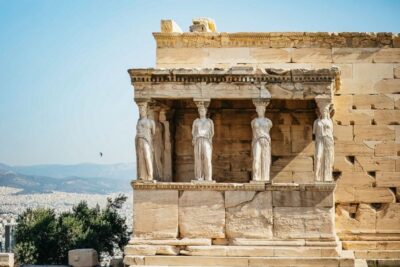
Acropolis, Parthenon & Acropolis Museum Guided Tour
Read our review →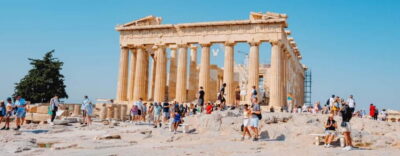
Acropolis, Parthenon & Acropolis Museum Guided Tour
Read our review →


Acropolis monuments & Parthenon Walking Tour with Optional Acropolis Museum
Read our review →Browse the lists this tour appears in