
Reviewed · ACROPOLIS & ACROPOLIS MUSEUM TOURS
Athens: Acropolis Beat the Crowds Afternoon Guided Tour
The smart idea here is the timing. You visit the Acropolis in the afternoon, when the morning rush has eased and the worst summer heat may have passed. With a licensed guide leading a group of no more than 15, you get the major monuments without trying to make sense of the hill on your own.
I like the story-led approach, which connects the stones to Greek mythology, democracy, politics, and daily life. I also like the guide’s focus on shade where possible, a small kindness that matters on a hot climb. The main drawback is that entry fees are extra, and the steep, uneven hill is not suitable for people with mobility impairments.
In This Review
- Key points to know before you book
- Why an afternoon Acropolis visit makes sense
- Meeting at Hadrian’s Arch
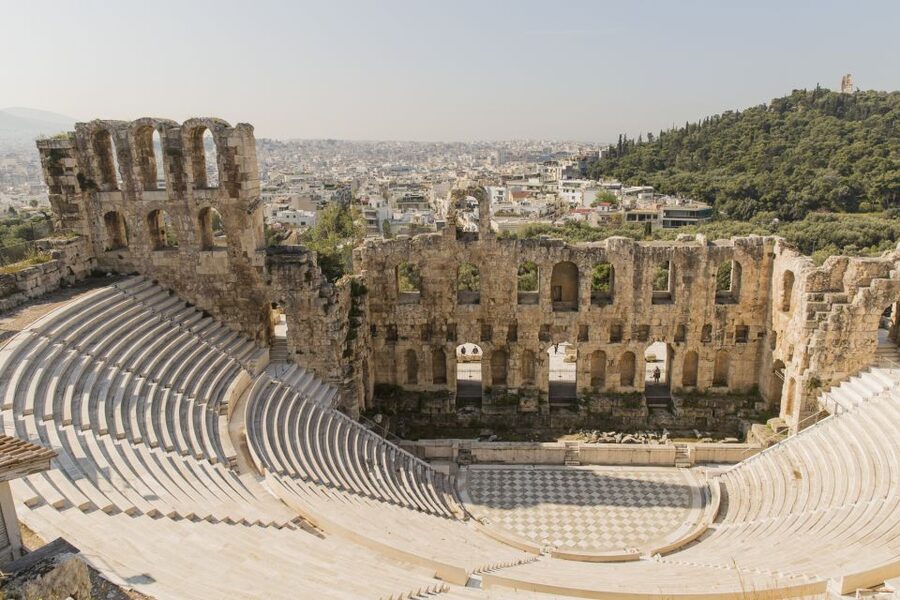
- Walking up through the Theatre of Dionysus
- Temple of Athena Nike and the gateway to the hill
- The Erechtheion and its unusual design
- Seventy-five minutes with the Parthenon
- What the guides add to the stones
- Is $51 a fair price?
- Practical points that can make or break the visit
- Who will enjoy this Acropolis tour?
- Should you book it?
- FAQ
- How long does the Acropolis tour last?
- Where does the tour begin?
- How will I identify the guide?
- Where does the activity end?
- Is the Acropolis entrance ticket included?
- What languages are available?
- How large is the group?
- Are food and drinks included?
- Can I bring a backpack or stroller?
- Is the tour suitable for children and people with mobility impairments?
Key points to know before you book
- Afternoon timing: A useful choice for avoiding the busiest morning conditions and reducing exposure to peak summer heat.
- Four major monuments: The route includes the Theatre of Dionysus, Temple of Athena Nike, Erechtheion, and Parthenon.
- Small group size: The group is limited to 15 people, allowing more room for questions and conversation.
- Strong storytelling: Guides such as Christina, Michael, and Alex have been praised for linking architecture with mythology, language, politics, and Athenian history.
- Bring light luggage only: Backpacks, large bags, and baby strollers are not allowed at the Acropolis.
- Budget for admission: The professional guide and ancient Athens map are included, but the Acropolis ticket is not.
Why an afternoon Acropolis visit makes sense
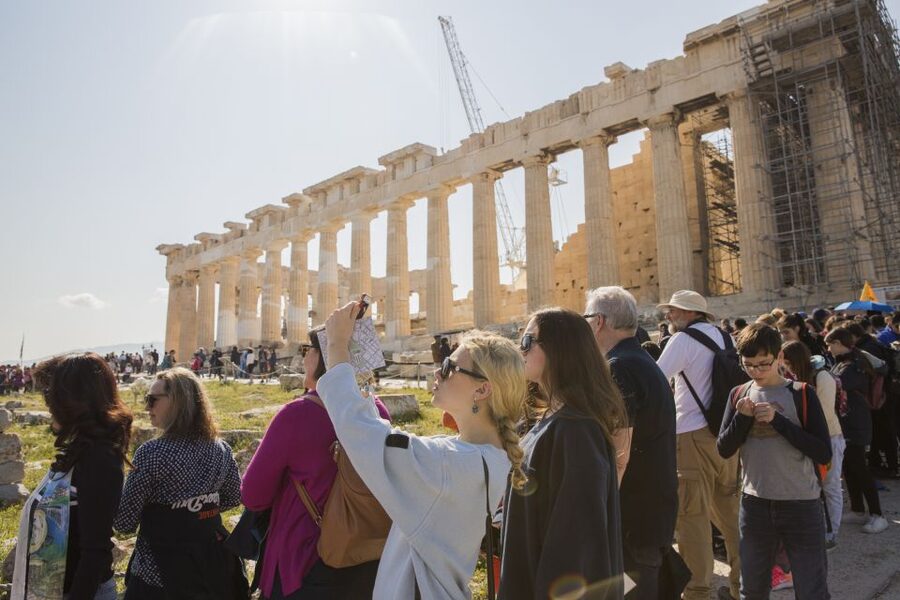
The Acropolis is Athens’ essential sight, but it is not a quiet one in the morning during the high season. Tour groups, independent sightseers, school groups, and cruise passengers can all converge on the hill. By afternoon, some of that pressure has eased.
You should not expect the Acropolis to be empty. It is one of Europe’s most visited ancient sites, and the experience still involves a climb over worn stone and exposed ground. But the timing gives you a better chance of enjoying the monuments without facing the full morning crush.
The afternoon can also be kinder in summer. The Acropolis Rock has little shade, and the sun can make the marble glare. A later start may bring cooler air, though you should still carry water and wear sturdy shoes. One guide, Michael, made a point of keeping the group in shade when possible, a practical touch that can make the two-hour visit more comfortable.
The group cap of 15 is another real advantage. This is not a private tour, but it is small enough for the guide to keep the party together and answer questions without shouting across a crowd. You get the social ease of a group outing with more personal attention than a large coach tour.
More Athens trips worth a second look
- Athens: Acropolis & up to 5 Archaeological Sites Combo Pass
★ 4.4 · 12,619 reviews - Athens: Acropolis Ticket with Optional Audio or Live Guide
★ 4.2 · 11,055 reviews - Athens: Acropolis, Parthenon & Acropolis Museum Guided Tour
★ 4.8 · 9,316 reviews
Meeting at Hadrian’s Arch
The tour begins beneath Hadrian’s Arch at Leof. Vasilisis Amalias 50. Look for the guide holding a sign marked ALTERATIVE ATHENS. The activity returns to this same meeting point after the Acropolis visit.
Starting here gives your guide a useful place to set the scene. Hadrian’s Arch marks the boundary between the older Greek city and the Roman expansion of Athens, making it a fitting introduction to a tour that moves across several periods of Athenian history.
Arrive ready to walk. There is no separate transport during the activity, and the tour description allows no time for a stop in Athens beyond the guided route. The Acropolis itself is the focus from start to finish.
The tour is offered in English and French. If you need entry tickets, the guide can arrange pre-purchase, but you should settle that detail in advance. Admission is not part of the $51 tour price, and entry fees are non-refundable and non-exchangeable.
Walking up through the Theatre of Dionysus
The first major stop is the Theatre of Dionysus, with about 15 minutes of guided explanation. This is where the tour can begin to make ancient Athens feel like a working city rather than a collection of ruins.
The theatre connects to drama, civic life, and the public culture of Athens. Your guide uses the site to explain how performances, festivals, and political life fitted into the wider city. Greek mythology also enters the story here, helping you see how religious belief shaped public buildings and public events.
This first stop is brief, so do not expect an exhaustive study of the theatre. Its value is the setting and the context. You begin the climb with a clear idea of why Athens became so important and how its people understood their place in the world.
The route is uphill, with uneven surfaces and many steps. That physical effort is part of the setting, but it is also the reason this experience is not suitable for people with mobility impairments or children under four. If you are older or not used to walking uphill, take the pace seriously. One visitor noted that the heat and many steps were demanding, even while finding the tour worthwhile.
Temple of Athena Nike and the gateway to the hill
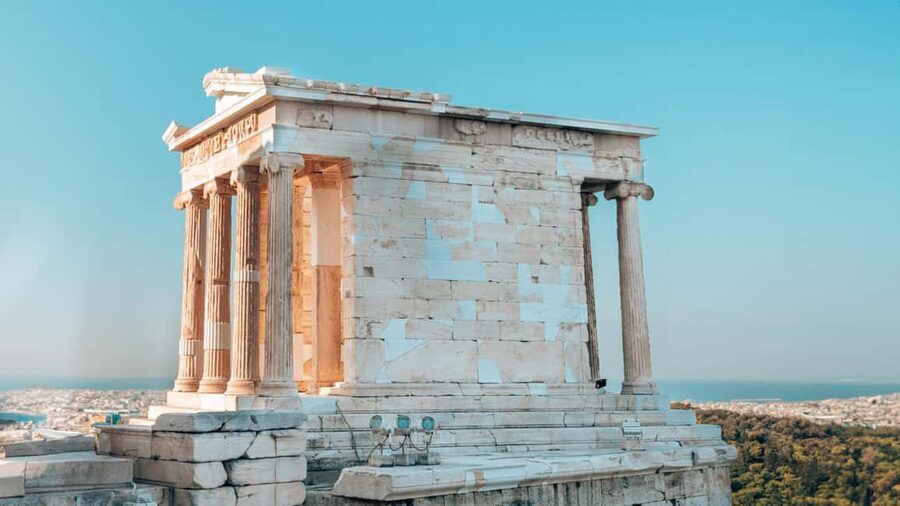
Next comes the Temple of Athena Nike, another stop planned for about 15 minutes. Small in scale beside the Parthenon, it is easy to pass without a guide. With an explanation, you can better understand why this compact temple mattered.
The temple honored Athena in her role as Nike, or victory. That connection fits the wider character of classical Athens, a city concerned with military success, civic identity, religion, and public display. Your guide can tie the building to the myths and beliefs that gave meaning to the hill.
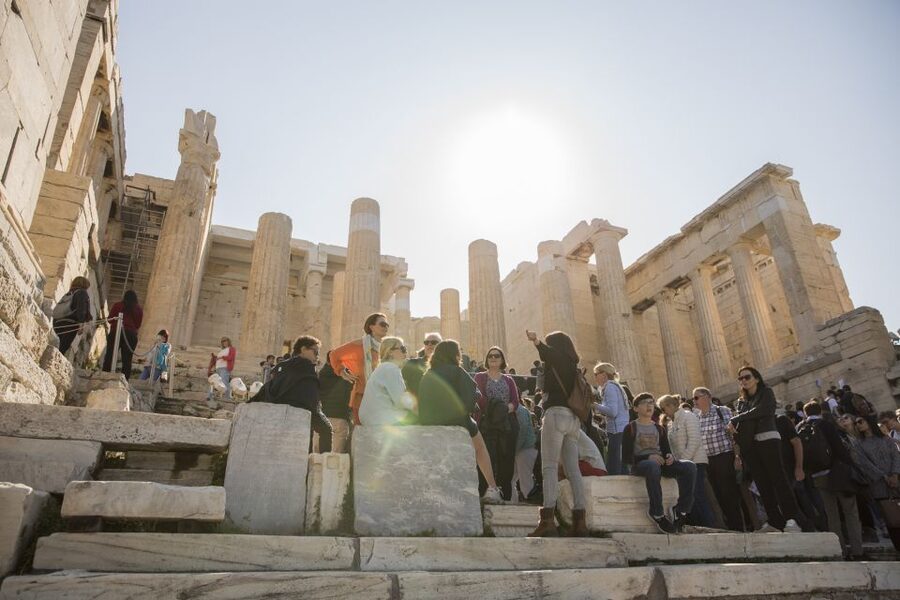
The temple sits near the Propylaia, the monumental entrance to the Acropolis. The Propylaia is included in the wider visit even though it does not have a separate timed stop in the outline. As you pass through this gateway, the route opens toward the hilltop monuments and the Parthenon.
This section is a good example of why a guided walk helps. Without context, you might focus only on the largest surviving structure. A guide points out the smaller buildings and explains how they fit the sacred entrance and the religious purpose of the Acropolis.
A different kind of day out, same corner of Greece:
- Athens: Cape Sounion & Poseidon Temple Sunset Half-Day Trip
★ 4.8 · 8,241 reviews - Athens: Acropolis and Parthenon Guided Walking Tour
★ 4.6 · 5,882 reviews - All Day Cruise -3 Islands to Agistri,Moni, Aegina with lunch and drinks included
★ 5.0 · 4,958 reviews - Athens, Piraeus, and Coastline: Blue Hop-On Hop-Off Bus
★ 3.9 · 4,849 reviews
The Erechtheion and its unusual design

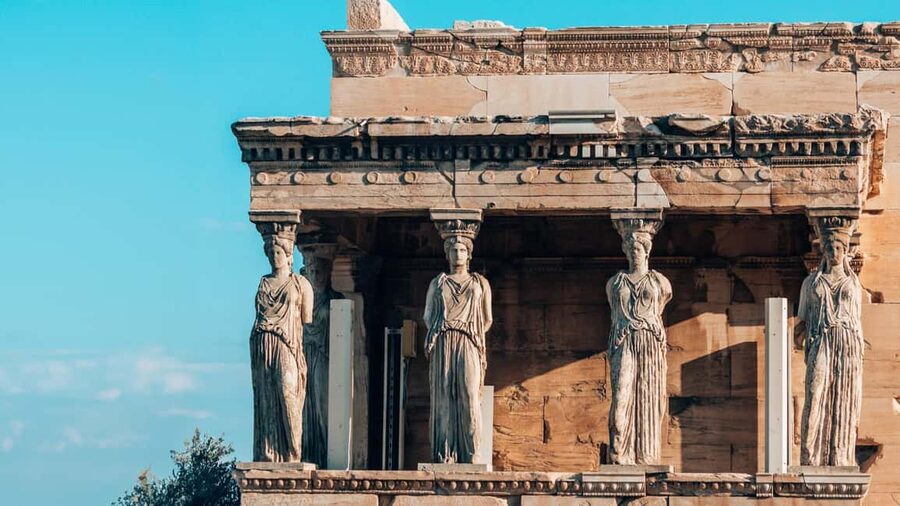
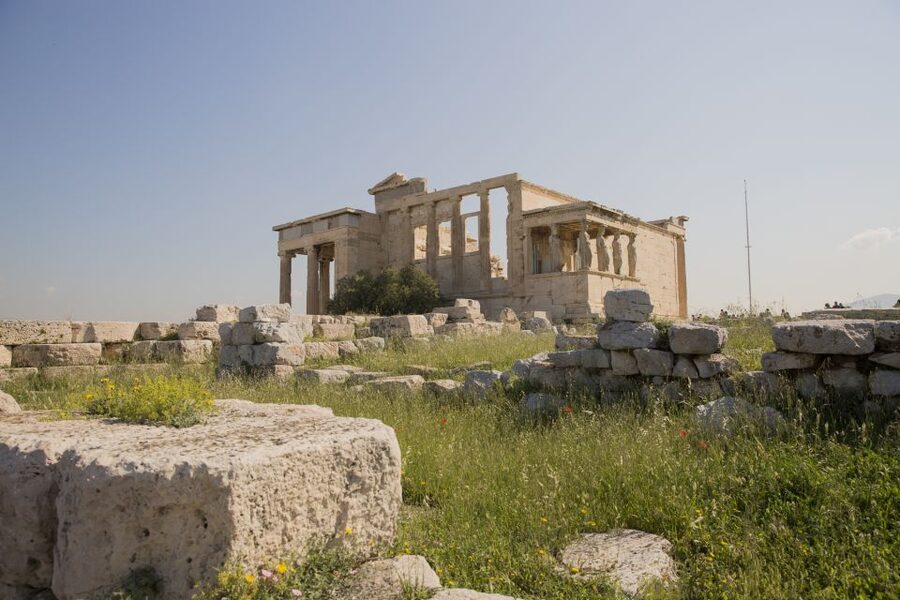
The Erechtheion receives another 15 minutes of guided attention. For many people, this is the most visually intriguing building on the hill because of its uneven plan and famous porch supported by sculpted female figures.
The building reflects the layered nature of ancient Greek religion. Different sacred traditions and stories came together here, including the contest between Athena and Poseidon for the city’s protection. This is where mythology can move beyond a list of gods and become part of the reason the buildings were placed and designed as they were.
Your guide also uses the Erechtheion to explain how the Acropolis developed over time. The monuments were not all built as one tidy project, and the hill’s history includes construction, destruction, rebuilding, and changing political fortunes. That wider timeline helps you understand why the site feels both ordered and complicated.
Because this stop is relatively short, listen for the main ideas rather than trying to memorize every name and date. The best guides, including Christina and Alex, have been especially effective at blending factual information with stories about language, mythology, and politics. That mix gives you something to remember after the marble details begin to blur together.
Seventy-five minutes with the Parthenon

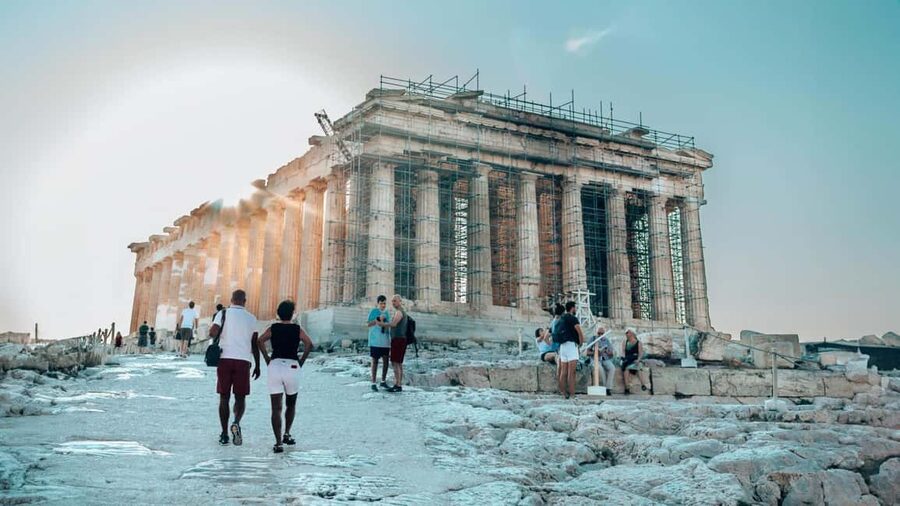
Most of the tour is reserved for the Parthenon, with about 75 minutes of guided time. That is the right priority. The building is the crowning sight of the Acropolis, and a quick photo stop would not do it justice.
Your guide explains the Parthenon as both a religious building and a statement about Athens. It was dedicated to Athena, the city’s patron goddess, but it also expressed the wealth, confidence, and power of Athens in the fifth century BC.
The tour places the building within the development of Athenian democracy and the city’s role as a center of ancient Greek civilization. You learn not only what you are looking at, but why Athens mattered during this period and how the political system that influenced later democracies began to take shape.
The Parthenon’s present condition also requires explanation. You see a monument shaped by construction, rebuilding, damage, and the passage of centuries rather than a perfectly preserved ancient temple. A good guide makes those changes part of the story instead of treating the ruins as a disappointment.
The generous time here allows you to look closely, ask questions, and take in the setting. You may find that your guide spends less time listing measurements and more time connecting the structure to Greek society, mythology, politics, and architecture. That balance has been a major strength of the guiding on this tour.
You also get the famous views across Athens, though the provided details do not promise a specific photo stop or viewpoint. Keep your attention on the guide during the explanations, then use pauses to enjoy the city below. The hill is exposed, so sun protection and water remain important even during an afternoon departure.
What the guides add to the stones
The strongest part of this experience is the human explanation. Christina has been praised for telling just enough history and mythology to carry the group from one site to the next without burying the visit in dates. Another guide, Alex, brought in language, politics, and wider cultural ideas, giving the tour more range than a standard monument talk.
Michael’s practical care with shade is worth noting for summer visitors. Other guides have been described as passionate about Greek mythology and proud of the country’s heritage. That enthusiasm can make a difference at a site where the physical remains are spectacular but not always easy to interpret.
You should still keep your expectations realistic. A two-hour tour cannot cover every period of Athens or every detail of the Acropolis. It is designed to give you a clear framework, memorable stories, and a confident understanding of the main monuments.
This is especially useful if you prefer oral storytelling to reading long information panels. If you are a serious archaeology specialist, you may want more technical detail than the tour can provide. For most people, the blend of explanation and movement should feel well judged.
Is $51 a fair price?
At $51 per person, the tour is not the cheapest way to enter the Acropolis. You still pay the admission fee separately, so calculate the total before booking. The price pays for a certified professional guide, the small group format, and two hours of structured explanation.
I think the value depends on how you like to visit major sites. If you are comfortable researching the Acropolis, following a map, and reading signs, you can save money by going independently. If you want the buildings to make sense as part of Athenian society and mythology, the guide adds something you cannot get from a quick walk past the ruins.
The group limit matters here. A large tour can be cheaper, but it often means standing at the edge of a crowd while the guide speaks to people several rows away. With up to 15 people, you have a better chance of hearing the explanation and asking a question.
The included fun map of ancient Athens is a modest extra, not a reason to book by itself. Its real value is as a quick reminder of how the ancient city related to the Acropolis. The main purchase is the guide’s time and interpretation.
Free cancellation is available up to 24 hours before the activity for a full refund. You can also reserve now and pay later, which helps if your Athens schedule is still changing.
Practical points that can make or break the visit
Do not bring a backpack, large bag, or baby stroller. These items are not allowed at the Acropolis, and leaving them behind is much easier than trying to solve the problem at the entrance.
Wear shoes that can handle stone steps and uneven ground. The tour is only two hours, but much of that time is spent walking or standing on the hill. The route is not suitable for people with mobility impairments, and children under four are not accepted.
Admission is free for European Union citizens under 25 with valid identification. From April 1, 2025, admission is also free for European Union and non-European Union citizens under 18 with valid identification or a passport. If you qualify, bring the required ID.
The tour does not include food or drinks. Bring water before you begin, especially in summer, since the Acropolis offers limited shade. The afternoon helps, but it does not remove the need for sun protection.
Who will enjoy this Acropolis tour?
I would choose this tour if you want the main Acropolis story in a compact format and prefer an afternoon visit. It suits first-time visitors who want help understanding the monuments, couples and friends who value a smaller group, and history fans who enjoy mythology, politics, and storytelling in the same tour.
It also works well if you have limited time in Athens. In two hours, you cover the hill’s essential monuments and return to the original meeting point. You will not see every museum or archaeological site in the city, but you will gain a useful foundation for exploring Athens on your own.
I would think twice if you dislike group tours, need a fully accessible route, or want a long, technical study of ancient architecture. The climb, heat, steps, and extra admission cost are real considerations.
Should you book it?
Book this Acropolis tour if you want a small-group afternoon visit with a guide who can turn the monuments into a connected story. The timing is sensible, the route covers the hill’s essential buildings, and the strongest guiding style combines mythology with the political and social story of Athens.
Skip it if you are happy visiting independently and already know the Acropolis well. For everyone else, $51 plus admission is a reasonable price for two hours of focused explanation, especially when a skilled guide such as Christina, Michael, or Alex makes the climb feel like a story unfolding rather than a march between ruins.
FAQ
How long does the Acropolis tour last?
The tour lasts two hours. Check availability for the specific afternoon starting time.
Where does the tour begin?
The meeting point is under Hadrian’s Arch at Leof. Vasilisis Amalias 50 in Athens.
How will I identify the guide?
Your guide will be waiting with a sign marked ALTERATIVE ATHENS.
Where does the activity end?
The tour ends back at the original meeting point under Hadrian’s Arch.
Is the Acropolis entrance ticket included?
No. Entry fees are not included in the tour price, but your guide can arrange pre-purchased tickets if requested.
What languages are available?
The live tour guide is available in English or French.
How large is the group?
The small group can include up to 15 people.
Are food and drinks included?
No. Food and drinks are not included.
Can I bring a backpack or stroller?
No. Backpacks, large bags, and baby strollers are not allowed at the Acropolis and should not be brought on the tour.
Is the tour suitable for children and people with mobility impairments?
The activity is not suitable for children under four or for people with mobility impairments. The route includes uphill walking, steps, and uneven surfaces.
Recently reviewed around Athens
- Small-Group Women History in Ancient Greece Walking Tour★ 5.0 · 38 reviews
- Ceramic and Pottery Creative Workshop with Two Local Artists★ 4.0 · 57 reviews
- Athens: Greek Wines Tasting with Sommelier and Acropolis Views★ 5.0 · 88 reviews
- Athens: Wine Workshop Create your Own Wine under the Acropolis★ 5.0 · 77 reviews
- Hydra Private Day Trip by Ferry from Athens with Transfers★ 4.0 · 30 reviews
- Small-Group Wine Tour in Athens with Tasting★ 5.0 · 33 reviews
- Wine Trails Private Tour/ Nemea visit 3 wineries from Athens or Nafplion (10 h)★ 5.0 · 44 reviews
- Private Athens Transfer Airport/Port -Greek Tours-Hourly service★ 5.0 · 88 reviews
Acropolis & Acropolis Museum Tours, compared.

Acropolis & up to 5 Archaeological Sites Combo Pass
Read our review →

Acropolis, Parthenon & Acropolis Museum Guided Tour
Read our review →
Acropolis, Parthenon & Acropolis Museum Guided Tour
Read our review →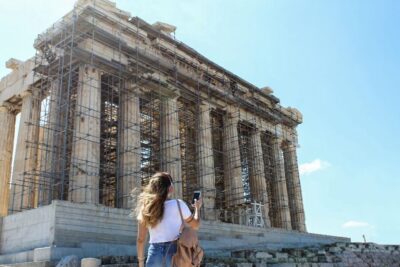


Acropolis monuments & Parthenon Walking Tour with Optional Acropolis Museum
Read our review →Browse the lists this tour appears in