
Reviewed · ACROPOLIS & ACROPOLIS MUSEUM TOURS
Athens: Acropolis FULLY PRIVATE Tour with Licensed Guide
The best thing about this fully private Acropolis tour is the guide’s ability to turn a pile of ancient stones into a connected story. You’ll move from the Theater of Dionysus to the Parthenon, with mythology, architecture, warfare, theater, and daily life tied together as you walk.
I like the state-accredited archaeological guide and the freedom of a private group. Your guide can adjust the pace, explain a point again, help with photographs, and steer you toward quieter viewpoints. I also like the option to add Plaka tastings or another site if your schedule allows.
The main drawback is price. At $163 per person, this costs more than a standard group visit, and admission is not included. You’ll also face steps, uneven ground, and a possible start-time change if tickets are scarce.
In This Review
- Key points at a glance
- Why a private guide changes the Acropolis visit
- Starting at the Theater of Dionysus
- The ancient defensive walls and the climb upward
- Entering through the Propylaea
- The Temple of Athena Nike
- The Parthenon, Athens’ great centerpiece
- The Erechtheion and the contest for Athens
- Looking down at the Odeon of Herodes Atticus
- What the 1.5 to 3 hours really means
- Tickets, timing, and the real cost
- Crowds, photographs, and physical effort
- Who should book this Acropolis tour?
- Should you book it?
- FAQ
- How much does the private Acropolis tour cost?
- Are Acropolis admission tickets included?
- How long does the tour last?
- Is the tour private?
- Which languages are available?
- Where does the tour meet?
- What places are included on the route?
- Can I add another activity?
- Is the tour suitable for wheelchair users?
Key points at a glance
- A true private tour: Your group has its own licensed archaeological guide rather than sharing explanations with a large crowd.
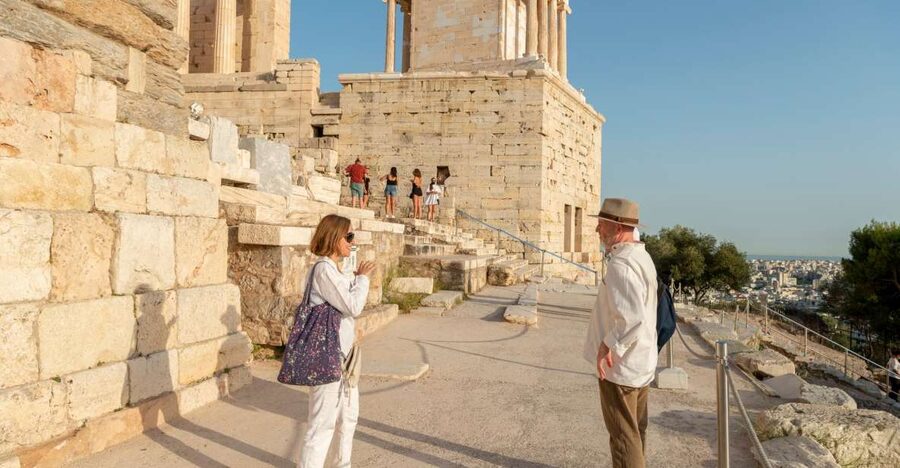
- The full Acropolis story: The route covers the Theater of Dionysus, Propylaea, Temple of Athena Nike, Parthenon, Erechtheion, and Odeon of Herodes Atticus.
- Mythology with a place to stand: Hear how Athena and Poseidon competed for Athens while looking at the Erechtheion.
- Smart ticket planning: Skip-the-line admission can be arranged after booking, but ticket costs are separate.
- Useful local guidance: Guides such as Efie, Betty, Ava, Ria, Vicky, Kelly, and Calliopeia have led bookings for this experience.
- Flexible finish: Stay at the Acropolis for more views, return to the meeting point, or finish in Plaka.
Why a private guide changes the Acropolis visit
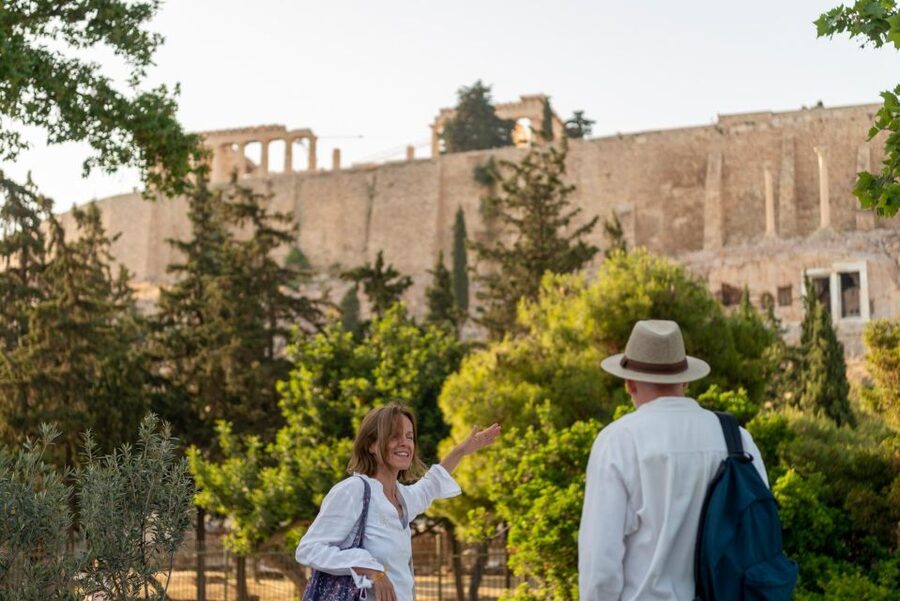
The Acropolis can be visually overwhelming. You see temples, columns, walls, and the whole city below, but without context it is easy to remember only the Parthenon and miss the rest.
A private guide gives you a better chance of making sense of the site. You can ask why a building looks incomplete, how the monuments fit together, or which parts belong to different periods. If you are traveling with children, your guide can focus on myths and dramatic stories. If you already know Greek history, the conversation can move toward architecture, archaeology, and the changing use of the hill.
The guide language choices are English, German, and Italian. The named guides connected with this experience include Efie, Betty, Lisa, Ava, Ria, Vicky, Kelly, and Calliopeia, though the person assigned to your booking can vary.
This is not a bus tour with a fixed script and a distant meeting point. It is a walking visit with a professional who can adjust the explanation to your group. That personal attention is the strongest reason to consider paying the higher price.
More Athens trips worth a second look
- Athens: Acropolis & up to 5 Archaeological Sites Combo Pass
★ 4.4 · 12,619 reviews - Athens: Acropolis Ticket with Optional Audio or Live Guide
★ 4.2 · 11,055 reviews - Athens: Acropolis, Parthenon & Acropolis Museum Guided Tour
★ 4.8 · 9,316 reviews
Starting at the Theater of Dionysus
The route begins with the Acropolis area and includes a guided visit to the Theater of Dionysus. This is one of the most useful opening stops because it shows that the Acropolis was not only a collection of temples.
The theater is linked to the beginnings of Western drama, and your guide explains how famous plays were performed here roughly 3,000 years ago. From the stone seating, you can think about the connection between religion, public festivals, music, and theater in ancient Athens.
The stop is scheduled for about 15 minutes. That is enough for a clear introduction, though not enough for a long discussion of ancient drama. Your guide may also use this point to explain how the Acropolis functioned as a sacred and civic center.
The ancient defensive walls and the climb upward
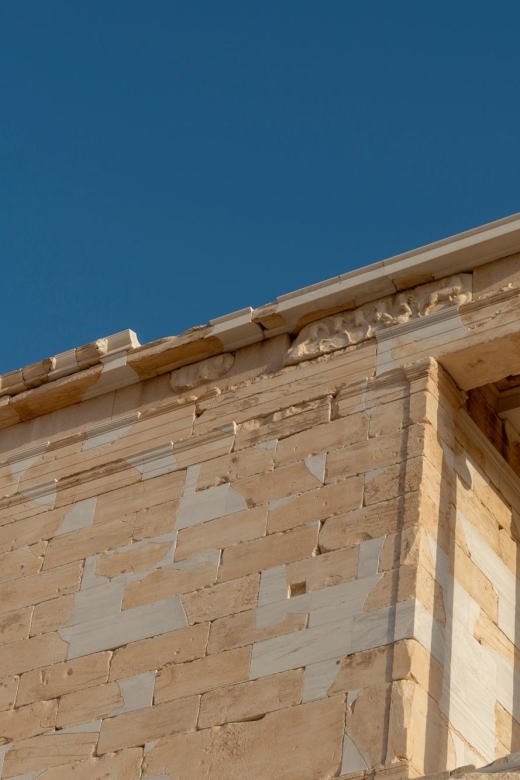
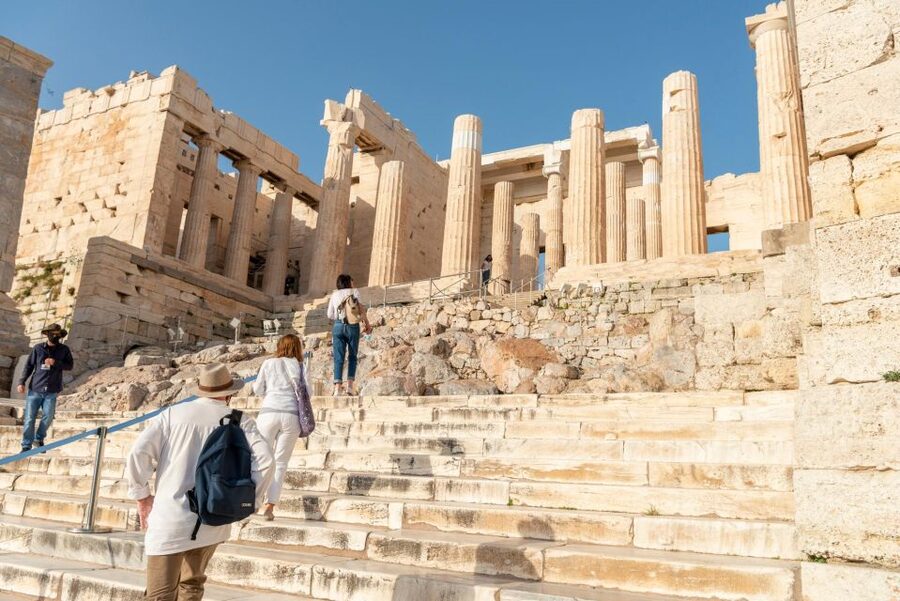
As you move toward the upper Acropolis, the thick defensive walls offer a reminder that the hill’s story began long before the classical age most people associate with Athens.
The walls are about five meters thick and were built by earlier inhabitants, not by the classical Greeks who created the Parthenon. That distinction matters. The Acropolis was not designed from scratch in the fifth century BCE. It was an old fortified and sacred place that later generations reshaped.
The route includes uphill walking and steps. The stones can be uneven, so comfortable shoes are important. This is not suitable for wheelchair users, and anyone with limited mobility should think carefully before booking.
Entering through the Propylaea
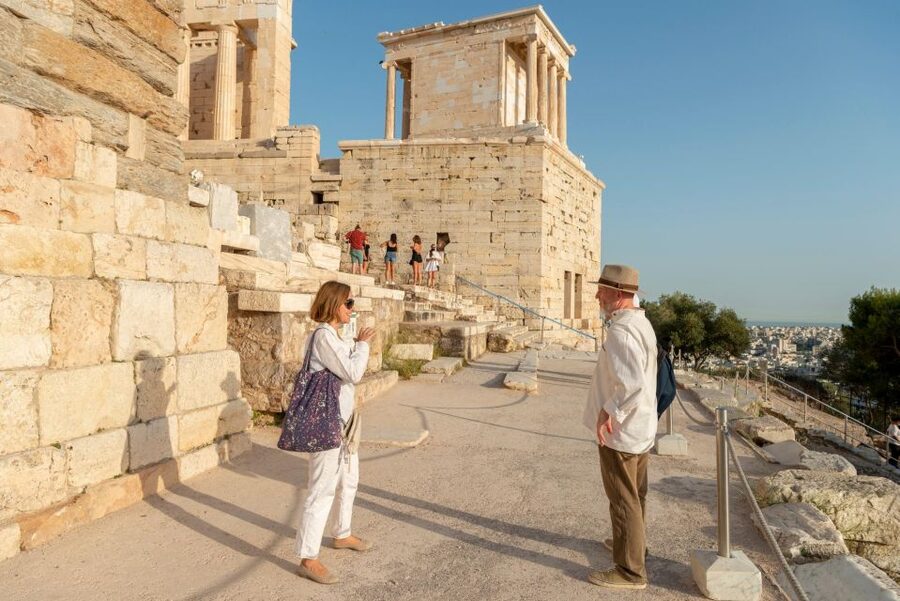
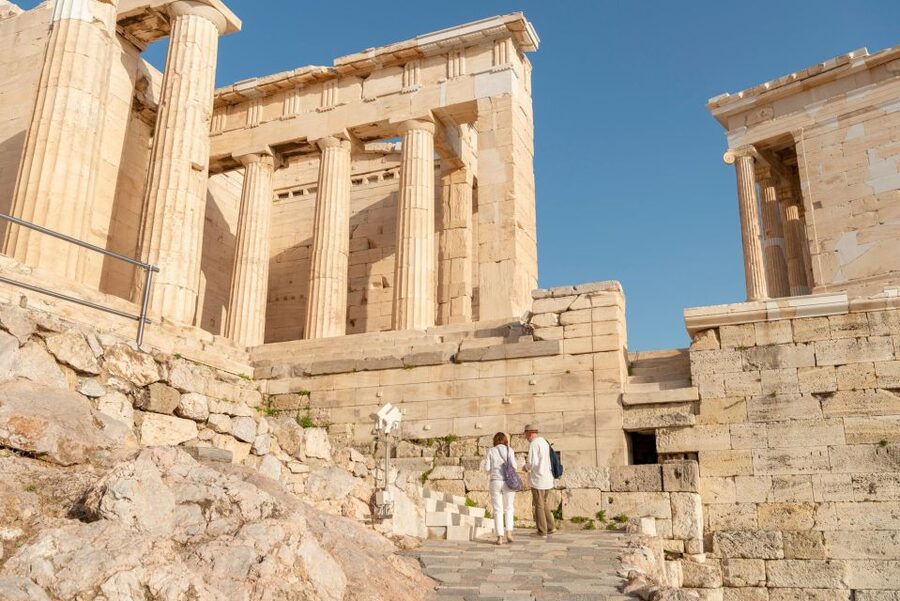
The Propylaea was the monumental entrance to the Acropolis. It is a powerful point in the walk because the approach makes you look upward and pass through an intentionally grand gateway.
Your guide can explain the planning, the scale, and the impression the entrance was meant to create. The ancient approach was designed to make the sacred summit feel separate from ordinary city life.
One memorable detail connected with the site is the huge statue of Athena that once stood nearby. Its bronze spear was said to catch the sun and could be seen from far away, even by sailors near Cape Sounion, about 70 kilometers from Athens. That image helps you picture the Acropolis as a landmark for the wider Attic coast, not just a monument viewed from the modern city.
The Propylaea visit lasts about 15 minutes. Crowds can gather here, so a private guide’s ability to position your group and keep the explanation focused is useful.
A different kind of day out, same corner of Greece:
- Athens: Cape Sounion & Poseidon Temple Sunset Half-Day Trip
★ 4.8 · 8,241 reviews - Athens: Acropolis and Parthenon Guided Walking Tour
★ 4.6 · 5,882 reviews - All Day Cruise -3 Islands to Agistri,Moni, Aegina with lunch and drinks included
★ 5.0 · 4,958 reviews - Athens, Piraeus, and Coastline: Blue Hop-On Hop-Off Bus
★ 3.9 · 4,849 reviews
The Temple of Athena Nike
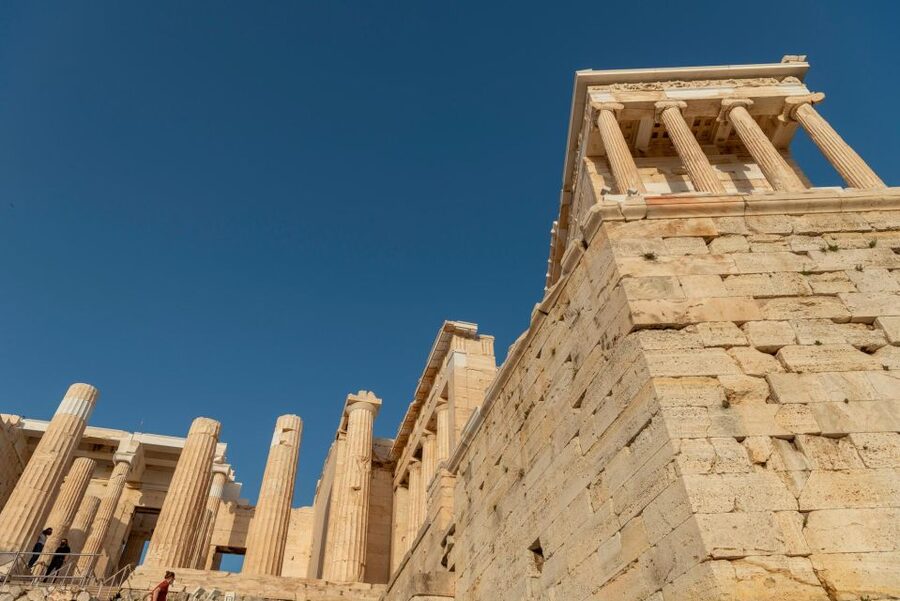
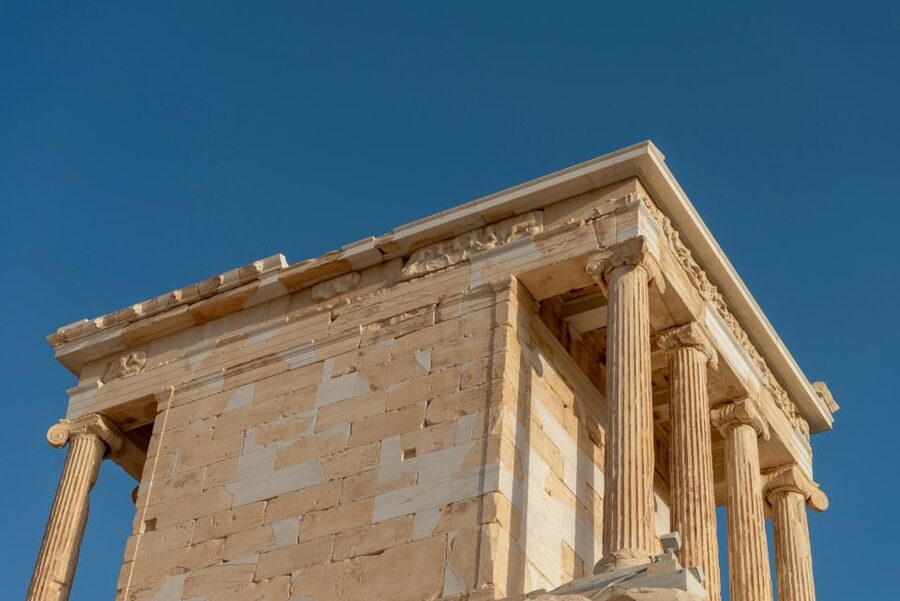
The small Temple of Athena Nike sits beside the entrance. Its size makes it easy to overlook, especially after the scale of the Propylaea, but the building has an important role in the Acropolis story.
Your guide explains the temple’s connection with Athena as a protector and bringer of victory. You’ll also hear how the site’s mythology and political meaning were tied together. Ancient Athenians did not separate religion, military success, and civic identity in the way modern visitors often do.
The stop is listed at about 15 minutes. It works well as a short pause before the Parthenon, since your attention shifts from the entryway and its processional design to the summit’s main monuments.
The Parthenon, Athens’ great centerpiece
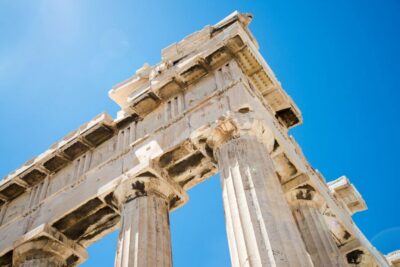
The Parthenon is the main reason many people come to the Acropolis, and it deserves time beyond a quick photograph. This temple is a masterpiece of classical Greek architecture, but your guide can help you see more than its famous columns.
Look at the proportions, the placement on the summit, and the way the building was meant to be approached and seen. The Parthenon has suffered damage and lost much of its original decoration, so an expert explanation helps you imagine the monument as an active religious and civic statement rather than a weathered shell.
The guided time is listed at about 15 minutes, though the broader Acropolis visit lasts around 1.5 hours. That distinction is worth noting. The schedule gives each major point a focused explanation, but this is not a slow architectural seminar at one building.
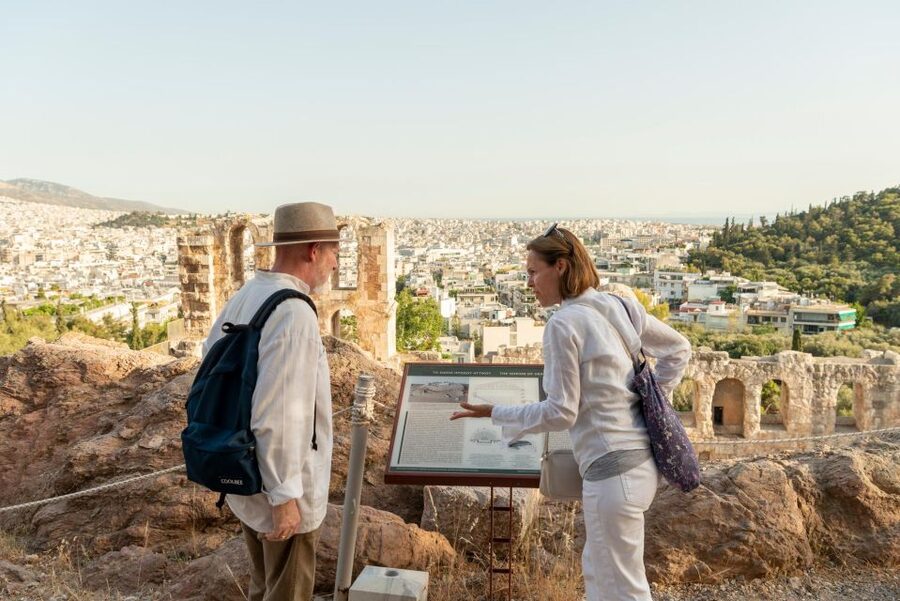
You will also have wide views over Athens from the summit. The city spreads below the ancient hill, giving you a clear sense of why this location mattered. Your guide can connect the physical view with the site’s cultural and political importance.
Past guide assignments have included Kelly, whose background in Greek culture and history was praised for bringing the site to life, as well as Ava, Vicky, Ria, and others described as warm, engaging, and careful with their groups. Those names are useful when reading the booking details, but you should not assume a specific guide unless your confirmation says so.
The Erechtheion and the contest for Athens
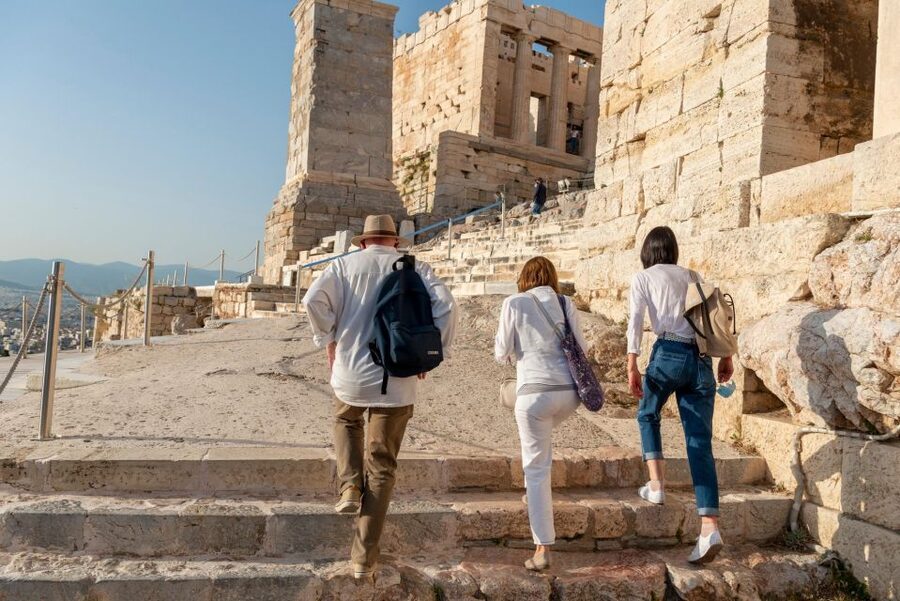
The Erechtheion is one of the most distinctive buildings on the Acropolis. Its unusual shape and famous porch make it different from the more orderly appearance of the Parthenon.
This is where the myth of Athena and Poseidon becomes especially vivid. The two gods competed to become the protector of Athens. Athena offered the olive tree, while Poseidon’s challenge involved water and the force of his trident. Your guide uses the building and its setting to explain why this story mattered to the ancient city.
The Erechtheion is also a good place to ask questions. Its design reflects a complicated sacred setting, and a private guide can spend more time here if your group finds the mythology or architecture especially interesting.
The site is uneven and exposed in places. Bring water, protect yourself from the sun when needed, and expect walking rather than a smooth museum-style visit.
Looking down at the Odeon of Herodes Atticus
The descent brings you toward the Odeon of Herodes Atticus, a large ancient theater still used for performances during the summer.
This is a satisfying final stop because it links ancient Athens with the living city. The building is not simply an archaeological object behind a barrier. It remains part of Athens’ cultural life, even though modern performances take place under very different conditions.
The guided explanation here lasts about 15 minutes. Depending on crowd conditions, you may get a clear view from outside rather than enter the theater itself. The important point is the connection: the Acropolis area still serves as a setting for music and theater after centuries of change.
At the end, you can stay and enjoy the views, return with your guide to the meeting point, or receive directions for continuing on your own.
What the 1.5 to 3 hours really means
The core guided Acropolis visit is about 1.5 hours. The wider booking options can extend the experience to as much as three hours.
That extra time may be used for another archaeological site or for a walk through Plaka. The Plaka option includes stops connected with Greek coffee or mountain tea, souvlaki, traditional savory pies, and sweet treats. These additions turn the visit from a focused monument tour into a broader introduction to Athens, but they also require more time and energy after the uphill Acropolis walk.
If you want only the major ancient monuments, the shorter option may be enough. If this is your main Athens outing and you want help understanding local food and streets afterward, the longer option has more appeal.
The itinerary lists several meeting and finish points around Makrigianni, including Makrigianni 7 and Makrigianni 11, with Plaka available as one drop-off choice. Check the exact option you book because the meeting point can vary.
Tickets, timing, and the real cost
The listed price is $163 per person. That is a serious expense, especially for a couple or family, because admission fees are not included.
The price makes more sense for a small private group that values expert explanation and schedule control. You are paying for a licensed guide dedicated to your party, not just for entry to the Acropolis. If you are already comfortable reading archaeological sites on your own, the extra cost may feel harder to justify.
Skip-the-line tickets can be purchased on request after booking. This is important: the admission fee remains separate, and you need to make sure tickets are arranged before the tour. If you buy them yourself, have them ready for the start of the visit.
The booking terms allow free cancellation up to 24 hours before the tour, and you can reserve now and pay later. The starting time may change if availability becomes limited, so keep a little flexibility in your Athens schedule.
Crowds, photographs, and physical effort
A private guide cannot remove the crowds from the Acropolis, but a skilled guide can help you avoid the worst congestion and find better places for photographs. One guide, Vicki, was especially praised for knowing where to take pictures and how to walk the route in a way that reduced the hills.
That kind of practical help matters. The Acropolis is not difficult only because of its history. Heat, stone surfaces, stairs, and crowded gateways can wear you down. A guide who sets a sensible pace can make the visit more enjoyable.
Golden hour can be especially attractive for photographs, as one October booking showed. Still, the best start time depends on availability, weather, and the rest of your day. Ask about timing if light and views are important to you.
Pets are not allowed. The experience is not suitable for wheelchair users, and the uneven surfaces should be taken seriously by anyone with knee, balance, or walking concerns.
Who should book this Acropolis tour?
I would choose this tour if you want the site explained by a trained archaeologist rather than explored with an audio guide. It is also a strong fit for families, since the guide can adjust the level from simple myths for children to more detailed architecture for adults.
Couples and small groups may find the private format worth the cost if the Acropolis is a major reason for visiting Athens. The ability to ask questions and avoid being rushed is valuable at a site with this much to see.
I would think twice if you are watching every euro, have only a short time at the Acropolis, or prefer to explore independently. In that case, buying admission and visiting on your own may leave more money for another Athens experience.
The tour is available in English, German, and Italian. Make sure the language you need is available for your selected time.
Should you book it?
Book this tour if you want a personal, story-led visit and can accept the added cost of separate admission. The strongest features are the licensed archaeological guide, the private pace, and the full route from the Theater of Dionysus to the Parthenon and Odeon of Herodes Atticus.
Before paying, confirm the meeting point, the admission arrangement, and the language of your guide. If you do that and prepare for stairs and uneven ground, this is a well-focused way to understand the Acropolis rather than simply photograph it.
FAQ
How much does the private Acropolis tour cost?
The listed price is $163 per person. Ticket costs and admission fees are not included.
Are Acropolis admission tickets included?
No. You must have admission tickets with you, or ask the provider to purchase skip-the-line tickets after booking.
How long does the tour last?
The activity lasts between 1.5 and 3 hours, depending on the option selected. The guided Acropolis visit is listed at about 1.5 hours.
Is the tour private?
Yes. The tour is exclusive to your group and includes a licensed expert archaeological guide.
Which languages are available?
Live guiding is available in English, German, and Italian.
Where does the tour meet?
Meeting points can vary by option. Listed starting points include Makrigianni 7 and Makrigianni 11.
What places are included on the route?
The route includes the Acropolis, Theater of Dionysus, Propylaea, Temple of Athena Nike, Parthenon, Erechtheion, and Odeon of Herodes Atticus.
Can I add another activity?
Yes. Flexible options allow you to add another site for private guiding or choose a Plaka visit with Greek coffee or mountain tea, souvlaki, savory pies, and sweets.
Is the tour suitable for wheelchair users?
No. The Acropolis has steps and uneven surfaces, and the experience is not suitable for wheelchair users.
Recently reviewed around Athens
- Small-Group Women History in Ancient Greece Walking Tour★ 5.0 · 38 reviews
- Ceramic and Pottery Creative Workshop with Two Local Artists★ 4.0 · 57 reviews
- Athens: Wine Workshop Create your Own Wine under the Acropolis★ 5.0 · 77 reviews
- Athens: Greek Wines Tasting with Sommelier and Acropolis Views★ 5.0 · 88 reviews
- Hydra Private Day Trip by Ferry from Athens with Transfers★ 4.0 · 30 reviews
- Small-Group Wine Tour in Athens with Tasting★ 5.0 · 33 reviews
- Wine Trails Private Tour/ Nemea visit 3 wineries from Athens or Nafplion (10 h)★ 5.0 · 44 reviews
- Private Athens Transfer Airport/Port -Greek Tours-Hourly service★ 5.0 · 88 reviews
Acropolis & Acropolis Museum Tours, compared.
Acropolis & up to 5 Archaeological Sites Combo Pass
Read our review →
Acropolis, Parthenon & Acropolis Museum Guided Tour
Read our review →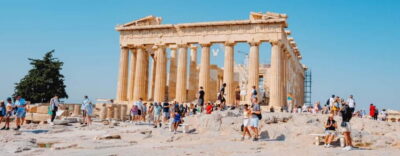
Acropolis, Parthenon & Acropolis Museum Guided Tour
Read our review →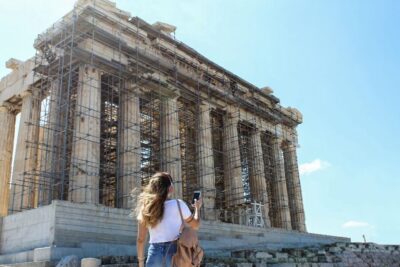


Acropolis monuments & Parthenon Walking Tour with Optional Acropolis Museum
Read our review →Browse the lists this tour appears in