
Reviewed · ACROPOLIS & ACROPOLIS MUSEUM TOURS
Athens & Acropolis Highlights: Greek Mythology Small-Group Tour
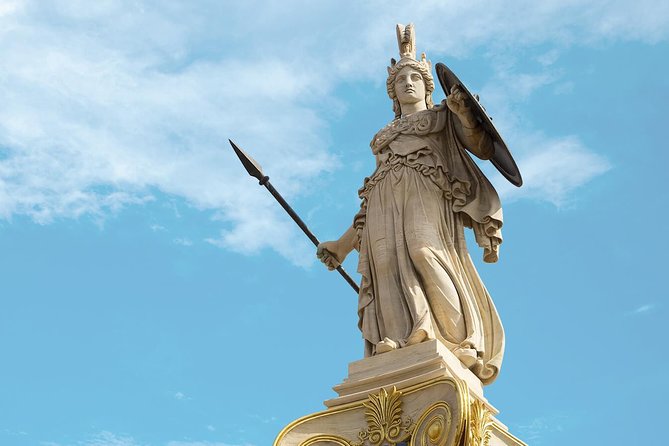
The most memorable part of this Athens tour is the way Greek mythology gives meaning to the ruins. You do not simply look at broken columns. You hear why Athena mattered, how Dionysus shaped theater, and why Hephaestus was honored by the craftsmen of ancient Athens.
I like the small-group format, capped at 15 people, and I like the way the tour connects the Acropolis with the Ancient Agora instead of treating them as separate photo stops. The main caution is the walking: expect steep sections, stairs, uneven stone, heat, and a long four-hour outing. Entrance tickets also cost extra.
In This Review
- Key points to know before booking
- Why the mythology makes the ruins easier to understand
- Starting near Hadrian’s Arch and the Temple of Olympian Zeus
- Climbing the Acropolis and seeing the Theater of Dionysus
- Athena Nike, the Erechtheion, and the Parthenon
- The Ancient Agora and the Temple of Hephaestus
- What the $54.42 price really includes
- Group size, pace, and guide quality
- Timing, weather, and physical effort
- Who should book this Athens tour?
- Should you book it?
- FAQ
- How long does the Athens mythology tour last?
- What language is the tour offered in?
- Where does the tour begin?
- Where does the tour end?
- Are Acropolis tickets included?
- Is Ancient Agora admission included?
- Can the company pre-purchase entry tickets?
- How large is the group?
- Can I bring a stroller or large backpack?
- What happens if I need to cancel?
Key points to know before booking
- Mythology is the main thread: Stories about Athena, Zeus, Dionysus, Nike, and Hephaestus make the monuments easier to remember.
- The route covers Athens’ major ancient sights: You see the Acropolis, Parthenon, Theater of Dionysus, Ancient Agora, and Temple of Hephaestus.
- Groups are limited to 15 people: That is small enough for questions, though one account describes a group of 18 and difficulty staying together.
- Tickets are not included: Budget $30 for the Acropolis and $20 for the Ancient Agora on the four-hour option, in addition to the $54.42 tour price.
- Morning departures can help: One guide-led visit left the Acropolis before crowds grew much larger later in the day.
- Good shoes matter: The route includes hills, stairs, and rough surfaces. Bring water, a hat, and no large backpack or stroller.
Why the mythology makes the ruins easier to understand
Athens can be a blur of famous names: Parthenon, Acropolis, Agora, Athena, Zeus. A good guide gives those names a human shape. This tour uses mythology as the organizing idea, then adds architecture, civic life, religion, and modern context.
That approach works especially well if you know only the basics. Guides such as Irene, Michael, Dani, Maria, Christina, and Chrysanthi are praised for telling stories in a clear, lively way. Several guides used printed photos or visual aids to show how buildings may once have looked, which helps when you are facing columns, foundations, and scattered stones.
I also like the question-and-answer style described by several people on the tour. Dani, for example, reportedly asked the group about the gods and then added details beyond the familiar schoolbook myths. That can turn a passive walk into a more alert experience. You are not just hearing a speech. You are being asked to connect the story with the place.
The tour is offered in English and uses a certified guide. The individual guide matters a great deal here. Strong guides have been praised for combining mythology with architecture, early Greek life, and modern Athens. One guide was an archaeologist, while others were described as especially warm, patient, and attentive to rest breaks.
More Athens trips worth a second look
- Athens: Acropolis & up to 5 Archaeological Sites Combo Pass
★ 4.4 · 12,619 reviews - Athens: Acropolis Ticket with Optional Audio or Live Guide
★ 4.2 · 11,055 reviews - Athens: Acropolis, Parthenon & Acropolis Museum Guided Tour
★ 4.8 · 9,316 reviews
Starting near Hadrian’s Arch and the Temple of Olympian Zeus
The meeting point is the Arch of Hadrian on Leoforos Vasilisis Amalias, near the Temple of Olympian Zeus. The route begins by discussing the temple from outside, so you should not expect an interior visit at this first stop.
The Olympeion was planned as a colossal sanctuary to Zeus, and its surviving columns give you an immediate sense of scale. The site sits between the Acropolis and the Ilissos River, making it a useful place to begin thinking about how ancient Athens spread across the area.
You spend about 15 minutes here. That is enough for an introduction, not a full archaeological visit. If you want to explore the Temple of Olympian Zeus itself, this tour does not include that admission.
From the start, the guide sets up the rivalry, family drama, and religious ideas that shaped Greek myths. The stories are entertaining, but the real value is that they help you understand why temples were built and what people expected from their gods.
Climbing the Acropolis and seeing the Theater of Dionysus
The Acropolis receives about an hour and a half, making it the center of the experience. You approach the great hill and its monuments, including the Propylaea, the Parthenon, the Temple of Athena Nike, and the Erechtheion.
The climb is not extreme for most people who can manage stairs and uneven ground, but it is not a flat city walk. On hot days, the slope and exposed stone can feel demanding. Marika and Chrysanthi are praised for stopping in shaded areas, allowing water breaks, and checking that everyone could keep going. Michael reportedly broke the climb into shorter sections, using each pause to explain another feature.
That pacing matters. A guide who races uphill may cover more ground but leave you too tired to absorb anything. Here, the pauses can turn the climb into a sequence of manageable sections. Still, you should wear sturdy walking shoes and carry water. Strollers, large bags, and backpacks are not permitted at the Acropolis and should not be brought along.
The route includes the Theater of Dionysus, usually given about 15 minutes. This is one of the most important stops for understanding the connection between mythology and everyday culture. Dionysus was linked with wine and the grape harvest, but his sanctuary also became the birthplace of major Greek drama.
The works of Aeschylus, Sophocles, Euripides, and Aristophanes were first performed here. Sitting or looking across the theater, you can connect the god of wine with performance, public gathering, comedy, tragedy, and civic life. It is a useful reminder that ancient Athens was not only about temples and military power.
Athena Nike, the Erechtheion, and the Parthenon
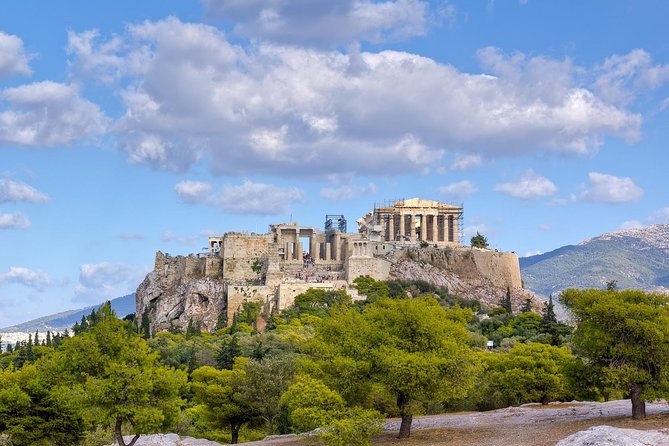
The small Temple of Athena Nike receives about 10 minutes. Nike means victory, and this shrine honored Athena in her victorious form. The guide may explain the famous idea that the cult statue had no wings so victory would not fly away from Athens.
This is a short stop, but it gives the Acropolis a political edge. The monuments were religious buildings, yet they also expressed the city’s power and confidence. You begin to see the Acropolis not as a collection of pretty ruins but as a carefully planned statement about Athens.
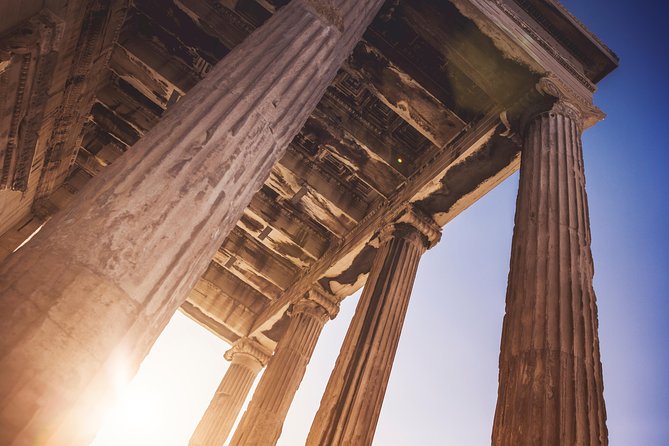
The Erechtheion receives another 10 minutes. It was built to house the ancient wooden cult image of Athena and to honor the city at the height of its influence. Its unusual design makes it different from the more regular Parthenon, and the guide can explain why this building is so important to Athenian identity.
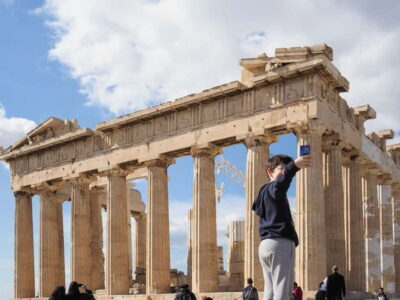
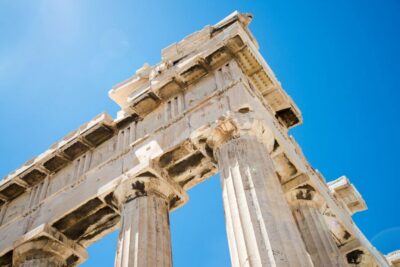
Then comes the Parthenon, with about 20 minutes allotted. Built in the mid-fifth century BCE and dedicated to Athena Parthenos, it is the best-known building on the hill. The tour places it within the Doric architectural tradition, whose forms are simpler and heavier than the other classical orders.
Twenty minutes is enough for orientation and explanation, but not for every architectural detail. You will have time to admire the proportions, location, and surviving structure, then hear how the temple’s design influenced art and architecture for centuries. If you want a slow, highly technical study of every column and sculptural fragment, you may want additional Acropolis time outside this tour.
The Acropolis admission fee is not part of the $54.42 tour price. The stated fee for the four-hour option is $30 per person. The company can pre-purchase tickets if you ask, which may make the process easier, but you should confirm exactly what is being purchased before the tour.
A different kind of day out, same corner of Greece:
- Athens: Cape Sounion & Poseidon Temple Sunset Half-Day Trip
★ 4.8 · 8,241 reviews - Athens: Acropolis and Parthenon Guided Walking Tour
★ 4.6 · 5,882 reviews - All Day Cruise -3 Islands to Agistri,Moni, Aegina with lunch and drinks included
★ 5.0 · 4,958 reviews - Athens, Piraeus, and Coastline: Blue Hop-On Hop-Off Bus
★ 3.9 · 4,849 reviews
The Ancient Agora and the Temple of Hephaestus
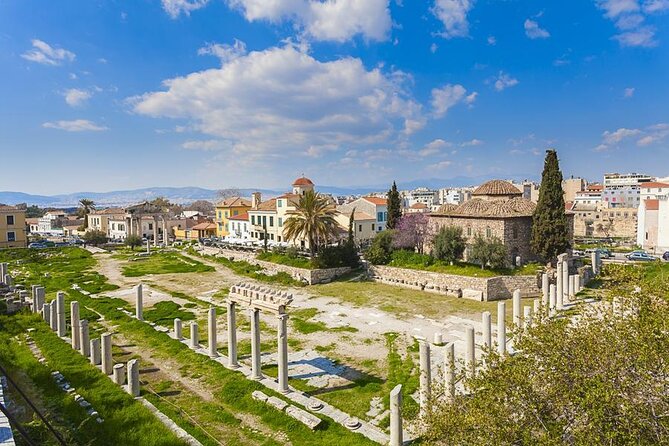
After the Acropolis, the group continues to the Ancient Agora for about an hour. This was ancient Athens’ political, commercial, administrative, religious, cultural, and legal center. It is where the city functioned, not just where it worshipped.
I find the Agora valuable because it adds ordinary civic life to the grand monuments above. The Acropolis shows the city’s religious and symbolic power. The Agora helps you picture debate, trade, public decisions, justice, and social contact.
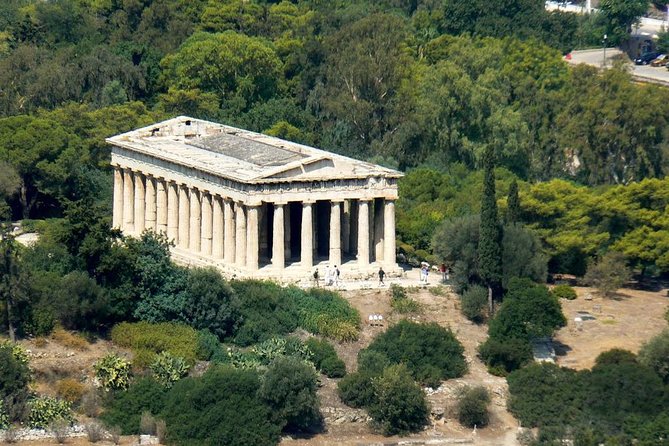
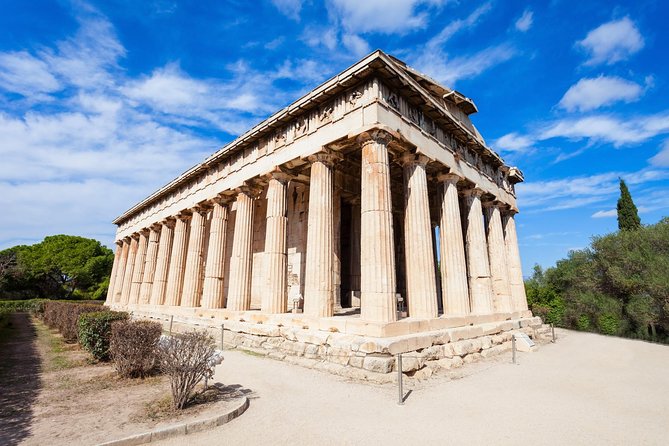
The final major stop is the Temple of Hephaestus, with about 20 minutes for explanation and viewing. The itinerary calls this the Temple of Aries in one place, but the description clearly identifies the monument as the Temple of Hephaestus. It is one of the best-preserved ancient temples in the world.
Hephaestus was honored by metalworkers, while Athena Ergani protected potters and other small industries. That pairing makes perfect sense in the Agora, where merchants and craftsmen worked and traded. The temple is not just a beautiful survivor. It also tells you which gods mattered to the people whose work supported the city.
The tour ends at the Ancient Agora of Athens. There is no transfer back to your hotel or to the starting point, so plan your afternoon from the Agora area. Its central location makes it practical for continuing on foot or using nearby public transportation, though no private transfer is provided.
What the $54.42 price really includes
At $54.42 per person, the tour is reasonably priced for four hours with a certified guide and a maximum group size of 15. The price pays for interpretation, route planning, and the chance to ask questions at sites that can otherwise feel confusing.
The real cost is higher once admissions are added. The Acropolis fee is listed as $30 per person, and the Ancient Agora fee for the four-hour option is listed as $20. That brings the stated total to about $104.42 per person before food or drinks.
That is not a cheap sightseeing walk, but it can be good value if mythology and context are important to you. A self-guided visit costs less in guiding fees, yet you would need to organize the route and supply your own explanation. This tour is strongest for a first visit, a short stay, or anyone who wants the major ancient sights tied together in one morning.
People under 25 should carry an ID card or passport in case a discount is available. Entry fees are non-refundable and non-exchangeable, so check your plans carefully before allowing the company to pre-purchase tickets.
Group size, pace, and guide quality
The advertised maximum is 15 people. That is a useful limit at crowded archaeological sites, where a large group can easily scatter or block other visitors. Smaller groups also make it easier to hear, ask questions, and pause for photographs.
The guide is the biggest variable. Irene is praised for breaking difficult ideas into simple terms and asking questions that help the information stick. Michael is described as patient and strong at connecting mythology with early Greek life. Maria is praised for bringing the myths to life, while Christina is noted for making the mythical figures feel more real.
There is one important caution. One account describes a group of 18 and says the guide did not keep everyone together, creating a stressful ten-minute separation. That seems out of step with the advertised group limit, but it is worth taking seriously. In crowded areas, stay alert, keep the guide in sight, and ask where the group will regroup if you need to pause.
Another practical point is sound. One person found it hard to hear because the guide did not use a microphone. If the group is spread out or the Acropolis is crowded, stay near the guide rather than at the back.
Timing, weather, and physical effort
The tour lasts about four hours, and the route is best treated as active sightseeing. You will walk uphill, climb stairs, and cross uneven surfaces. Most people can participate, but the experience is not suited to someone looking for a slow, level stroll.
Morning timing can be a smart choice. One account describes leaving the Acropolis as crowds had begun to double or triple. Exact crowd levels vary, but an earlier start generally gives you a better chance of hearing the guide and seeing the monuments with fewer interruptions.
Athens can be hot, and shade is limited on parts of the Acropolis. Wear a hat, bring water, and use the rest stops. Guides have been praised for finding shade and pointing out places to refill water bottles or sit.
The activity requires good weather. If poor weather cancels it, you are offered another date or a full refund. You can cancel for a full refund up to 24 hours before the start time. Changes or cancellations inside 24 hours are not accepted for a refund, and the same 24-hour rule applies to the cut-off time.
Who should book this Athens tour?
I would choose this tour if you want the Acropolis and Agora explained by a person who can connect architecture, gods, theater, politics, and daily life. It is especially helpful if Greek mythology is new to you, or if you remember the names but not the stories.
Families and older visitors may appreciate the frequent pauses, though the hills and stairs still require reasonable mobility. The tour can also suit repeat visitors who saw the Acropolis before but missed the mythological links. One person even found it more informative than a previous Acropolis visit that included the museum, while still considering the museum worthwhile on its own.
I would be more cautious if you dislike group touring, want long periods alone at each monument, or have difficulty with heat and uneven ground. You also need to accept the extra admission cost and the possibility that hearing the guide may be harder in a crowded group.
Should you book it?
Book it if you want a story-led introduction to ancient Athens, not just a quick checklist of monuments. The strongest parts are the mythology, the broad route, the generally praised guides, and the small-group limit.
Before paying, add the $50 in stated site admissions to the tour price, confirm whether tickets will be pre-purchased, and plan for four hours of walking. Bring water, wear good shoes, leave large bags behind, and stay close to the guide.
For a first visit to Athens, this is a sensible way to connect the Acropolis with the Agora. For an independent history expert, it may feel too paced and general. For most visitors who want the famous ruins to make sense, it offers a useful mix of stories, monuments, and practical guidance.
FAQ
How long does the Athens mythology tour last?
The tour lasts approximately four hours.
What language is the tour offered in?
The tour is offered in English.
Where does the tour begin?
The stated meeting point is the Arch of Hadrian, at Leoforos Vasilisis Amalias 50 in Athens.
Where does the tour end?
The tour ends at the Ancient Agora of Athens.
Are Acropolis tickets included?
No. Acropolis admission is not included. The stated fee for the two-hour and four-hour options is €30 per person.
Is Ancient Agora admission included?
No. For the four-hour option, the stated Ancient Agora admission fee is €20 per person.
Can the company pre-purchase entry tickets?
Yes. The company can pre-purchase entry tickets if you request this.
How large is the group?
The tour has a stated maximum of 15 travelers.
Can I bring a stroller or large backpack?
No. Strollers, backpacks, and big bags are not allowed at the Acropolis and should not be taken on the tour.
What happens if I need to cancel?
You can cancel at least 24 hours before the start time for a full refund. Cancellations or changes made less than 24 hours before the experience are not refunded or accepted.
Recently reviewed around Athens
- Small-Group Women History in Ancient Greece Walking Tour★ 5.0 · 38 reviews
- Ceramic and Pottery Creative Workshop with Two Local Artists★ 4.0 · 57 reviews
- Athens: Wine Workshop Create your Own Wine under the Acropolis★ 5.0 · 77 reviews
- Athens: Greek Wines Tasting with Sommelier and Acropolis Views★ 5.0 · 88 reviews
- Wine Trails Private Tour/ Nemea visit 3 wineries from Athens or Nafplion (10 h)★ 5.0 · 44 reviews
- Hydra Private Day Trip by Ferry from Athens with Transfers★ 4.0 · 30 reviews
- Small-Group Wine Tour in Athens with Tasting★ 5.0 · 33 reviews
- Private Athens Transfer Airport/Port -Greek Tours-Hourly service★ 5.0 · 88 reviews
Acropolis & Acropolis Museum Tours, compared.
Acropolis & up to 5 Archaeological Sites Combo Pass
Read our review →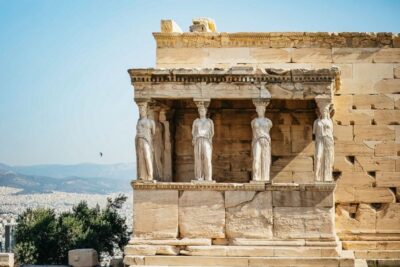
Acropolis, Parthenon & Acropolis Museum Guided Tour
Read our review →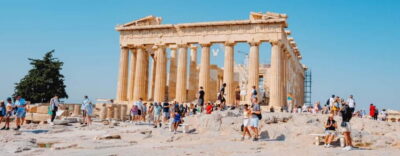
Acropolis, Parthenon & Acropolis Museum Guided Tour
Read our review →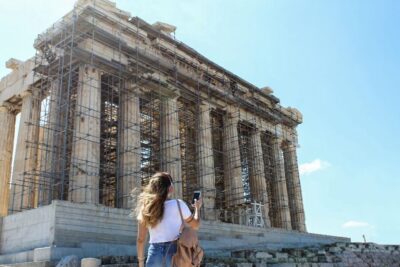


Acropolis monuments & Parthenon Walking Tour with Optional Acropolis Museum
Read our review →Browse the lists this tour appears in