

Reviewed · ACROPOLIS & ACROPOLIS MUSEUM TOURS
Athens: Acropolis Museum and Acropolis Tour in the Afternoon
The smartest feature of this four-hour Athens tour is its order: you see the Acropolis Museum first, then climb to the monuments it explains. By the time you reach the Parthenon, the statues, marble fragments, myths, and vanished buildings have already given you a useful set of clues.
I like the later start, which helps you avoid the harshest morning rush and some of the day’s heat. I also like the practical rhythm, with a short café break between the museum and the hill. The main catch is ticket handling: if you choose the option without pre-booked admission, you must buy both tickets correctly and arrive on time for the fixed Acropolis entry slot.
In This Review
- Key points to know before booking
- Why the museum-first plan works so well
- Inside the Acropolis Museum for 75 minutes
- The café pause before the climb
- Entering from the south slope
- Theater of Dionysus and the Odeon of Herodes Atticus
- Propylaea, Erechtheion, and the Parthenon
- Timing, heat, and crowd control
- The ticket choice can change the value
- Meeting point and physical demands
- Who will get the most from this tour
- Should you book the Acropolis afternoon tour?
- FAQ
- How long does the tour last?
- What language is the tour conducted in?
- Are admission tickets included?
- When do you enter the Acropolis?
- Where does the tour start?
- What should I bring?
- Are food, drinks, backpacks, or strollers allowed?
- Is the tour suitable for wheelchair users or people with mobility impairments?
Key points to know before booking

- Museum before monument: The 75-minute museum visit gives meaning to what you see above.
- Afternoon timing: A later start can mean cooler conditions and fewer early crowds, though the Acropolis may still be busy.
- Parthenon finale: The route ends with the Acropolis hill’s grandest view and most famous building.
- Tickets need care: The museum and Acropolis use separate official ticket systems if admission is not included.
- Guides add the stories: Apollo, Ellenica, Jordan, Margarita, and Jim are among the guides named for past departures.
- Expect a physical walk: Comfortable shoes, water, sunscreen, and a hat are essential, and the tour is not suitable for wheelchair users or people with mobility impairments.
Why the museum-first plan works so well
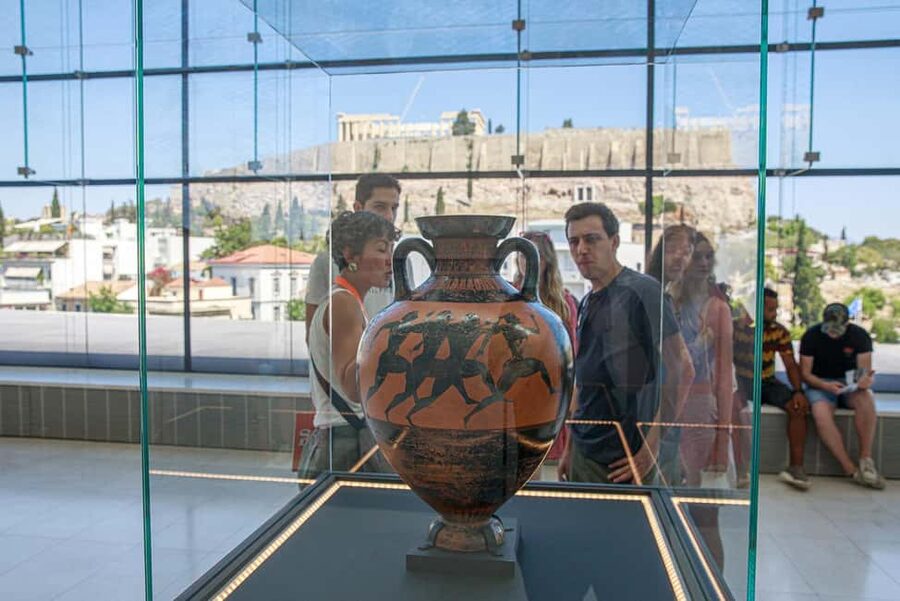
Many people visit the Acropolis, take in the Parthenon, and leave with a few impressive photographs but little sense of what they are seeing. This tour reverses that habit. Inside the Acropolis Museum, you first meet the sculptures, architectural pieces, and religious stories connected with the hill.
That sequence matters. When your guide later points out a temple or explains a damaged statue, you have already seen related objects at close range. The experience becomes less about checking off famous names and more about connecting the museum’s carefully displayed pieces with the ancient site outside.
The museum covers the Archaic, Classical, Hellenistic, and Roman periods. Greek mythology also gets room in the storytelling, including the contest between Athena and Poseidon over the protection of Athens. That is the sort of background that helps you understand why the Acropolis was not simply a high point with buildings on it, but a sacred center tied to the city’s identity.
The museum’s modern design also gives you a direct view toward the Acropolis. That visual link is useful before the climb. You can look out at the hill while standing among objects taken from it, then walk up later and see the setting for yourself.
More Museum Tours in Athens
- Athens: Acropolis, Parthenon & Acropolis Museum Guided Tour
★ 4.8 · 9,316 reviews - Athens: Mythology of Delphi, Museum and Arachova Guided Tour
★ 4.6 · 4,008 reviews - Athens: Acropolis, Parthenon & Acropolis Museum Guided Tour
★ 4.8 · 3,579 reviews
Inside the Acropolis Museum for 75 minutes
The guided museum portion lasts about 75 minutes. That is enough time for a focused introduction, but not enough for every gallery or every label. I consider that a fair trade for combining the museum with the hill in one afternoon.
Expect to see Parthenon Marbles, statues, pottery, architectural remains, and other archaeological finds. Your guide provides the thread through these objects rather than leaving you to sort out dates and names on your own. Guides such as Apollo, Ellenica, Jordan, and Margarita have been singled out for clear explanations, good English, and an easy way of handling questions. Your assigned guide may be different, but the tour is conducted in English.
The museum is also the cooler part of the visit. In a hot Athens afternoon, that first indoor stretch lets you use your energy wisely. You will still walk later, but you will not begin the Acropolis climb already worn down by the sun.
Headsets are included, which is especially useful in galleries where other groups may be nearby. They let you keep moving without crowding around the guide. The group does not need to stop every few steps just so the person at the back can hear.
One limitation is pace. If you are an archaeology enthusiast who wants to read every panel, this guided visit may feel brisk. You can return to the museum later on your own if you want a slower look, but the four-hour schedule is built around seeing both major sites.
The café pause before the climb
After the museum, the plan allows about 10 minutes at a local café. Treat this as a quick reset, not a full meal. Food and drink are not included, and the information for the tour says food and drinks are not allowed during the visit itself.
Use these minutes for water, a quick restroom stop if available, and a breath before the outdoor portion. The Acropolis is not difficult because of distance alone. Uneven surfaces, exposed sun, crowds, and the need to keep to a timed entry can make the climb more tiring than expected.
The tour provides a map and an Athens guidebook with recommendations. Those are handy after the guided portion, especially if you want to plan another museum, neighborhood walk, or meal.
Entering from the south slope
The group enters the Acropolis area by the south slope. This approach brings several important sites into view before the Parthenon, so the walk feels like a gradual unfolding of the hill rather than a quick dash to the top.
Your guide first introduces the Acropolis itself and the sacred buildings connected with it. This is where the stories become especially useful. You may hear about the beginnings of theater, the role of ancient healing centers, and the unusual remedies associated with the Sanctuary of Asclepius.
The route also puts Athens’ public life beside its religious life. The Theater of Dionysus helps explain how drama developed in a place that could hold large audiences. The Sanctuary of Asclepius points to ancient approaches to illness and recovery. These stops give the hill more variety than a simple march from gate to temple.
The walking sections are short on the schedule, but do not mistake that for an easy indoor stroll. The ground can be uneven, and the upper site is exposed. Wear shoes with a firm sole. Bring water, sunscreen, and a hat, even for an afternoon departure.
More Athens museums and collections:
- Acropolis monuments & Parthenon Walking Tour with Optional Acropolis Museum
★ 5.0 · 2,678 reviews - Athens All Included: Acropolis and Museum Guided Tour with Ticket
★ 4.5 · 2,673 reviews - Athens: Acropolis Museum Ticket with optional Audio Guide
★ 4.4 · 2,652 reviews - From Athens: Small-Group Delphi, Museum & Arachova Day Trip
★ 4.8 · 2,476 reviews
Theater of Dionysus and the Odeon of Herodes Atticus
The Theater of Dionysus receives about 15 minutes of guided attention. It is an important stop because it connects the Acropolis with the origins of theater. Rather than treating ancient Greek drama as an abstract school subject, you can stand in the setting where public performance became part of civic life.
The Odeon of Herodes Atticus follows, with about five minutes of explanation. Its dramatic stone structure remains one of the most memorable sights on the lower approach. The short stop is enough for an orientation and photographs, but not a long lecture.
Crowds can bunch up along this route. One person specifically found it hard to keep up with the guide in the Acropolis crowds. Stay close, use the headset, and pay attention when the group moves. If you prefer to wander freely and stop whenever a view catches your eye, a private guide or self-guided visit may suit you better.
Propylaea, Erechtheion, and the Parthenon
The Propylaea marks the grand entrance to the upper Acropolis. Your guide explains its role before leading you farther into the site. The scheduled stop is brief, so expect a concise account rather than a detailed study of every architectural feature.
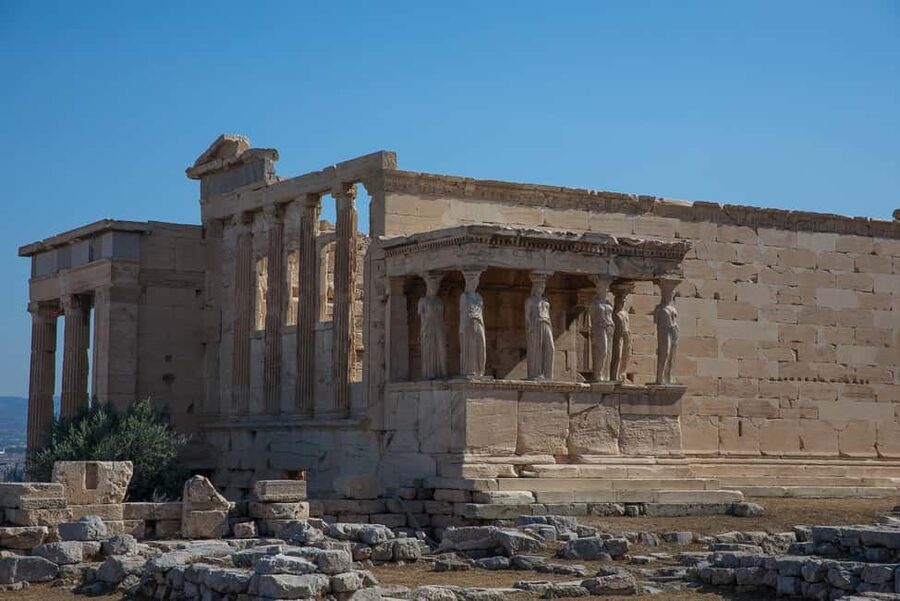
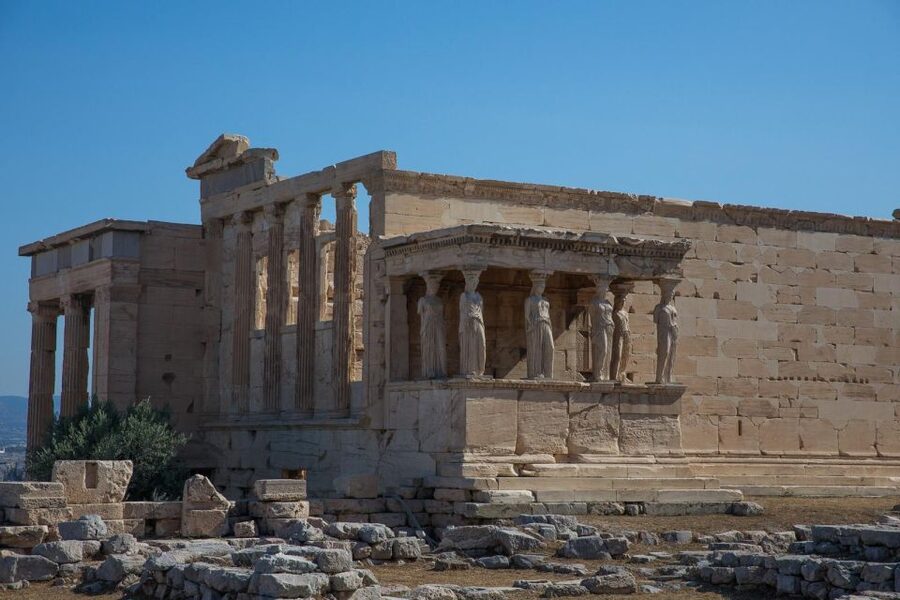
The Erechtheion gets more time, about 10 minutes. Its irregular form makes it a good contrast to the Parthenon’s strict symmetry. This is also where the contest between Athena and Poseidon becomes especially relevant. The guide can connect the building’s sacred associations with the wider mythology of Athens.
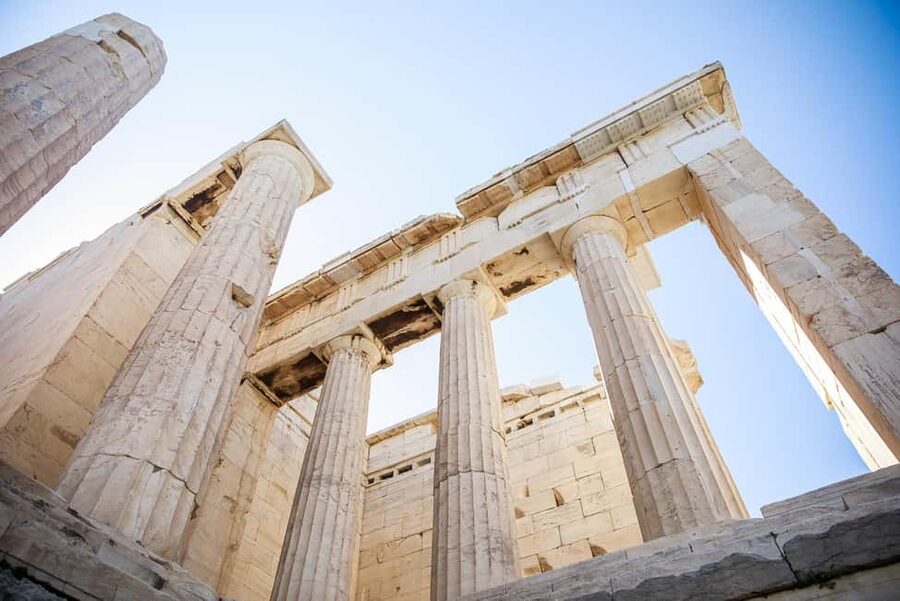
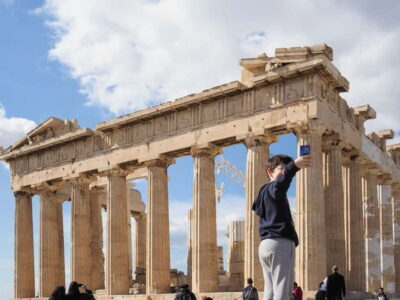
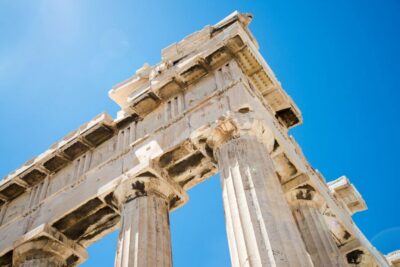
Then comes the Parthenon, with around 20 minutes. This is the emotional high point of the afternoon. You will have already seen related objects in the museum, so the columns and surviving fragments are easier to place. The building is damaged, reconstructed, and surrounded by active preservation work, but its scale and setting remain startling.
The guide does not simply point and name it. You can expect an explanation of why it was built, what it represented, and how the objects in the museum relate to it. Take time to look beyond the structure, too. The hill opens wide views across Athens, and the late-day light can be gentler than the hard glare of midday.
The tour also covers the Temple of Athena Nike, scheduled for about five minutes. It is a small stop compared with the Parthenon, but it helps complete the picture of the hill’s religious buildings. Because the schedule is tight, your guide may focus on the most important details and keep the group moving.
Timing, heat, and crowd control

This tour is designed around a later start, not total solitude. The afternoon can be calmer than the morning, but the Acropolis remains one of Athens’ busiest sights. Security checks may take 30 minutes or more in peak season, and airport-style screening is possible.
The fixed entry time is the most important practical detail. The Acropolis is entered about 90 minutes after the tour begins. Late arrivals cannot be held for, and no refund is offered if you miss the timed entry. Arrive at the meeting point early, not merely on time.
The tour runs in rain or shine. Weather-appropriate clothing is sensible, and summer visitors should not assume that an afternoon start removes the need for sun protection. One afternoon group found the heat intense, but the guide used shaded spots and added breathing breaks. That kind of pacing can make a real difference.
The ticket choice can change the value
The advertised price is $115 per person. That can be reasonable for four hours of guiding at two major archaeological sites, headsets, skip-the-ticket-line service, a map, and a guidebook. The value depends heavily on whether your option includes the admission tickets.
With pre-booked tickets selected, the price is easier to understand. You pay more upfront, but the operator handles the timed admissions and reduces the chance of choosing the wrong ticket type or date. For many people, that convenience is worth paying for at Athens’ most tightly controlled site.
Without tickets, the process becomes more complicated. You must purchase Acropolis Museum admission through its official site and Acropolis admission through the official archaeological ticket site. The Acropolis entry is tied to the tour start, approximately 90 minutes later.
You must choose the correct date, time, and citizenship category, including EU or non-EU status. Students must select the correct category and carry a passport for verification. Buy the tickets before booking the tour, because the tour fee is non-refundable and a missing or invalid ticket can prevent you from joining.
The details are easy to mishandle, especially if you are booking several people with different categories. If you want the least stressful arrangement, choose the ticket-included option. On days when Acropolis admission is free, that ticket cost is already deducted from the tour price.
Meeting point and physical demands
The meeting point is 3 Dionysiou Areopagitou Street. Look for the orange Athens Walking Tours sign at the start of the pedestrian path leading toward the Acropolis from Hadrian’s Arch and Syngrou Avenue.
The route is on foot from there. There is no transport between stops, so plan on a continuous walking experience with a short café pause. Strollers, backpacks, and food or drinks are not allowed. Pack lightly and carry only what you need.
This is not a suitable choice for wheelchair users or people with mobility impairments. Even fit visitors should wear comfortable shoes and expect stone surfaces, stairs, sun, and crowds. If you need frequent unscheduled rests or a slower pace, ask the operator about a more suitable format before paying.
The supplied information gives both an ending at the Acropolis and a note saying the activity ends back at the meeting point. Since the final guided stop is at the Acropolis, confirm the exact end arrangement when you book, especially if you have dinner reservations or a timed evening plan.
Who will get the most from this tour
I would choose this tour for a first visit to Athens, especially if you want the main ancient sights explained without spending a full day on a private guide. The museum-first format is also excellent for families with older children who need stories and context to keep the ruins interesting.
It suits solo visitors, too. Apollo has been praised for helping with photographs, a small but useful kindness when you are traveling alone. The headsets also make it easier for one person to stay connected to the group.
The tour is less suited to independent visitors who already know the Acropolis well, want to set their own pace, or plan to spend hours examining museum displays. It is also a poor match if you dislike timed entries, crowded archaeological sites, or outdoor walking in heat.
The guides named for different departures include Apollo, Ellenica, Jordan, Margarita, and Jim. The strongest pattern is clear explanations, friendly handling of questions, and good use of stories rather than a stream of dates. One guide was described as giving information at the right level, neither overwhelming the group nor leaving it short of context.
Should you book the Acropolis afternoon tour?
Book it if you want an efficient first look at Athens’ two essential ancient sites and value having the museum explain the hill before you climb it. The later timing, short refreshment break, headsets, and focused guiding make the four-hour plan practical.
Choose the pre-booked ticket option if you want fewer chances for an expensive mistake. If you buy your own tickets, check every date, time, citizenship category, and name before confirming, then arrive early for the strict entry schedule.
I would skip this tour only if you need wheelchair access, want a slow museum visit, or prefer to explore alone. For most first-time visitors who want the Parthenon to mean more than a photograph, the museum-first sequence is the strongest reason to book.
FAQ
How long does the tour last?
The tour lasts four hours. The Acropolis Museum visit takes about 75 minutes, followed by a 10-minute café break and the guided Acropolis visit.
What language is the tour conducted in?
The live tour guide speaks English.
Are admission tickets included?
Admission tickets are included only if you select the option with pre-booked tickets. If you choose the option without tickets, you must purchase the Acropolis Museum and Acropolis tickets yourself from the official sites.
When do you enter the Acropolis?
Entry to the Acropolis takes place about 90 minutes after the tour begins. The timed entry is strict, so late arrivals cannot be accommodated.
Where does the tour start?
Meet at 3 Dionysiou Areopagitou Street. Look for the orange Athens Walking Tours sign near the start of the pedestrian walkway leading to the Acropolis from Hadrian’s Arch and Syngrou Avenue.
What should I bring?
Bring comfortable shoes, a hat, sunscreen, water, a camera, and clothing suited to the weather. Bring your passport if your ticket category may need verification.
Are food, drinks, backpacks, or strollers allowed?
Food and drinks, backpacks, and baby strollers are not allowed. Plan to carry only necessary items and use the short café break before entering the Acropolis.
Is the tour suitable for wheelchair users or people with mobility impairments?
No. The activity is not suitable for wheelchair users or people with mobility impairments. It includes walking over archaeological surfaces and through the Acropolis site.
Recently reviewed around Athens
- Small-Group Women History in Ancient Greece Walking Tour★ 5.0 · 38 reviews
- Ceramic and Pottery Creative Workshop with Two Local Artists★ 4.0 · 57 reviews
- Athens: Wine Workshop Create your Own Wine under the Acropolis★ 5.0 · 77 reviews
- Athens: Greek Wines Tasting with Sommelier and Acropolis Views★ 5.0 · 88 reviews
- Hydra Private Day Trip by Ferry from Athens with Transfers★ 4.0 · 30 reviews
- Small-Group Wine Tour in Athens with Tasting★ 5.0 · 33 reviews
- Wine Trails Private Tour/ Nemea visit 3 wineries from Athens or Nafplion (10 h)★ 5.0 · 44 reviews
- Private Athens Transfer Airport/Port -Greek Tours-Hourly service★ 5.0 · 88 reviews
Acropolis & Acropolis Museum Tours, compared.
Acropolis & up to 5 Archaeological Sites Combo Pass
Read our review →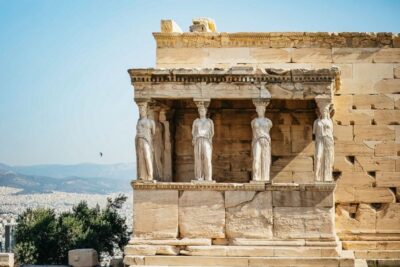
Acropolis, Parthenon & Acropolis Museum Guided Tour
Read our review →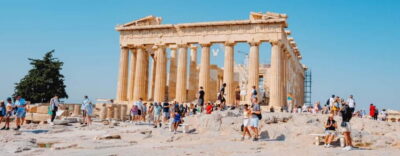
Acropolis, Parthenon & Acropolis Museum Guided Tour
Read our review →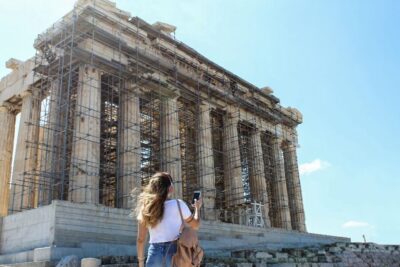


Acropolis monuments & Parthenon Walking Tour with Optional Acropolis Museum
Read our review →Browse the lists this tour appears in