
Reviewed · ACROPOLIS & ACROPOLIS MUSEUM TOURS
Athens: Acropolis, Parthenon and Acropolis Museum Guided Tour
The best part of this Athens tour is the way it links the stones on the hill with the original sculptures below. A guide such as Angel, Maria, Natasha, or Bernie can turn the Parthenon from a famous photo stop into a story about Athena, democracy, religion, war, and changing empires. The museum makes the hill easier to understand.
I like the central meeting point near the Acropolis Metro and the steady pauses at the Theater of Dionysus, Herodes Atticus Theater, and the hilltop monuments. I also like the guide-led format: you get useful context without spending your own morning sorting out dates and names. The main caution is the pace. The museum portion can feel short if you want to study every gallery on your own, and the Acropolis climb is steep, slippery when wet, and exposed to sun or wind.
In This Review
- Key points to know before booking
- What this half-day Athens tour actually covers
- Meeting near the Acropolis Metro
- Climbing through the Theater of Dionysus
- The Propylaea and the first hilltop views
- The Parthenon, seen with context
- The Erechtheion and its sculpted Caryatids
- The Acropolis Museum, from daily life to the Parthenon frieze
- How good is the guiding?
- Is $41.12 a good price?
- Who should book this Acropolis tour?
- Booking, cancellation, and timing details
- Should you book it?
- FAQ
- How long does the Acropolis and museum tour last?
- Where does the tour begin?
- Where does the tour end?
- Are Acropolis and museum tickets included?
- How much are the admission tickets if they are not included?
- Can I skip the Acropolis line?
- How early should I arrive?
- Is the tour suitable for people with mobility impairments?
- Can children join the tour?
- What should I bring?
Key points to know before booking
- The museum and hill tell one connected story: See ancient objects close up, then view the monuments they came from.
- Licensed English-speaking guides lead the walk: Guides praised by name include Angel, Maria, Natasha, Chrysa, Simon, Irene, and Bernie.
- The Acropolis climb is real exercise: Expect uneven stone, a steep approach, and no group-tour elevator access.
- The group can reach 24 people: That keeps the price moderate, but it is not a private or highly personal tour.
- Ticket choices change the value: The advertised price is $41.12 per person, while admission costs extra unless you select the ticket option.
- Strict timing matters: Arrive at the Mitseon 2 office at least 15 minutes early, since late arrivals cannot be accommodated.
What this half-day Athens tour actually covers
This experience takes about three to four hours and combines the Acropolis hill with the Acropolis Museum. That pairing is smart. The hill gives you the scale and setting, while the museum gives you original sculpture, architectural pieces, and everyday objects that help explain what you are seeing outdoors.
The route includes the Theater of Dionysus, the Odeon of Herodes Atticus, the sanctuary of Asclepius, the Propylaea, the Temple of Athena Nike, the Erechtheion, and the Parthenon. The museum then adds galleries on daily life, archaic statues, the Caryatids, and the Parthenon frieze.
The exact order can change for comfort and site conditions. The published timing lists roughly 25 minutes for the initial Acropolis visit, 30 minutes at the Parthenon, 15 minutes at the Propylaea, 20 minutes at the Erechtheion, and about two hours at the museum. In practice, these stops form one continuous guided visit rather than isolated blocks. Plan on walking and listening for most of the morning.
More Museum Tours in Athens
- Athens: Acropolis, Parthenon & Acropolis Museum Guided Tour
★ 4.8 · 9,316 reviews - Athens: Mythology of Delphi, Museum and Arachova Guided Tour
★ 4.6 · 4,008 reviews - Athens: Acropolis, Parthenon & Acropolis Museum Guided Tour
★ 4.8 · 3,579 reviews
Meeting near the Acropolis Metro
You meet at the Athenian Tours office at Mitseon 2, Athens 117 42. It is a short walk from the Acropolis Metro station, making this a practical choice if you are staying in central Athens or arriving by subway.
Arrive at least 15 minutes before the start. Acropolis admission uses assigned entry times, so this is not a tour where you can stroll in late and catch up. If you are coming from the Port of Piraeus, allow 30 to 40 minutes by taxi, and more during morning traffic.
There is no hotel pickup or drop-off. That keeps the price down, but you need to plan your own route to the office. The tour ends at the Acropolis Museum on Dionysiou Areopagitou 15, so you do not return to the starting point. This is useful if you plan to continue around the Acropolis pedestrian zone or visit nearby sights afterward.
Climbing through the Theater of Dionysus
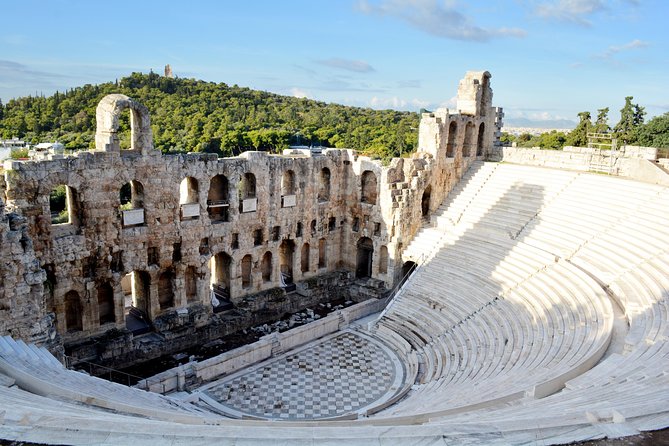
The walk begins on the lower slopes of the Acropolis with the Theater of Dionysus. This is an important opening because the Acropolis was not only a collection of temples. It was also tied to public performance, civic life, religious festivals, and the city’s shared identity.
Here, your guide can explain the setting where ancient Greek dramas and tragedies were first performed. The stone seating and open-air design give you a better sense of how theater worked than a quick photograph ever could.
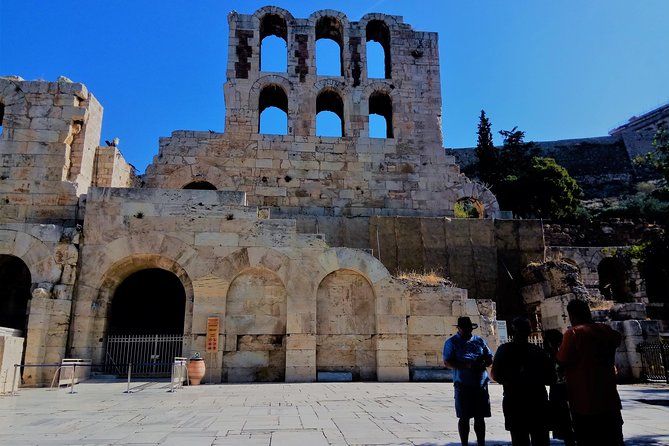
The route continues toward the Odeon of Herodes Atticus, a Roman-era theater built in memory of Herodes Atticus’s wife. You will also pass the sanctuary of Asclepius, associated with the healing god. These stops show that the Acropolis was used across many periods and for more than one purpose.
The climb is broken into pauses for explanations and photographs. That helps, but do not mistake the breaks for an easy walk. The hill is steep, and some surfaces are slick after rain. Wear shoes with a firm grip, bring water, and use the restroom during the short break offered before the museum.
The Propylaea and the first hilltop views
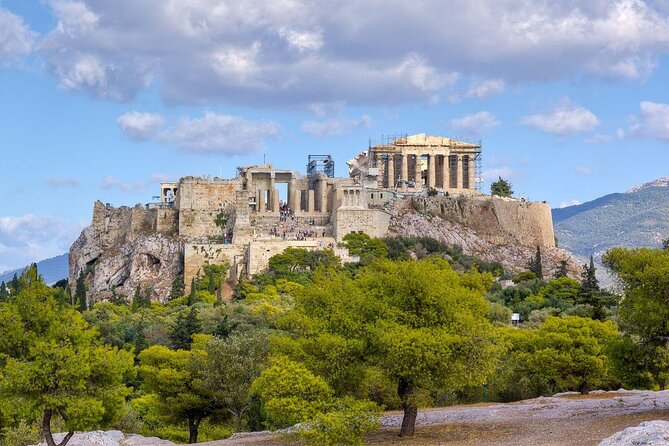
At the top, the Propylaea forms the grand gateway into the Acropolis. Its broad approach and monumental columns prepare you for the temples beyond, while the height opens views across Athens.
You will also see the Temple of Athena Nike, a smaller temple dedicated to a form of Athena associated with victory. It is easy to overlook beside the Parthenon, which is one reason a guide helps. A good explanation gives the smaller monuments their proper place instead of reducing the visit to one famous building.
The Acropolis is exposed. In summer, carry a hat, sunglasses, and water. There are no cafés on the site, though a water fountain is available. In winter, bring an extra layer because the top can feel cold and windy even when the city below seems mild. One January visit was especially comfortable because the site was less crowded, but weather can change quickly.
More Athens museums and collections:
- Acropolis monuments & Parthenon Walking Tour with Optional Acropolis Museum
★ 5.0 · 2,678 reviews - Athens All Included: Acropolis and Museum Guided Tour with Ticket
★ 4.5 · 2,673 reviews - Athens: Acropolis Museum Ticket with optional Audio Guide
★ 4.4 · 2,652 reviews - From Athens: Small-Group Delphi, Museum & Arachova Day Trip
★ 4.8 · 2,476 reviews
The Parthenon, seen with context

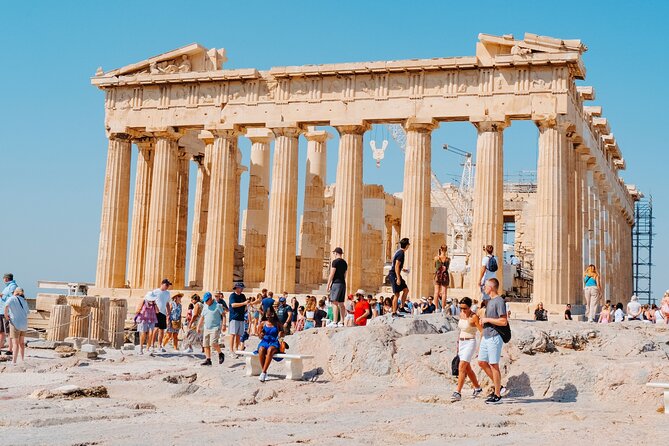
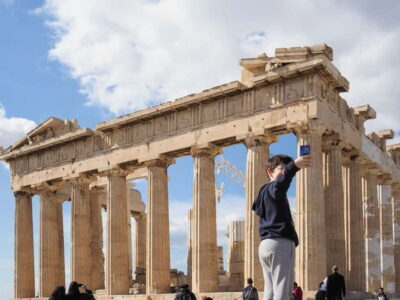
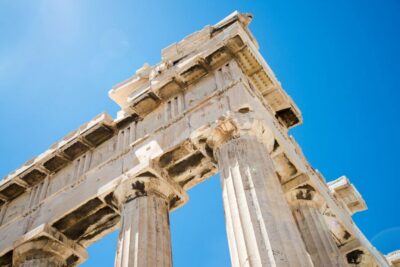
The Parthenon was dedicated to Athena, the city’s patron goddess, and dates from the fifth century BC. It is the best-known monument here, but the guide-led visit gives you more than a few minutes to admire its Doric design and take photographs.
The point is not just to label it as an ancient temple. Your guide can connect the building to the Golden Age of Pericles, the growth of Athenian democracy, religious practice, and the later changes that affected the Acropolis. Several guides are praised for explaining how the site shifted across different eras, which is especially useful because the hill is not frozen in one moment of history.
Crowds can gather around the main viewpoints, especially at popular times. The tour cannot promise a private view or an empty Parthenon. It can, however, help you use the time well, showing where to look and explaining details you might miss while moving with the crowd.
The Acropolis has no separate skip-the-line entrance that lets a group bypass every queue. If you select the ticket option, the guide handles the included admissions at the meeting point, but timed entry rules still apply. That distinction matters. You are skipping the ticket-office process, not every line at the monument.
The Erechtheion and its sculpted Caryatids
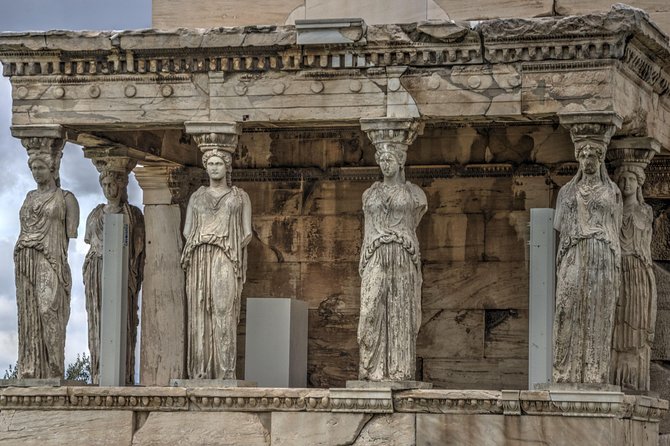
The Erechtheion is one of the most intriguing buildings on the hill. Its asymmetrical plan differs sharply from the regular form most people expect from a Greek temple. The building served more than one sacred purpose, and its unusual design reflects the complicated traditions attached to this part of the Acropolis.
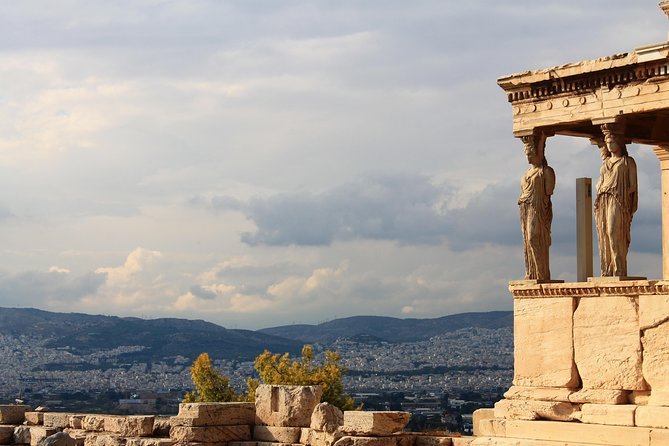
Its porch with six sculpted female figures, the Caryatids, is a highlight. The originals are preserved in the Acropolis Museum, while replicas remain on the hill. Seeing both locations gives the museum visit a clear purpose: you are not looking at disconnected objects in glass cases, but at pieces tied to the buildings above.
The guide usually pauses here for explanation and photos. This is also a good point to ask questions, since the building raises practical issues about restoration, preservation, and how much of what you see is original.
The Acropolis Museum, from daily life to the Parthenon frieze
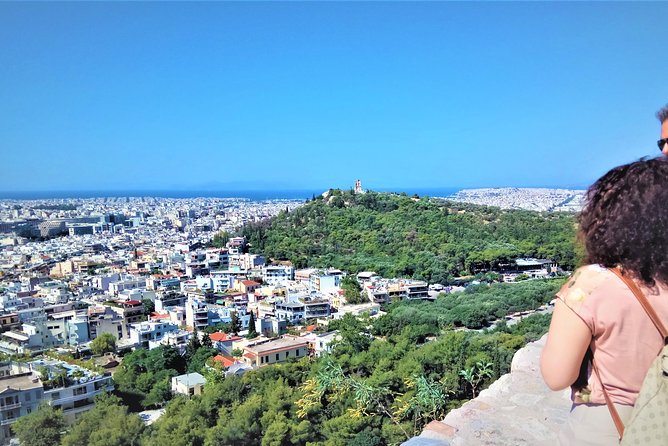
After the hill, you take a short break with access to a restroom before walking a few minutes to the Acropolis Museum. The change of setting is welcome. You move from bright stone and open air into a carefully arranged collection where you can look closely at sculpture and smaller objects.
The ground floor focuses on ordinary Athenian life. Exhibits cover wedding customs, children’s toys, healing practices, and religious habits. These details are valuable because temples alone can make ancient Athens seem like a city inhabited only by rulers and gods. Everyday objects restore the human side of the story.
On the first floor, you see archaic statues from the sixth century BC. The Caryatids are a major draw, as are large pieces connected with the Acropolis entrance. The originals have a presence that copies on the hill cannot match, and your guide can point out how weathering, color, posture, and carving technique affect the way you read them.
The upper level offers views toward the Acropolis and displays the Parthenon frieze. This is one of the strongest moments of the tour because you can study the sculpted procession while looking toward the temple it once decorated.
The museum portion is planned for about two hours, but that does not mean two hours of unstructured wandering. The guide leads you through selected works and explains their place in the larger story. Several guides are praised for making difficult subjects clear through humor, mythology, and vivid anecdotes. Bernie, in particular, is noted for combining academic archaeology with warm, human storytelling.
If you want to examine every room, read every label, or return to favorite objects alone, this format may feel rushed. After the guided portion, you may be able to remain in the museum and continue on your own, but the core experience is a guided survey rather than a full-day museum study.
How good is the guiding?
The guide is the main reason to choose this tour instead of walking through with an audio guide. Names praised in the feedback include Angel, Natasha, Maria, Alexander, Simon, Chrysa, Irene, Theodora, and Bernie. The consistent strengths are clear explanations, mythology, humor, answers to questions, and a pace that includes rest and photo stops.
That does not mean every guide will use the same script or tell the same stories. The company may adjust the order of the sites, and guides have room to shape the experience. You should expect a group presentation, not a private conversation tailored entirely to your interests.
Audio quality can occasionally suffer when other groups nearby are using their own equipment. In a crowded archaeological site, that is a practical possibility. Stay close enough to hear, and do not drift away during transitions.
A group maximum of 24 is reasonable for a site this busy. It is small enough to keep moving without becoming a large crowd of its own, though visitors who want constant one-to-one attention should consider the private option, which also offers a more flexible start time.
Is $41.12 a good price?
At $41.12 per person, the base price is attractive for a three to four hour guided visit. You are paying for a licensed English-speaking guide and organized access to two of Athens’s major sights.
Read the ticket choice carefully. Acropolis admission is listed at €30 per person and museum admission at €20 per person when tickets are not included. If you choose the option without tickets, you need to buy them online at least 24 hours ahead using the correct time slot, or arrange the purchase through the operator in advance. Cash may be required at check-in if you ask the office to provide the tickets.
That can change the total cost by a great deal. The included-ticket option is simpler and may be worth choosing if you value an organized arrival more than finding the cheapest base fare. On free-entry days, the tour price is adjusted so you are not charged for complimentary admission.
The value is strongest for a first visit. The guide saves you research time, keeps the hill’s monuments connected, and helps you understand why the museum matters. If you already know Greek architecture well and prefer to linger independently, buying admission directly and visiting at your own pace may suit you better.
Who should book this Acropolis tour?
I would choose this for a first or second visit to Athens, especially if you want the main ancient sights covered in one half-day. It suits adults and older children who can manage a steep hill, uneven paths, and several hours on foot.
It is not suitable for children under six or people with mobility impairments. Group tours do not permit elevator use at the Acropolis, so anyone who needs step-free access should not assume the hill portion can be adapted.
The tour also works well for a short Athens stay. The meeting point is central, the end point is near other historic sights, and the experience fits into a morning or afternoon without requiring a full day.
For the best comfort, choose a time with favorable weather if you can, start early when possible, and bring water, sun protection, rain protection, and warm layers in winter. There are no cafés on the hill, and the stone can be slippery when wet.
Booking, cancellation, and timing details
Confirmation is provided at booking, and free cancellation is available until 24 hours before the local start time. Changes or cancellations inside that period are not accepted and are not refunded.
Punctuality is the key rule. Arriving 15 minutes early gives you time to check in, receive tickets if included, and join the group without a stressful dash to the entry point.
Should you book it?
Book this tour if you want the Acropolis and museum to make sense as one connected experience. The strongest feature is the guiding: mythology, architecture, daily life, and the site’s many historical periods are explained in plain language, with enough humor and questions to keep the climb lively.
Skip it if your priority is complete independence, a slow museum visit, or a flexible arrival time. Also check the final price carefully, since the $41.12 starting figure does not necessarily include both admission tickets.
For most first-time visitors, I think the combination is worth it. You see the Parthenon and the Caryatids in their proper settings, then meet the original objects inside the museum. That connection is what turns a famous Athens landmark into a visit you can actually understand.
FAQ
How long does the Acropolis and museum tour last?
The experience lasts approximately three to four hours.
Where does the tour begin?
It begins at the Athenian Tours office at Mitseon 2, Athens 117 42, a short walk from the Acropolis Metro station.
Where does the tour end?
It ends at the Acropolis Museum at Dionysiou Areopagitou 15, Athens 117 42.
Are Acropolis and museum tickets included?
Tickets are included only if you select the ticket option when booking. The option without tickets requires you to arrange admission separately or notify the operator in advance about purchasing through the office.
How much are the admission tickets if they are not included?
The listed adult prices are €30 for the Acropolis and €20 for the Acropolis Museum.
Can I skip the Acropolis line?
No separate group entrance can skip all Acropolis lines. The ticket option can bypass the ticket-office process, but timed entry and site queues still apply.
How early should I arrive?
Arrive at least 15 minutes before the scheduled start time. Late arrivals cannot be accommodated, and no refund is provided for missing the timed entry.
Is the tour suitable for people with mobility impairments?
No. The Acropolis is on a steep hill, and elevator use is not permitted on group tours.
Can children join the tour?
Children under six years old are not permitted. The tour is otherwise described as suitable for most participants who can manage the walking and climb.
What should I bring?
Bring water, comfortable shoes, a hat, sunglasses, and an umbrella if rain is possible. There are no cafés at the Acropolis, though a water fountain is available.
Recently reviewed around Athens
- Small-Group Women History in Ancient Greece Walking Tour★ 5.0 · 38 reviews
- Ceramic and Pottery Creative Workshop with Two Local Artists★ 4.0 · 57 reviews
- Athens: Wine Workshop Create your Own Wine under the Acropolis★ 5.0 · 77 reviews
- Athens: Greek Wines Tasting with Sommelier and Acropolis Views★ 5.0 · 88 reviews
- Wine Trails Private Tour/ Nemea visit 3 wineries from Athens or Nafplion (10 h)★ 5.0 · 44 reviews
- Hydra Private Day Trip by Ferry from Athens with Transfers★ 4.0 · 30 reviews
- Small-Group Wine Tour in Athens with Tasting★ 5.0 · 33 reviews
- Private Athens Transfer Airport/Port -Greek Tours-Hourly service★ 5.0 · 88 reviews
Acropolis & Acropolis Museum Tours, compared.
Acropolis & up to 5 Archaeological Sites Combo Pass
Read our review →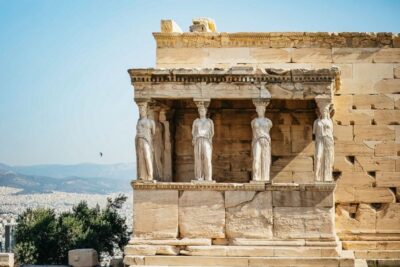
Acropolis, Parthenon & Acropolis Museum Guided Tour
Read our review →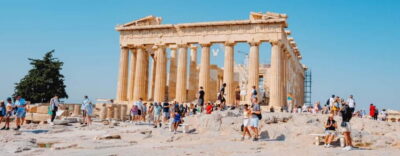
Acropolis, Parthenon & Acropolis Museum Guided Tour
Read our review →


Acropolis monuments & Parthenon Walking Tour with Optional Acropolis Museum
Read our review →Browse the lists this tour appears in