
Reviewed · ACROPOLIS & ACROPOLIS MUSEUM TOURS
Athens: Guided Tour of Acropolis and Parthenon Tickets Included
The best part of this Athens tour is the way a guide turns a hilltop of broken marble into a readable story. With a reserved entry time and a roughly two-hour route, you see the Parthenon, Propylaea, Erechtheion, and lesser-visited northern temples without spending your morning puzzling over a map.
I like the expert local guidance, especially for mythology, architecture, and the long restoration story behind the monuments. I also like the choice of departure times and the chance to remain on the Acropolis afterward, so you can take photographs or explore at your own speed.
The main catch is the strict timed entry. Arrive at least 10 minutes early, because tickets expire within about 5 to 10 minutes and late arrivals cannot join or receive a refund. The climb is also harder than a casual city walk, especially in hot weather or for anyone with knee trouble.
In This Review
- Key points to know before booking
- Why a guided Acropolis visit helps
- Meeting at Makrigianni 7 and entering on time
- The uphill walk to the Acropolis
- The Propylaea, the ceremonial gateway
- The Parthenon, Athens at its most ambitious
- The Erechtheion and the myths of Athena and Poseidon
- Northern temples and a quieter side of the hill
- The south exit, Asclepius, and the Theater of Dionysus
- What the $119.47 price gets you
- Crowds, heat, and hearing your guide
- Who should book this Acropolis tour
- Should you book it?
- FAQ
- How long does the Acropolis and Parthenon tour last?
- What is included in the ticket?
- Is the Acropolis Museum included?
- Where does the tour meet?
- How early should I arrive?
- Can children or strollers join the tour?
Key points to know before booking
- Timed Acropolis admission: Pre-reserved tickets help you avoid the regular ticket queue, though high-season visitors may still wait in a separate skip-the-line queue.
- A real walking route: Expect steep sections, marble surfaces, stairs, and about two hours on your feet.
- Small-group format: The maximum is 20 people, with headsets used on some tours to help you hear the guide among the crowds.
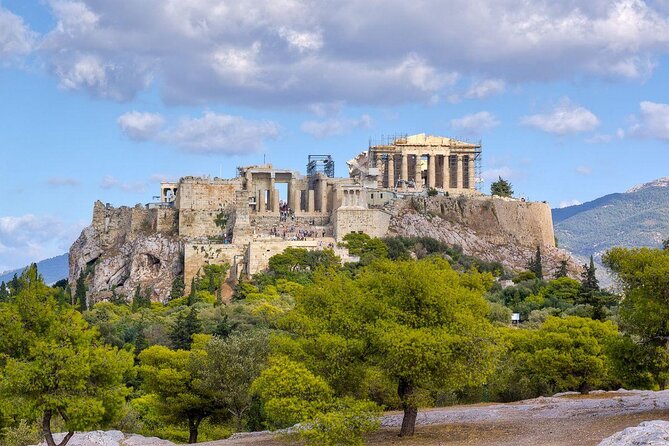
- More than the Parthenon: The route includes the Propylaea, Erechtheion, northern temples, Sanctuary of Asclepius, and Theater of Dionysus.
- Museum not included: Plan a separate visit if you want to see the Acropolis Museum.
- Strict meeting time: Meet at Makrigianni 7, near public transportation, 10 minutes before departure.
Why a guided Acropolis visit helps
You can certainly walk up the Acropolis on your own. But without context, it is easy to see only the Parthenon, snap a few photographs, and miss the religious and civic world around it.
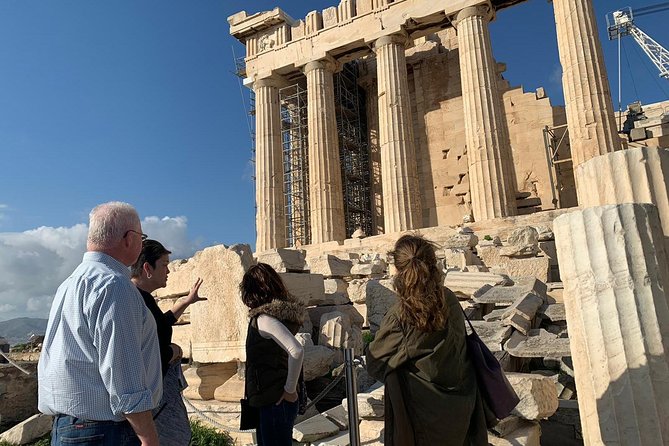
A good guide gives you a sequence to follow. You learn why the Propylaea was built as a grand entrance, how Athena and Poseidon competed for the city’s favor, and why the Parthenon was far more than an attractive temple. The stones begin to connect.
The strongest part of this experience is the spoken explanation. Guides such as Frosso, Dora, and Victoria have been singled out for clear storytelling, patience, good pacing, and careful group management. That does not mean you will receive one particular guide, but it gives you a useful sense of the standard the company aims for.
The tour is offered in English only. That suits English-speaking visitors who want a live explanation rather than an audio guide. Your guide can also answer questions as you go, which is especially useful when you want to understand a detail that is not obvious from the ruins.
More Athens trips worth a second look
- Athens: Acropolis & up to 5 Archaeological Sites Combo Pass
★ 4.4 · 12,619 reviews - Athens: Acropolis Ticket with Optional Audio or Live Guide
★ 4.2 · 11,055 reviews - Athens: Acropolis, Parthenon & Acropolis Museum Guided Tour
★ 4.8 · 9,316 reviews
Meeting at Makrigianni 7 and entering on time
The meeting point is at Makrigianni 7, Athens 117 42, close to public transportation. You are expected to arrive 10 minutes before the scheduled start, not at the scheduled start. This distinction matters.
Your entry is tied to a reserved time. The tickets are reported to expire within 5 to 10 minutes, so the group cannot wait for a late arrival. Taxi traffic, a delayed bus, or a long line at the meeting point will not change that rule.
I would build in extra time and avoid making this the first activity of your Athens visit after a complicated airport transfer. Have the meeting address and booking confirmation ready, and allow time to find the exact spot. If you miss the departure, the payment is not refunded.
The tour has a maximum of 20 people. That is not a private visit, and the Acropolis can still feel crowded, but it is more manageable than being part of a very large walking group. Some guides use earpieces, which can make a big difference when several groups are speaking nearby.
The uphill walk to the Acropolis
The Acropolis sits on high ground, and reaching the monuments involves a real climb. The tour description calls for moderate physical fitness, but that phrase deserves a practical reading: you should be comfortable walking uphill, standing for long periods, and moving over uneven or polished surfaces.
Wear sturdy shoes. Lightweight footwear with a secure sole is a better choice than smooth sandals or dress shoes. Carry as little as possible, since a small bag is easier to manage on crowded paths and during the ascent.
There is not much shade. Guides may choose shaded places for explanations and make occasional stops, but you should still prepare for sun and heat. One of the most useful pieces of practical advice is to consider the weather when choosing your departure time. A cooler morning can make the climb far more pleasant than a hot midday visit.
The Acropolis site does not permit baby strollers of any kind, and children under six cannot join this tour. The supplied information also notes that there is no elevator access, so anyone with serious mobility or knee concerns should think carefully before booking. A shared group tour cannot fully adjust its pace to one person’s needs.
The Propylaea, the ceremonial gateway
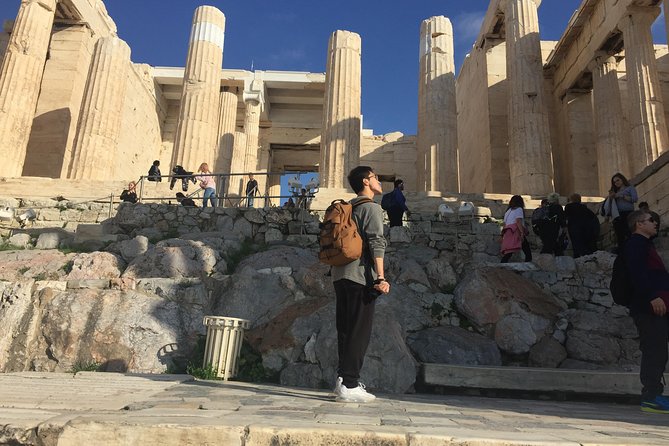
Your first major architectural lesson comes at the Propylaea, the monumental gateway to the Acropolis. This was not merely a practical doorway. Its scale and marble columns prepared people for the sacred buildings beyond and expressed the order and power of Athens.
The guide explains how visitors once approached this hill during religious festivals and processions. That context helps you see the entrance as part of a carefully planned experience, not just a partly ruined structure.
This is also where the physical reality of the site becomes clear. Crowds gather, groups pause, and the marble can be uneven underfoot. Stay close enough to hear your guide and keep track of the people ahead of and behind you.
A different kind of day out, same corner of Greece:
- Athens: Cape Sounion & Poseidon Temple Sunset Half-Day Trip
★ 4.8 · 8,241 reviews - Athens: Acropolis and Parthenon Guided Walking Tour
★ 4.6 · 5,882 reviews - All Day Cruise -3 Islands to Agistri,Moni, Aegina with lunch and drinks included
★ 5.0 · 4,958 reviews - Athens, Piraeus, and Coastline: Blue Hop-On Hop-Off Bus
★ 3.9 · 4,849 reviews
The Parthenon, Athens at its most ambitious
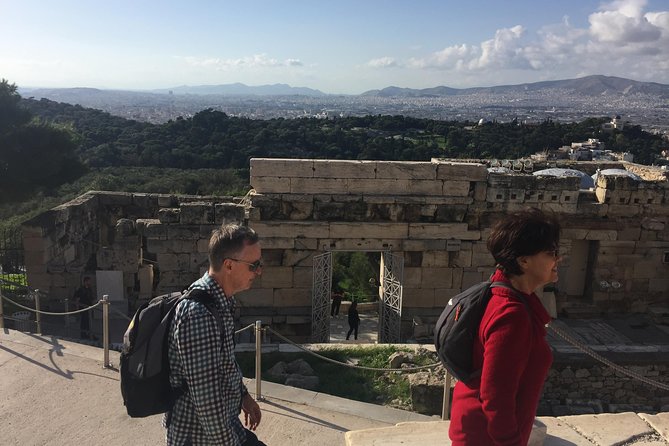
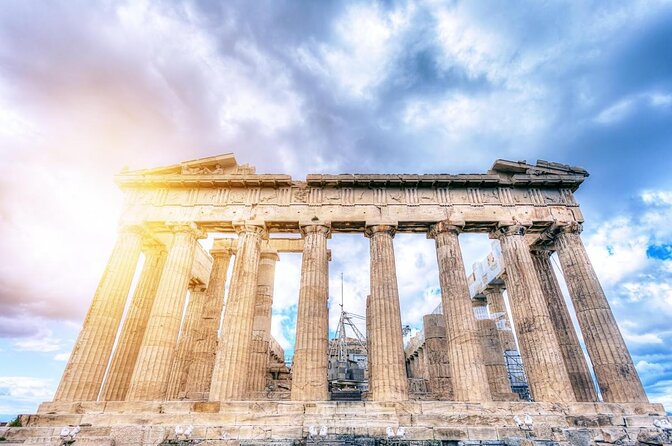
The Parthenon receives about 30 minutes of focused attention, though you will see it from several points during the wider Acropolis walk. Dedicated to Athena, the city’s patron goddess, it reflects the ambition of Athens during its golden age.
A guide can point out how the temple was designed and built, explain its religious use, and connect it to the political ideals of the city. You are not simply looking at columns. You are considering how architecture communicated civic pride, divine favor, artistic skill, and the authority of Athens.
The building is a ruin, and restoration work remains part of the view. That can disappoint anyone expecting an untouched ancient temple, but it is also part of the site’s reality. The guide helps explain what you are seeing and why the work matters for preserving the monument.
Crowds are the chief nuisance here. The Parthenon is the main prize for nearly every Acropolis group, so space can be tight and it may be difficult to hear at certain points. A guide who chooses a shady spot, uses an earpiece, and waits for the group to gather improves the experience considerably.
The Erechtheion and the myths of Athena and Poseidon
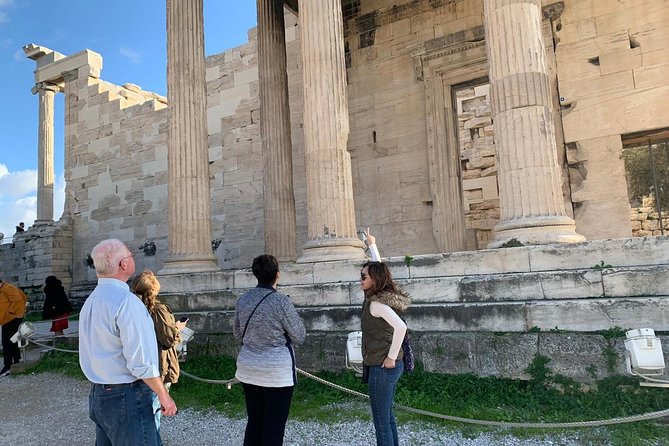
The Erechtheion offers a different mood from the broad, commanding form of the Parthenon. Its refined marble work and unusual design reflect the complicated sacred traditions of the Acropolis.
Here, your guide brings in the contest between Athena and Poseidon for the city’s allegiance. The temple’s connection to both deities helps explain why it was so important, and why its layout is less straightforward than a simple rectangular temple.
The famous female-shaped columns are a major visual highlight, but the story behind the building gives the view more weight. You begin to understand that several sacred traditions occupied this hill at once, each with its own rituals and claims.
Since the Erechtheion is one of the most photographed places on the Acropolis, do not expect solitude. Your guide should help position the group and identify good viewing angles, but you may need patience for a clear photograph.
Northern temples and a quieter side of the hill
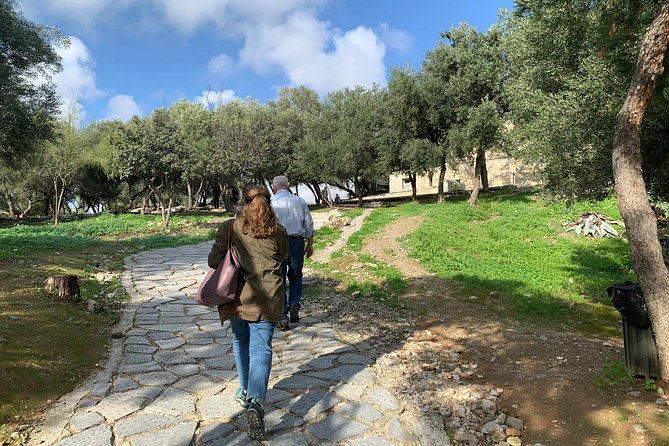
One of the most useful features of this route is the attention given to the northern side of the Acropolis. Many people focus on the Parthenon and Erechtheion, then leave without considering the smaller sanctuaries scattered around the hill.
These lesser-visited temples offer a better sense of the Acropolis as a functioning religious center. Your guide discusses early Athenian cults and the worship of Olympian gods, giving you a broader picture of ancient religious life.
This part of the walk can also provide a little breathing room after the busiest monuments. It will not necessarily be empty, particularly in high season, but the atmosphere can feel less pressured than the main Parthenon viewpoints.
I especially value this portion for first-time visitors. It discourages the quick checklist approach and shows that the Acropolis was not built around one famous temple alone.
The south exit, Asclepius, and the Theater of Dionysus
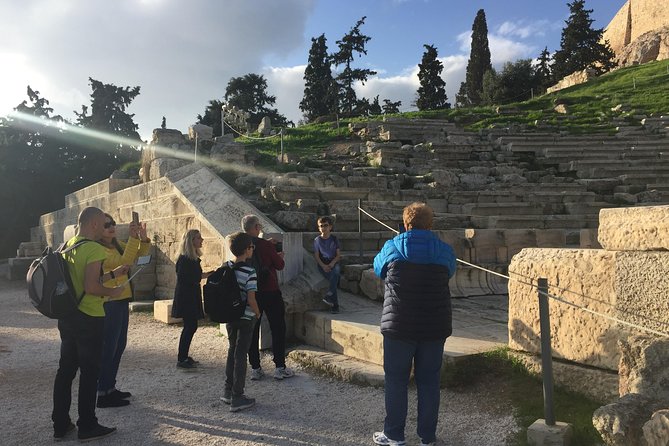
After the main guided visit, you have a choice. You may remain on the Acropolis and continue looking around independently, enjoying views across Athens and, on clear days, toward the Aegean Sea.
Or you may follow the guide toward the south exit. This route passes the Sanctuary of Asclepius and the Theater of Dionysus, a place widely regarded as the birthplace of theatrical drama.
The Theater of Dionysus is an important final stop because it connects the Acropolis to the public life of Athens. The hill was not isolated from the city below. Religion, civic identity, performance, and political life all met here.
The tour is scheduled for about two hours, with roughly 90 minutes assigned to the Acropolis and about 30 minutes to the Parthenon. In practice, the exact flow depends on crowds, group movement, and stops. A toilet queue once took a noticeable portion of one scheduled tour, so do not assume every minute will be spent listening to the guide.
After the guided portion, you may be allowed to remain on the site and explore independently. Confirm the exact exit arrangement with your guide, especially if you want extra time for photographs.
What the $119.47 price gets you
At $119.47 per person, this is not the cheapest way to enter the Acropolis. The value rests in the combination of a pre-reserved timed ticket, an English-speaking expert guide, a small group, and a planned route through the key monuments.
I think the price makes more sense for a first visit than for someone who has already studied the Acropolis and prefers to explore alone. The stories, architectural explanations, and mythological context can change a short look at the ruins into a much more meaningful visit.
Still, be clear about what is not included. Transportation to or from the site is not provided, and the Acropolis Museum is not part of this two-hour tour. If you want the museum, plan it separately. One advantage of that arrangement is flexibility: you are not forced to rush through the museum immediately after the hilltop visit.
The price may feel steep if you mainly want a ticket and a few photographs. It is easier to justify if you value clear explanations, help with the route, and the convenience of having admission arranged in advance.
Crowds, heat, and hearing your guide
The skip-the-line benefit needs a careful explanation. You avoid the standard process of buying an ordinary ticket, but high-season timed-ticket holders can still wait in their own queue. This is priority access, not a guarantee of walking straight through an empty entrance.
Crowds can also affect the guided portion. Several groups may gather around the same monument, and it can be hard to see exactly what the guide is discussing. Earpieces help, but they do not create more space.
I would choose a departure time that fits your tolerance for sun and crowds, then arrive early enough to avoid starting the visit tense and overheated. Bring water, wear good shoes, and keep your belongings secure in crowded areas. Pickpocketing is possible anywhere large numbers of tourists gather, so use a zipped bag and avoid carrying valuables in open pockets.
The guides are often praised for choosing shade, pausing on the climb, answering questions, and keeping the group together. That care matters, but you still need to stay with the group. Shared tours move according to a schedule, and the guide cannot provide a private pace for every participant.
Who should book this Acropolis tour
This experience suits a first-time Athens visitor who wants the major monuments explained in plain English and prefers not to manage timed entry alone. It also suits anyone with limited time who wants a focused two-hour introduction before visiting another site or the museum.
You should be comfortable with:
- An uphill walk and uneven ground
- Limited shade
- Standing and walking for about two hours
- A group of up to 20 people
- A fixed departure time
- Staying with the group during the guided route
I would not choose it for a young family using a stroller, since strollers are not allowed and children under six cannot join. I would also hesitate if you have significant knee, balance, or mobility problems. The route is described as moderate, but the hill is real, and the provided information says there is no elevator access.
A private or slower-paced option may be better for older family members who need frequent breaks or a pace tailored to them. The shared format works best when everyone can walk at roughly the same speed.
Should you book it?
Book this tour if you want the Acropolis to make sense, not just appear in your camera roll. The strongest reasons are the guides, the organized entry, the useful route through the Propylaea, Parthenon, Erechtheion, northern temples, and south-side monuments, and the option to stay longer afterward.
Skip it if you want a low-cost ticket-only visit, need complete control over your pace, or are mainly interested in the Acropolis Museum. At $119.47, the tour asks you to pay for interpretation and convenience, not just admission.
For most first-time visitors who can manage the climb and follow the clock, I see this as a worthwhile introduction. Just treat the arrival time as non-negotiable, plan the museum separately, and bring shoes made for ancient marble rather than an Athens fashion parade.
FAQ
How long does the Acropolis and Parthenon tour last?
The guided experience lasts approximately two hours. About 1 hour and 30 minutes is assigned to the Acropolis visit, with about 30 minutes focused on the Parthenon.
What is included in the ticket?
The price includes pre-reserved admission to the Acropolis, a small-group walking tour, an expert local English-speaking guide, and the approximately two-hour guided experience.
Is the Acropolis Museum included?
No. The Acropolis Museum is not included in this tour. You need to arrange a separate museum visit.
Where does the tour meet?
The meeting point is Makrigianni 7, Athina 117 42, Greece. The location is near public transportation, and the activity information says the tour ends back at the meeting point.
How early should I arrive?
Arrive at least 10 minutes before the scheduled start time. Admission is timed, tickets can expire within 5 to 10 minutes, and late arrivals cannot join the tour or receive a refund.
Can children or strollers join the tour?
Children under six are not permitted, and baby strollers of any kind are not allowed inside the Acropolis site. You should also have a moderate level of physical fitness for the uphill walking route.
Recently reviewed around Athens
- Small-Group Women History in Ancient Greece Walking Tour★ 5.0 · 38 reviews
- Ceramic and Pottery Creative Workshop with Two Local Artists★ 4.0 · 57 reviews
- Athens: Wine Workshop Create your Own Wine under the Acropolis★ 5.0 · 77 reviews
- Athens: Greek Wines Tasting with Sommelier and Acropolis Views★ 5.0 · 88 reviews
- Hydra Private Day Trip by Ferry from Athens with Transfers★ 4.0 · 30 reviews
- Small-Group Wine Tour in Athens with Tasting★ 5.0 · 33 reviews
- Wine Trails Private Tour/ Nemea visit 3 wineries from Athens or Nafplion (10 h)★ 5.0 · 44 reviews
- Private Athens Transfer Airport/Port -Greek Tours-Hourly service★ 5.0 · 88 reviews
Acropolis & Acropolis Museum Tours, compared.

Acropolis & up to 5 Archaeological Sites Combo Pass
Read our review →

Acropolis, Parthenon & Acropolis Museum Guided Tour
Read our review →
Acropolis, Parthenon & Acropolis Museum Guided Tour
Read our review →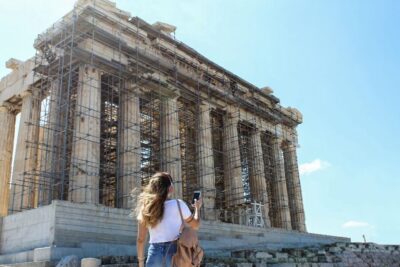


Acropolis monuments & Parthenon Walking Tour with Optional Acropolis Museum
Read our review →Browse the lists this tour appears in