
Reviewed · MUSEUMS
Athens: Museum of Cycladic Art Entry Ticket
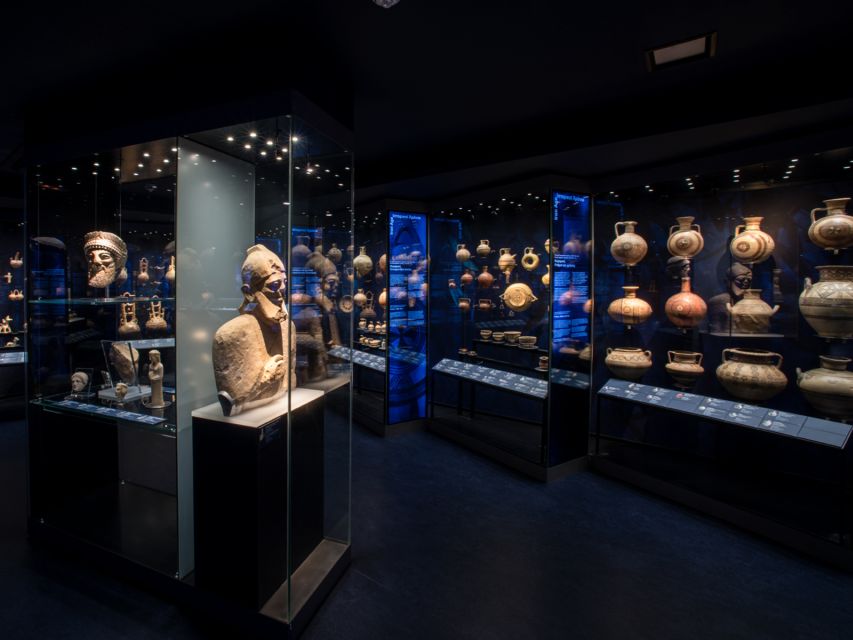
The Museum of Cycladic Art gives you a clear look at one of the ancient Aegean’s most distinctive art styles: smooth marble figurines made around 2300 BC. Its four floors move from Cycladic island culture to ancient Greek society, daily life in Classical Athens, and the mixed traditions of ancient Cyprus.
I like the easy central location, only about five minutes from Syntagma Square and its Metro station. I also like the calm layout, readable information panels, free Wi-Fi, and the useful QR-linked Clio Muse Tours. The main caution is that this is an unguided museum visit, and the audio content covers only some objects. Construction work has also affected access and noise at times, so check current conditions before you go.
In This Review
- Key points to know before you go
- Why the Cycladic figurines deserve your attention
- Starting near Syntagma Square
- A practical route through four floors
- The ancient Greek collection from the second millennium BC
- Classical Athens and everyday life
- Ancient Cyprus and Mediterranean connections
- Using the Clio Muse Tours QR guide
- How the $14 price works for a short visit
- The Cycladic Café and a sensible stopping point
- Noise, access, and other points to watch
- Who should book this museum ticket?
- Should you book the Museum of Cycladic Art?
- FAQ
- Where is the Museum of Cycladic Art located?
- What does the ticket include?
- Is a guided tour included?
- How long is the ticket valid?
- How long should I plan for the museum?
- Is the museum wheelchair accessible?
- Can I bring food or drinks into the museum?
- Is there a café at the museum?
- Can I cancel the booking?
Key points to know before you go
- Marble figurines from the third millennium BC: See the famous simplified human forms and other Cycladic carvings from the Early Bronze Age.
- Four floors with different themes: The collection moves from Cycladic art to Greek art, Classical Athenian life, and ancient Cyprus.
- A sensible one-and-a-half to two-hour visit: The museum is compact enough for a focused stop, without demanding an entire day.
- No guide is included: You explore independently, with QR access to Clio Muse Tours for selected pieces.
- Five minutes from Syntagma Square: The location fits neatly into a central Athens sightseeing day.
- A small café and shop: Finish with Cycladic-inspired food and drinks, though food and drinks are not allowed in the galleries.
Why the Cycladic figurines deserve your attention
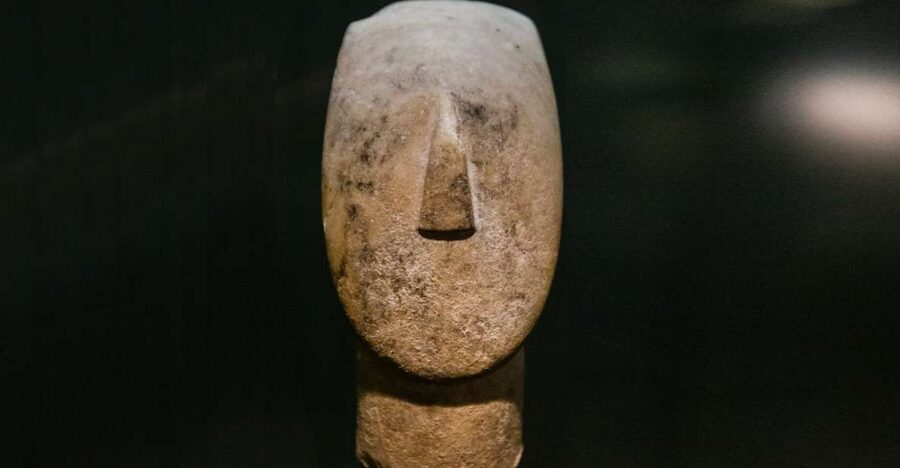
You may recognize Cycladic figurines before you know their name. Their folded arms, long noses, and simple white marble bodies have influenced modern artists and designers, yet these objects were made thousands of years ago on islands in the central Aegean.
The collection shows more than a handful of famous figures. You will find marble carvings, vases, tools, weapons, and pottery from the different stages of Cycladic island culture during the Early Bronze Age. That range matters because it lets you see how people lived, worked, and made objects, not just the pieces that look best in a photograph.
The figurines are often small and spare. They do not come with the visual noise of later sculpture. I find that their plain shapes make you look harder at proportion, surface, and the skill needed to cut a human form from stone with limited tools.
The date, around 2300 BC for some of the best-known works, can also reset your sense of time. These are not early versions of Classical Greek statues. They belong to a separate prehistoric culture, long before the Athens most people picture when they hear the word Greece.
More Museum Tours in Athens
- Athens: Acropolis, Parthenon & Acropolis Museum Guided Tour
★ 4.8 · 9,316 reviews - Athens: Mythology of Delphi, Museum and Arachova Guided Tour
★ 4.6 · 4,008 reviews - Athens: Acropolis, Parthenon & Acropolis Museum Guided Tour
★ 4.8 · 3,579 reviews
Starting near Syntagma Square
The museum’s main entrance is about a five-minute walk from Syntagma Square and Syntagma Metro station. That makes the visit easy to pair with central Athens sights, especially if you want an indoor stop during a day of walking.
Enter through the main entrance and allow a little extra time to find it if street works are taking place. Access has been blocked or confusing during construction in the past, and one visitor was directed to approach from another route. Conditions can change, so do not leave the museum until the last five minutes of a tightly planned schedule.
The building itself is part of the appeal. It is a handsome old house rather than a vast modern museum complex. The rooms are spread across four floors, with one or two exhibition rooms on each level in some sections. That scale helps you keep your attention on the objects instead of tiring out before the end.
The museum is wheelchair accessible. Food and drinks are not permitted in the galleries, but you can use the Cycladic Café after your visit.
A practical route through four floors
Your ticket covers the permanent collections for one day. There is no fixed guided itinerary, so you can follow the museum’s order or use the advice given at the entrance. One practical approach is to begin on the top floor and work downward, reducing the need to climb stairs later.
The four-floor arrangement is easy to follow once you get your bearings. The displays are not overloaded, and the information panels are designed to help you understand what you are seeing without requiring a long lecture at every case.
For a first visit, plan about 1.5 to 2 hours. You can move faster if you mainly want the famous marble pieces, or stay longer if ancient tools, pottery, coins, and small decorative objects hold your interest.
The visit works best when you do not treat every object as equally important. Pick a few pieces on each floor, read the nearby text, and then compare them with the objects around them. That gives you a sense of change over time without turning the museum into a checklist.
The ancient Greek collection from the second millennium BC
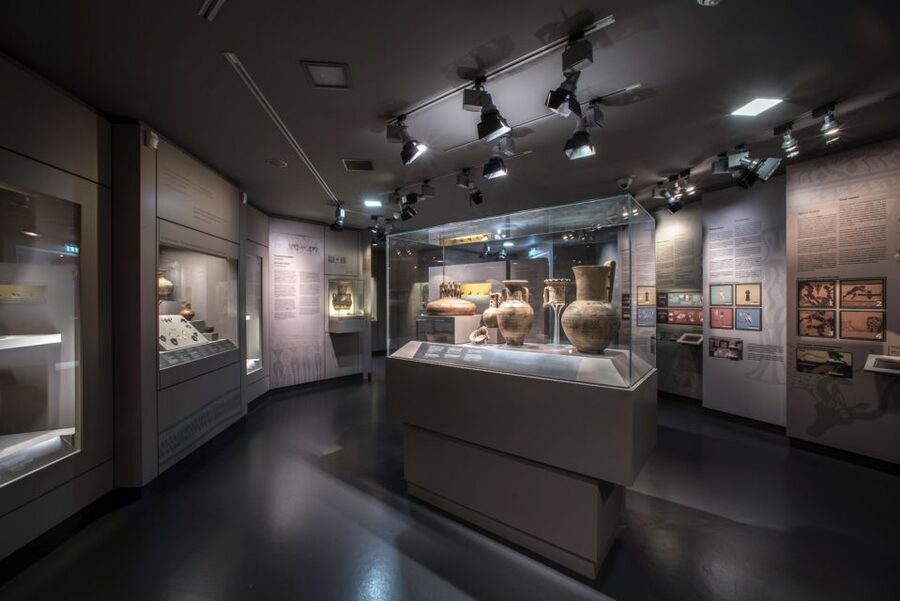
The Ancient Greek Art collection covers a long stretch, from the second millennium BC to the fourth century AD. You will see painted vases, terracotta figurines, bronze vessels, stone sculpture, coins, gold jewelry, and glass objects.
This section helps explain how Greek art changed as cities and society developed. A vase is not just a decorated container here. Its shape, painting, and use can point to changing customs, technical skills, and ideas about daily life.
The mix of large and small pieces is helpful. Stone sculpture catches your eye first, but jewelry, coins, glass, and bronze vessels reward slower looking. These smaller objects show craftsmanship in forms that people handled and used, rather than made only for public display.
I would give this collection more time if you have already visited Athens’ major archaeological museums and want a focused comparison. You will encounter some familiar categories, including pots, weapons, and statues. The benefit here is the tidy presentation and the chance to connect them with the Cycladic and Cypriot material nearby.
More Athens museums and collections:
- Acropolis monuments & Parthenon Walking Tour with Optional Acropolis Museum
★ 5.0 · 2,678 reviews - Athens All Included: Acropolis and Museum Guided Tour with Ticket
★ 4.5 · 2,673 reviews - Athens: Acropolis Museum Ticket with optional Audio Guide
★ 4.4 · 2,652 reviews - From Athens: Small-Group Delphi, Museum & Arachova Day Trip
★ 4.8 · 2,476 reviews
Classical Athens and everyday life
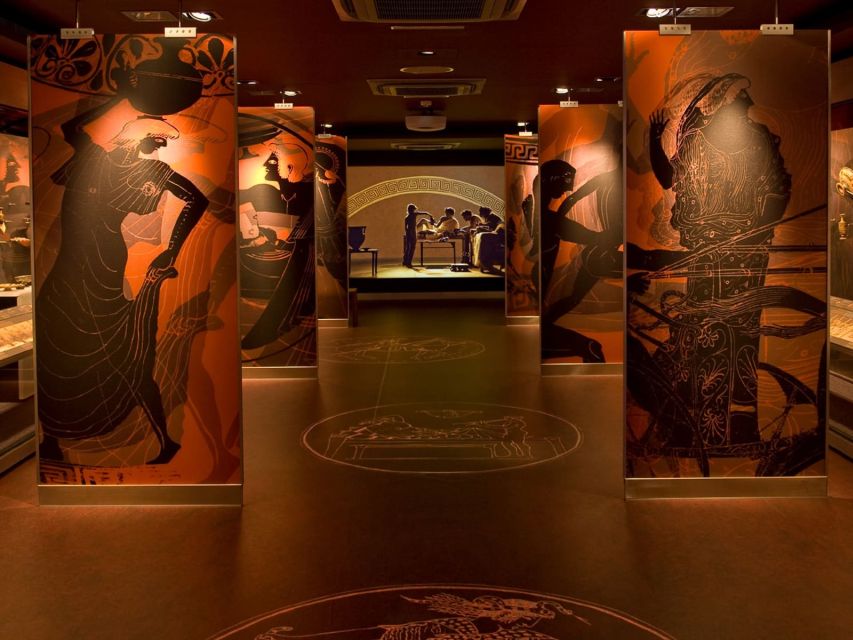
The fourth-floor exhibition offers a look at everyday life in Classical Athens. This gives the museum a useful change of scale. Instead of asking only what ancient artists made, you can consider how objects fitted into ordinary homes, social customs, and public life.
The display is particularly useful for visitors who find rows of sculpture hard to place. Everyday objects give the larger artistic story a human setting. They help you think about who used an object, what it was for, and how it might have fitted into Athenian society.
The museum’s arrangement makes this floor a natural part of a chronological visit, but you can also head here first if daily life interests you more than prehistoric art. Families should note that the material may be less engaging for children under about 10, especially if they need hands-on displays or a quick pace.
Ancient Cyprus and Mediterranean connections
The Ancient Cypriot Art collection is one of the largest outside Cyprus. It covers an unusually long period, from the fourth millennium BC through medieval times.
You will see prehistoric figurines, Archaic and Classical sculpture, inscriptions, bronzes, coins, gold jewelry, glasswork, and many types of ceramics. The value of this section is not simply its size. Cyprus sat among several cultural worlds, and its art reflects contact with local, Greek, Egyptian, and Near Eastern traditions.
Look for those overlaps as you move through the displays. A form, decoration, or material may suggest that ideas traveled across the ancient Mediterranean. The collection gives you a way to see Cyprus as a meeting point, not as an isolated island culture.
This section also breaks up the familiar Athens-centered story. If your sightseeing has focused mainly on the Acropolis, the Agora, and Classical sculpture, ancient Cyprus adds a wider regional view. It shows that Greek art developed through contact and exchange as well as through local invention.
Using the Clio Muse Tours QR guide
Your admission includes access to Clio Muse Tours through a QR code. This is not the same as having a museum guide beside you, but it can add context when you want more than the wall panels provide.
Use it selectively. The museum contains many objects, while only some are covered in the audio guide. A practical method is to read the room text first, then use the QR material for pieces that catch your eye.
The application can require some patience. Searching for individual objects by number may feel slow, especially if you are trying to follow a route from the top floor down. If you prefer a fully narrated museum experience, this ticket may feel limited. If you like to set your own pace, the independent format is a strength.
You also get free Wi-Fi, which helps with the QR-linked material. Bring a charged phone and allow yourself time to use the guide without rushing from case to case.
How the $14 price works for a short visit
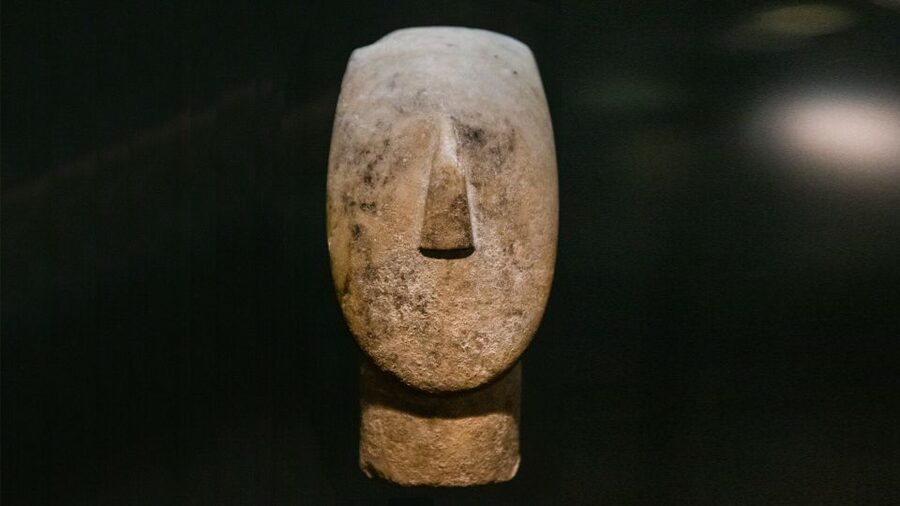
At $14 per person, this is a reasonable ticket for a central Athens museum visit, especially if you spend 1.5 to 2 hours with the permanent collections. You are paying for access to several distinct collections in one building, not just a single room of Cycladic figurines.
The value is strongest if you appreciate ancient art but do not want another enormous museum. The compact layout lets you focus on the objects and leave with a clear sense of the main themes.
The price is less compelling if you expect a personal guide, a full audio tour of every exhibit, or special temporary exhibitions. The ticket covers the permanent collections, and no hotel transfer or guided tour is included.
You can reserve now and pay later, which helps if your Athens schedule is still changing. Cancellation is free up to 24 hours in advance for a full refund. Since the ticket is valid for one day rather than a set short time slot, you have room to fit it around other central Athens plans.
The Cycladic Café and a sensible stopping point
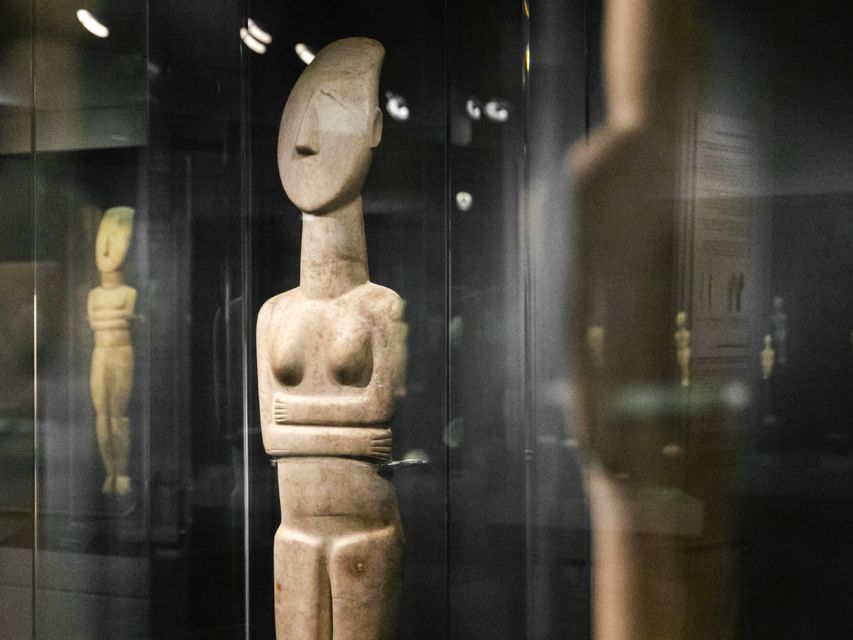
The Cycladic Café offers a quiet place to rest after the galleries, with Cycladic flavors made from natural products and virgin ingredients. It gives the visit a pleasant ending rather than forcing you straight back onto the city streets.
Food and drinks are not allowed inside the exhibition areas, so treat the café as a separate stop. The museum also has a shop, useful if you want a small reminder of the collection without buying a major archaeological reproduction.
The café is not a reason to visit on its own, but it adds value when you are already nearby. A museum visit can become tiring after several archaeological sites, and this gives you a chance to pause in the same building.
Noise, access, and other points to watch
The museum is generally cool, well structured, and easy to navigate. That can be welcome during a hot Athens day, though you may want a light layer if you are sensitive to cool interiors.
Renovation work was reported in late 2025, including loud construction noise and a blocked street approach. If quiet matters to you, check the museum’s current access and renovation status before booking. Earplugs could be useful if work is still underway, though they may make it harder to hear the audio guide.
The collection is displayed across multiple floors. Visitors who have difficulty with stairs should ask staff about the most suitable route, even though the museum is wheelchair accessible.
Children under 10 may find the visit slow. Older children and teenagers who like mythology, design, ancient technology, or small visual details may do better if you give them a simple mission, such as finding the oldest object, comparing two figurines, or spotting materials used in different periods.
Who should book this museum ticket?
I would recommend it to you if you want a focused museum stop close to central Athens. It suits anyone curious about Cycladic figurines, ancient Mediterranean connections, or the way Greek art developed across many centuries.
It is also a good choice after visiting major archaeological sites. The displays are calm and manageable, and the clear floor-by-floor organization helps you make sense of objects that can seem disconnected in a larger museum.
You may want to skip it if you only have time for one major Athens museum and your priority is the Acropolis collections. You should also think twice if you want a live guide or a fully narrated route. This ticket gives you independence, not a guided lesson.
Should you book the Museum of Cycladic Art?
Book it if you can spare two hours and want more than the usual Classical Athens story. The marble Cycladic figures are the main draw, but the Greek and Cypriot collections make the visit worthwhile by showing how art, trade, technology, and ideas moved around the ancient Mediterranean.
The $14 price is fair for the range of permanent collections and the central location. Go with realistic expectations: use the QR guide as a supplement, not a replacement for a guide, and check for renovation noise or entrance changes before you set out.
FAQ
Where is the Museum of Cycladic Art located?
The main entrance is about a five-minute walk from Syntagma Square and Syntagma Metro station in central Athens.
What does the ticket include?
The ticket includes entry to the museum’s permanent collections, free Wi-Fi, and access to Clio Muse Tours through a QR code.
Is a guided tour included?
No. A live guided tour is not included. You explore independently and can use the QR-linked Clio Muse Tours for selected exhibits.
How long is the ticket valid?
The ticket is valid for one day. Check availability for the applicable starting times when booking.
How long should I plan for the museum?
A focused visit to the permanent exhibitions generally takes about 1.5 to 2 hours, though you can stay longer if you read more labels and spend extra time with the collections.
Is the museum wheelchair accessible?
Yes, the museum is wheelchair accessible.
Can I bring food or drinks into the museum?
No. Food and drinks are not allowed in the exhibition areas.
Is there a café at the museum?
Yes. The Cycladic Café serves Cycladic-inspired flavors made with natural products and virgin ingredients.
Can I cancel the booking?
Yes. You can cancel up to 24 hours in advance for a full refund. You can also reserve now and pay later.
Recently reviewed around Athens
- Small-Group Women History in Ancient Greece Walking Tour★ 5.0 · 38 reviews
- Ceramic and Pottery Creative Workshop with Two Local Artists★ 4.0 · 57 reviews
- Athens: Wine Workshop Create your Own Wine under the Acropolis★ 5.0 · 77 reviews
- Athens: Greek Wines Tasting with Sommelier and Acropolis Views★ 5.0 · 88 reviews
- Hydra Private Day Trip by Ferry from Athens with Transfers★ 4.0 · 30 reviews
- Small-Group Wine Tour in Athens with Tasting★ 5.0 · 33 reviews
- Wine Trails Private Tour/ Nemea visit 3 wineries from Athens or Nafplion (10 h)★ 5.0 · 44 reviews
- Private Athens Transfer Airport/Port -Greek Tours-Hourly service★ 5.0 · 88 reviews
Museums, compared.

Acropolis, Parthenon & Acropolis Museum Guided Tour
Read our review →
Mythology of Delphi, Museum and Arachova Guided Tour
Read our review →Acropolis, Parthenon & Acropolis Museum Guided Tour
Read our review →
Acropolis monuments & Parthenon Walking Tour with Optional Acropolis Museum
Read our review →
Athens All Included: Acropolis and Museum Guided Tour with Ticket
Read our review →
Acropolis Museum Ticket with optional Audio Guide
Read our review →
Small-Group Delphi, Museum & Arachova Day Trip
Read our review →
Parthenon & Acropolis Museum with Audio or Live Tour Option
Read our review →Browse the lists this tour appears in