
Reviewed · MUSEUMS
Athens: National Archaeological Museum Private Guided Tour
The National Archaeological Museum holds the Antikythera mechanism, often called the world’s oldest analogue computer, along with thousands of objects spanning Greek civilization from prehistory to late antiquity. A private guide helps you make sense of a collection so large that two hours can disappear quickly.
I like the focused route and the chance to ask questions without keeping pace with a big tour group. I also like the guide’s reported flexibility: Christos Theodoropoulos has adjusted timing, answered specialist questions, and even arranged access to a normally closed jewelry room in one case. The main drawback is pace. Two hours gives you the major works, not the whole museum, and the €400 group price does not include the €10 museum ticket.
In This Review
- Key points to know before booking
- Why this museum deserves two hours of your Athens time
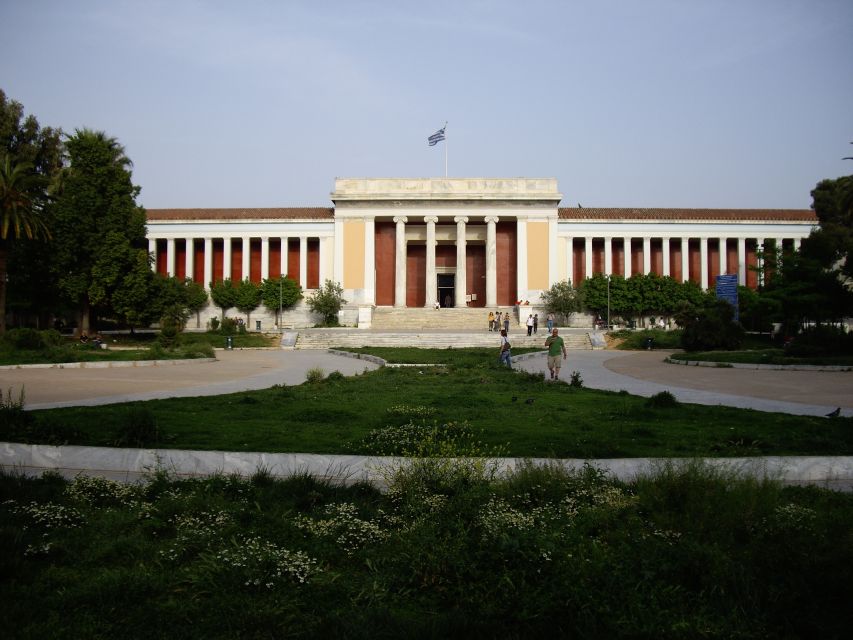
- Meeting at 44 Patission Street
- The prehistoric galleries: Cycladic figures and Mycenaean gold
- The Antikythera mechanism and the power of a single object
- Greek sculpture from the seventh to fifth centuries BC
- Pottery, small objects, and everyday Greek life
- Egyptian and Near Eastern antiquities
- What Christos adds to the visit
- Is $400 good value for a private group?
- Making the two-hour route work
- Who should book this museum tour?
- Should you book it?
- FAQ
- Where does the tour meet?
- What is the listed starting location?
- How long is the guided tour?
- How much does the private tour cost?
- Is museum admission included?
- Is hotel transfer included?
- Which languages are available?
- Who leads the tour?
- What is the main museum highlight?
- Can I cancel the booking?
- Can I pay later?
Key points to know before booking
- The Antikythera mechanism is a major highlight: See the ancient device linked to astronomy and mechanical calculation.
- Christos Theodoropoulos leads the tour: He is praised for clear explanations, humor, strong historical context, and good timing.
- You get a private group experience: The advertised rate is $400 for up to six people, so the value improves with a full group.
- The collection is far too large for two hours: Expect selected masterpieces from prehistoric, classical, Roman, Egyptian, and Near Eastern sections.
- Entry costs extra: Budget €10 per person for museum admission, in addition to the guide fee.
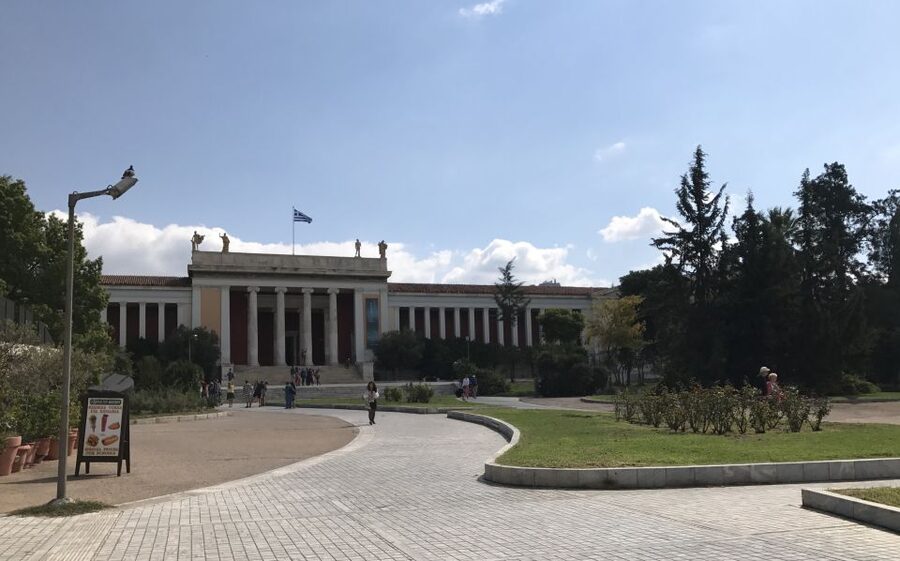
- The meeting point is at the museum entrance: Meet at the steps of the main entrance on 44 Patission Street, with booking details also showing 28is Oktovriou 42.
Why this museum deserves two hours of your Athens time
Athens is packed with famous ancient sites, but the National Archaeological Museum gives you the objects themselves in one place. You see sculpture, pottery, jewelry, bronze work, tools, and burial objects rather than only the remains of buildings.
The museum was created to hold archaeological finds from Athens and later grew into Greece’s central national collection. Its more than 11,000 exhibits cover an enormous span, from the sixth millennium BC through late antiquity.
That scale is both the museum’s strength and its challenge. You can wander in and admire beautiful objects, but the connections between them are not always obvious when you are seeing several thousand years of art in a single morning or afternoon. A guide gives you a route and a story, so the famous pieces do not become a blur of marble, gold, clay, and bronze.
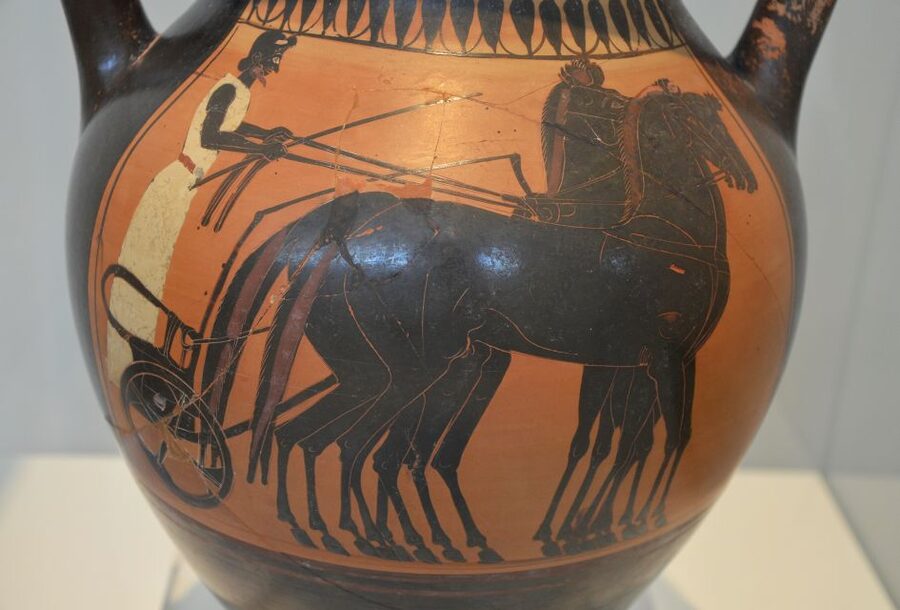
I would not treat this as a quick stop between the Acropolis and lunch. The museum occupies a large neoclassical building, with galleries across two floors and about 8,000 square meters of exhibition space. Even a carefully planned two-hour visit will show only a portion of what is here.
More Museum Tours in Athens
- Athens: Acropolis, Parthenon & Acropolis Museum Guided Tour
★ 4.8 · 9,316 reviews - Athens: Mythology of Delphi, Museum and Arachova Guided Tour
★ 4.6 · 4,008 reviews - Athens: Acropolis, Parthenon & Acropolis Museum Guided Tour
★ 4.8 · 3,579 reviews
Meeting at 44 Patission Street
The meeting point is on the steps in front of the main entrance of the National Archaeological Museum, listed at 44 Patission Street, postal code 10682. The activity information also gives 28is Oktovriou 42 as the starting location, so check the exact wording on your booking confirmation before you set out.
There is no hotel transfer included. You make your own way to the museum, then meet the licensed archaeologist outside. That arrangement keeps the tour simple, but allow enough time to reach the entrance without rushing. The museum is the only stop, so you are not paying for a guide to shepherd you around Athens.
The guide should help with museum entry, but the admission ticket itself is separate. The listed museum price is €10 per person. For a group of six, that adds €60 to the advertised $400 guide cost, before any transport to the museum.
The prehistoric galleries: Cycladic figures and Mycenaean gold

A good tour begins by showing you that Greek art did not start with the marble gods of the fifth century BC. The prehistoric collection traces Aegean cultures from the Neolithic period through the Cycladic and Mycenaean eras, covering roughly the sixth millennium BC to 1050 BC.
The Cycladic material is especially useful for understanding how much modern art has borrowed from very old forms. The small marble figures are spare and stylized, with smooth shapes that can look surprisingly modern. Your guide can place them in their archaeological setting rather than treating them as isolated design objects.
The Mycenaean galleries shift the mood. Here you may see luxurious burial goods and objects linked with elite life in the Bronze Age Aegean. The material helps explain the world behind the legends of Mycenae, Troy, and the heroic age, while also reminding you that archaeology and later epic poetry are not the same thing.
The finds from prehistoric Thera add another important chapter. They connect the museum to the settlements of the Aegean and show that early Greek culture was not a single, fixed tradition. If ancient Greece feels too familiar from schoolbooks, this section gives you a more varied starting point.
The Antikythera mechanism and the power of a single object
The Antikythera mechanism is one of the tour’s clearest reasons to hire a guide. The corroded fragments can look modest in a display case, but the object’s purpose and construction are remarkable. It is described as the world’s oldest analogue computer, a mechanical device connected with astronomical calculations.
A guide can help you see why it matters instead of leaving you with only its name. This is an object where context does the work. You need to understand what it could calculate, how unusual its gears were, and what it reveals about ancient Greek science and craft.
The museum also has an important Bronze Collection, with statues, figurines, and smaller objects. Bronze behaves differently from marble, and the surviving pieces offer another view of ancient skill. A private tour lets you pause when a particular object catches your attention, provided the overall schedule allows it.
More Athens museums and collections:
- Acropolis monuments & Parthenon Walking Tour with Optional Acropolis Museum
★ 5.0 · 2,678 reviews - Athens All Included: Acropolis and Museum Guided Tour with Ticket
★ 4.5 · 2,673 reviews - Athens: Acropolis Museum Ticket with optional Audio Guide
★ 4.4 · 2,652 reviews - From Athens: Small-Group Delphi, Museum & Arachova Day Trip
★ 4.8 · 2,476 reviews
Greek sculpture from the seventh to fifth centuries BC
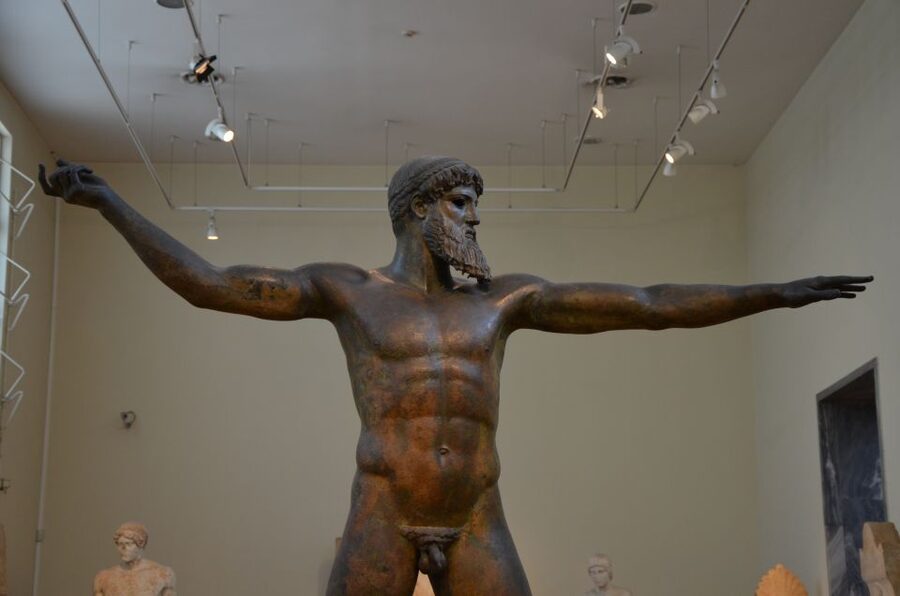
The Sculpture Collection follows the development of Greek sculpture from the seventh to the fifth centuries BC. This is the section many people picture when they think of the museum, and it rewards close attention.
Rather than seeing every statue as a perfect, finished ideal, you can watch artists change the way they represented the human body, clothing, movement, and expression. A guide makes those changes easier to spot. The value is not only naming famous works. It is learning what changed from one period to the next and why those changes matter.
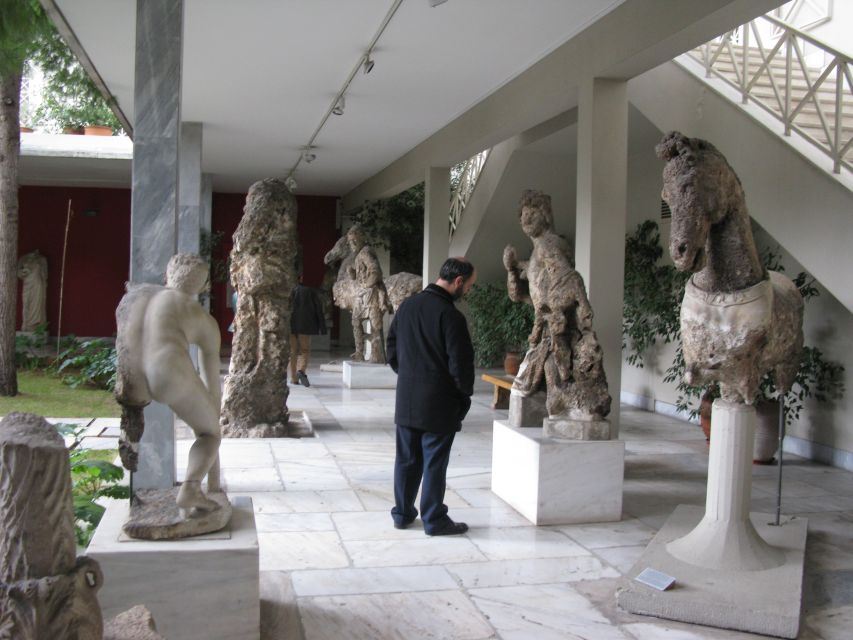
The museum’s sculpture rooms also help you compare works side by side. At outdoor archaeological sites, you often see fragments in their original setting. Here, the concentration of objects lets you compare scale, material, pose, and technique in a short walk.
Two hours is not enough for a slow study of every sculpture. The guide’s job is to choose the pieces that best explain the larger story. Several past descriptions of Christos’s tours praise his timing and his ability to move a group through the highlights without making the visit feel like a list of dates.
Pottery, small objects, and everyday Greek life
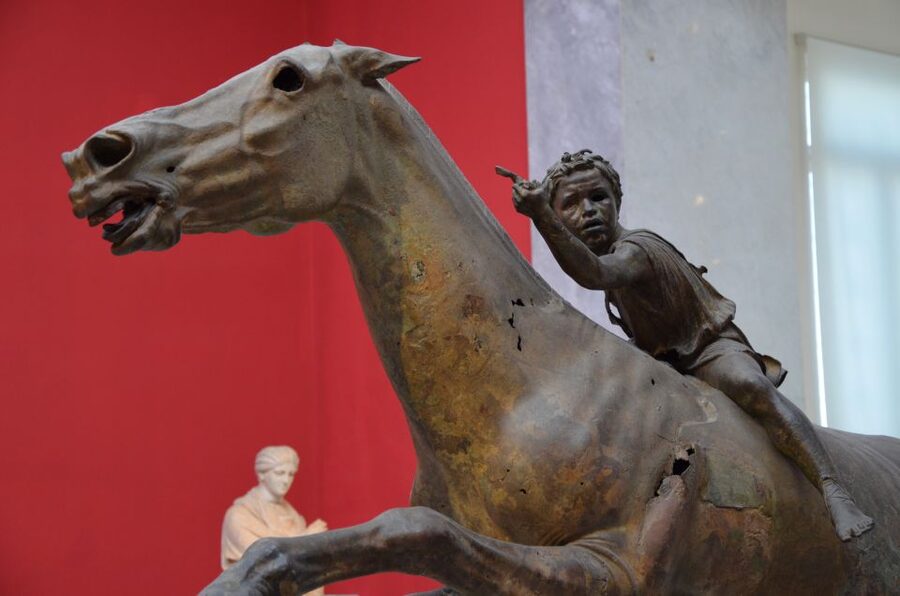
The Vase and Minor Objects Collection fills in details that monumental sculpture cannot. The pottery spans the eleventh century BC through the Roman period, offering a long look at changing shapes, painted scenes, and practical uses.
Vases can reveal how people ate, stored goods, traveled, worshiped, and imagined mythological stories. They also show that ancient art was not limited to temple statues. Smaller objects often bring daily life closer than grand public monuments do.
The Stathatos Collection adds small works from different periods. These pieces may not have the instant recognition of a major statue, but they can be rewarding if you like jewelry, decoration, or the fine details of ancient craftsmanship.
One particularly useful detail comes from a tour for a visitor with a professional interest in ancient jewelry. Christos arranged a private showing of the jewelry room, which was normally locked at that time of year. That is a memorable possibility, but do not treat it as a guaranteed part of every booking. It depended on the circumstances and should be requested in advance.
Egyptian and Near Eastern antiquities
The museum’s Egyptian and Near Eastern Antiquities Collection is the only one of its kind in Greece. Its objects range from the predynastic period, around 5000 BC, to the Roman conquest.
This section broadens the visit beyond Greek art. You can place Greek civilization alongside older cultures and see that the ancient Mediterranean was connected by trade, ideas, artistic habits, and political change. The collection is also a useful reminder that the museum is not limited to classical Athens.
Because the tour is only two hours, the guide may give this collection a shorter treatment than the Greek sections. That is not a flaw in itself. A route has to make choices, and most people booking this experience want the major Greek works first. If Egypt or Near Eastern antiquities are your priority, tell the guide at the start so the route can reflect your interests.
What Christos adds to the visit
The strongest praise focuses on Christos Theodoropoulos, who is described as friendly, engaging, and passionate about Greek history. His approach appears to be more than a string of museum labels. He gives you a working outline of Greek history, then uses objects to make the outline concrete.
That is particularly helpful for families. One tour included children aged nine and seven, and the guide kept the visit interesting enough for them to stay involved. Another group included teenagers and a young adult, and the guide moved them through the museum’s highlights while giving them a fast introduction to ancient Greece.
His pace can be quick because the museum contains so much. I would tell him at the beginning if you want longer stops at sculpture, jewelry, prehistoric objects, or the Antikythera mechanism. A private group gives you more control than a standard public tour, but the clock still matters.
The guide is listed as offering tours in English, Greek, German, and Turkish. That range is useful for mixed-language groups, though you should select or confirm your preferred language when booking.
Is $400 good value for a private group?
The advertised price is $400 per group of up to six people, with museum admission extra. For one or two people, that is a serious expense. You are paying for a private licensed archaeologist rather than a cheap orientation, so the value depends on how much you want interpretation and personal attention.
For six people, the guide cost works out to about $67 per person before entry. Add the €10 museum ticket for each person, and the total becomes easier to justify if everyone in the group wants a guided visit.
The private format also matters if your group has different ages or interests. A guide can explain a statue in simple terms for children, give more detail to adults, and adjust the route when one person wants to spend extra time with jewelry or bronze objects.
If you are happy reading labels and choosing your own route, you may not need a guide. The museum is described as well labeled and logically arranged, and one assessment specifically found a guide helpful but not essential. The tour is most worthwhile when you want the larger story, have limited time, or find large museums intimidating.
Making the two-hour route work
Arrive ready to focus. The museum’s size means you should not expect a complete visit in the allotted time. Think of the tour as an introduction to the most important rooms, followed by the option to continue on your own if you still have energy and time.
Tell Christos what matters to you before you begin. You might ask for more prehistoric material, sculpture, pottery, bronze, the Antikythera mechanism, or Egyptian antiquities. A private tour has room for that conversation.
The tour is also a good first visit rather than a final one. Several people have used the guide to get their bearings, then stayed longer to see rooms that were not covered. One account describes the guide continuing to show an upper floor after the official tour time, but you should not assume extra time is included. Plan around the stated two hours.
The museum can feel intimidating because there is so much to see. That is exactly where a guide earns the fee. You leave with a structure in your head, not just a memory of beautiful objects.
Who should book this museum tour?
I would recommend it to first-time visitors who want ancient Greek art explained in historical order. It also suits families, private groups, and anyone who prefers asking questions instead of listening to a fixed script.
It is a good choice for people with a particular interest in archaeology, ancient technology, sculpture, or jewelry. Tell the guide your focus early, since the museum cannot be covered fully in two hours.
I would be more cautious if you are visiting alone on a tight budget. The €400 group fee is hard to justify for one person, especially since entry is extra. In that case, a self-guided visit may give you better value, provided you are comfortable choosing highlights on your own.
The activity allows free cancellation up to 24 hours before the start time, and you can reserve now and pay later. Those terms help if your Athens plans are still shifting, but the main decision remains the same: do you want expert interpretation, or would you rather explore independently?
Should you book it?
Book this tour if you want a clear introduction to Greece’s greatest archaeological museum and prefer a private route through its major collections. Christos’s strength is turning a huge set of objects into an understandable story, with room for questions and some flexibility.
Skip it if you are content with labels, have plenty of time, or cannot fill most of the private-group price. For everyone else, especially a group of four to six, the tour offers a practical way to see the Antikythera mechanism, major sculpture, prehistoric treasures, pottery, bronze, and selected Egyptian and Near Eastern objects without wandering blindly through 8,000 square meters of galleries.
FAQ
Where does the tour meet?
Meet at the steps in front of the main entrance of the National Archaeological Museum at 44 Patission Street, 10682, Athens.
What is the listed starting location?
The activity information lists 28is Oktovriou 42 as the starting location. The meeting point is also identified as the museum’s main entrance at 44 Patission Street, so check your booking details for the exact meeting instructions.
How long is the guided tour?
The guided tour lasts two hours.
How much does the private tour cost?
The listed price is $400 per private group of up to six people.
Is museum admission included?
No. The museum entry ticket is not included and is listed at €10 per person.
Is hotel transfer included?
No. You must make your own way to the museum.
Which languages are available?
The live guide is listed as available in Turkish, English, German, and Greek.
Who leads the tour?
The experience provider is Christos Theodoropoulos, a licensed archaeologist guide.
What is the main museum highlight?
The tour includes the Antikythera mechanism, described as the world’s oldest analogue computer, along with major works from Greek prehistoric, sculptural, pottery, bronze, Egyptian, and Near Eastern collections.
Can I cancel the booking?
You can cancel up to 24 hours in advance for a full refund.
Can I pay later?
Yes. The activity allows you to reserve your place and pay later, so you do not have to pay at the time of booking.
Recently reviewed around Athens
- Small-Group Women History in Ancient Greece Walking Tour★ 5.0 · 38 reviews
- Ceramic and Pottery Creative Workshop with Two Local Artists★ 4.0 · 57 reviews
- Athens: Wine Workshop Create your Own Wine under the Acropolis★ 5.0 · 77 reviews
- Athens: Greek Wines Tasting with Sommelier and Acropolis Views★ 5.0 · 88 reviews
- Wine Trails Private Tour/ Nemea visit 3 wineries from Athens or Nafplion (10 h)★ 5.0 · 44 reviews
- Hydra Private Day Trip by Ferry from Athens with Transfers★ 4.0 · 30 reviews
- Small-Group Wine Tour in Athens with Tasting★ 5.0 · 33 reviews
- Private Athens Transfer Airport/Port -Greek Tours-Hourly service★ 5.0 · 88 reviews
Museums, compared.

Acropolis, Parthenon & Acropolis Museum Guided Tour
Read our review →
Mythology of Delphi, Museum and Arachova Guided Tour
Read our review →Acropolis, Parthenon & Acropolis Museum Guided Tour
Read our review →
Acropolis monuments & Parthenon Walking Tour with Optional Acropolis Museum
Read our review →
Athens All Included: Acropolis and Museum Guided Tour with Ticket
Read our review →
Acropolis Museum Ticket with optional Audio Guide
Read our review →
Small-Group Delphi, Museum & Arachova Day Trip
Read our review →
Parthenon & Acropolis Museum with Audio or Live Tour Option
Read our review →Browse the lists this tour appears in