
Reviewed · ACROPOLIS & ACROPOLIS MUSEUM TOURS
Athens: Parthenon, Acropolis and Museum Small Group Tour
The best thing about this Athens tour is the order: you climb the Acropolis first, then see the original sculptures and finds in the Acropolis Museum. I like the reserved entry, which removes much of the ticket hassle, and I like the licensed guides, who explain mythology, architecture, and daily life instead of simply pointing at ruins. The main catch is that a small group can still reach about 20 people, especially in busy months.
I also like the sensible three-hour pace. You get time for photos, questions, and short rests without trying to cover every corner of the Acropolis. Just remember that this is a hilltop archaeological site with uneven ground, no elevator access, and no room for large bags or strollers.
In This Review
- Key points at a glance
- What you are really paying for
- Meeting at Acropolis Metro Station
- Climbing the Acropolis for the first hour
- The Parthenon and the view from the summit
- Why the Acropolis Museum changes the visit
- The guides are the heart of the experience
- Crowds, weather, and group size
- Who should book this Athens tour?
- Final verdict: worth $57?
- FAQ
- Where does the tour meet?
- Are tickets included?
- How long does the tour last?
- Is this a skip-the-line tour?
- What languages are available?
- Can I bring a stroller or wheelchair?
Key points at a glance
- The museum follows the hilltop visit: Seeing the surviving sculptures after the temples gives the ruins much more meaning.
- Reserved tickets save planning time: You enter through the reserved-ticket queue, though busy periods can still bring a wait.
- Guides make the difference: Eva, Vicky, Frosso, Lisa, Maria, and others have been praised for clear storytelling, humor, and care.
- Headsets help in crowds: You can hear the guide even when the group spreads out around the monuments.
- The tour is active: Expect an uphill walk, sun, stone surfaces, and no wheelchair, walker, stroller, or elevator access.
- Early starts are smart: An 8 a.m. option can mean fewer people and a more comfortable climb.
What you are really paying for
The price is $57 per person, including pre-reserved admission to both the Acropolis and the Acropolis Museum, a guide, and headsets. That is not the cheapest way to enter these sights, but it is a fair price if you want the major pieces of Athens explained in one well-planned visit.
You can walk up to the Acropolis and buy entry yourself. You can also visit the museum alone. The value here is the connection between the two. At the hilltop, you see the buildings in their setting, with their missing sculptures and weathered stone. In the museum, you see original pieces saved from those buildings, displayed in a way that helps you understand what the temples once looked like.
The guide is the other part of the price. The best guides do more than recite dates. Eva has been especially praised for combining Greek mythology, politics, architecture, and everyday culture in an easy-to-follow way. Vicky is known for turning facts into stories, while Frosso has been appreciated for her clear English and steady handling of groups. Names and assignments can change, of course, but the guide is central to the experience.
There is also a private-group option if you want more control over the pace. The standard version is designed for a small group, though you should not assume a tiny gathering. One group reported 20 people, which still worked because the guide used headsets and kept checking that everyone was together. If personal attention matters most, check the exact option and group size before booking.
More Museum Tours in Athens
- Athens: Acropolis, Parthenon & Acropolis Museum Guided Tour
★ 4.8 · 9,316 reviews - Athens: Mythology of Delphi, Museum and Arachova Guided Tour
★ 4.6 · 4,008 reviews - Athens: Acropolis, Parthenon & Acropolis Museum Guided Tour
★ 4.8 · 3,579 reviews
Meeting at Acropolis Metro Station
The tour starts outside Acropolis Metro Station at Makrigianni 7. If you arrive by metro, use the Makrygianni or Dionysiou Areopagitou exit, go up to street level, and look for the guide holding a sign with your names.
Arrive five to 10 minutes early. This is not a casual meet-up where you can stroll in after the group has left. Acropolis tickets are timed, and they can expire within five to 10 minutes. The tour leaves punctually because the guide has a reserved entry time.
The meeting point is convenient if you are staying in central Athens, but transport to it is not included. Give yourself extra time if you are coming from another part of the city. One useful practical point: a sign may not always be obvious in the crowd, so read the meeting instructions carefully and confirm the name of the tour when you arrive.
Climbing the Acropolis for the first hour
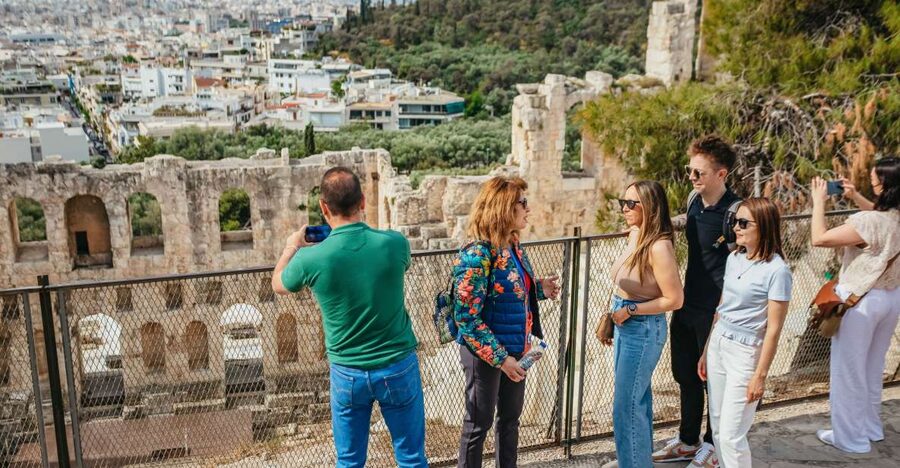
The visit begins with the Acropolis Hill, where you spend about an hour on a guided walk. The climb is not a mountain expedition, but it is a real uphill approach over ancient stone and exposed ground. On a hot day, the pace matters. Guides have adjusted their speed for mixed groups, offered chances to rest, and stopped for water and photographs.
Wear sturdy shoes. Sandals and flip flops are not allowed, and they would not be a good choice on the stone surfaces in any case. Bring water and a sun hat. Rain is possible too, and wet stone can make the walk less comfortable, so check the forecast before you set out.
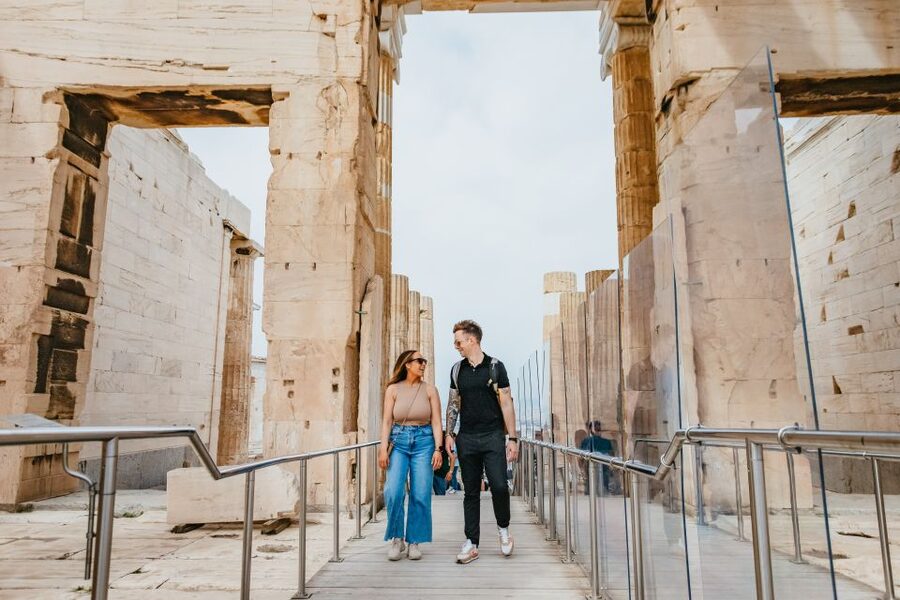
Your route takes in several major monuments. Some are formal stops, while others are viewed along the way. The guide explains what you are seeing as the group moves, rather than leaving you to puzzle over a broken column or half-visible foundation.
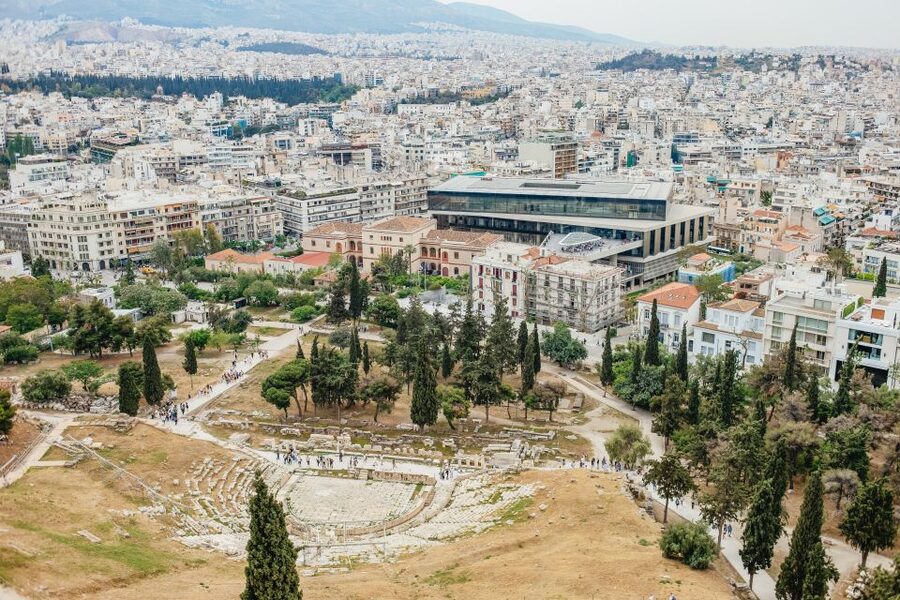
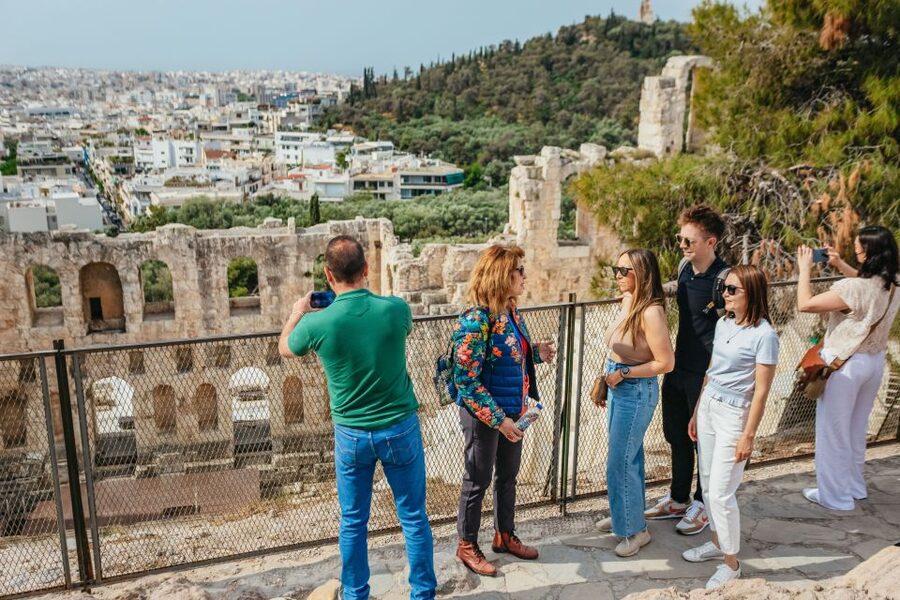
The Theater of Dionysus is passed on the way up. This is the place associated with the first performances of famous Greek dramas and tragedies. It helps you picture the Acropolis not only as a religious center, but also as part of a society that valued theater, debate, music, and public life.
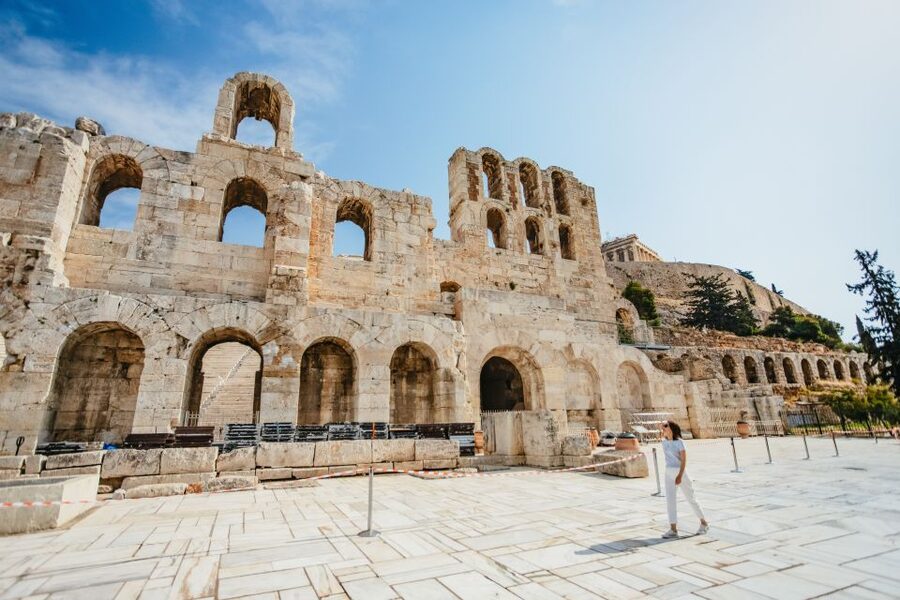
You also pass the Odeon of Herodes Atticus, a large Roman-era performance space built into the southern slope. The site is still used for performances, but even from outside, its scale gives you a sense of how the Acropolis remained important long after the classical period.
The route also touches the sanctuary of Asclepius, the healing god. This is a useful reminder that ancient worship was not limited to grand temples. People came to sacred places with practical concerns, including illness and the hope of recovery.
The Parthenon and the view from the summit
At the top, the Parthenon takes over the scene. The building is familiar from countless photographs, but the real impact comes from its size, position, and damaged details. Your guide helps you read the building as architecture and as a political statement linked to Athens, democracy, religion, and civic identity.
Expect to spend about 30 minutes on the Parthenon portion of the tour. That does not mean 30 minutes standing in one fixed spot. The guide may move you around the approach and nearby viewpoints, pointing out the building’s proportions, carved decoration, later changes, and the effects of time and conflict.
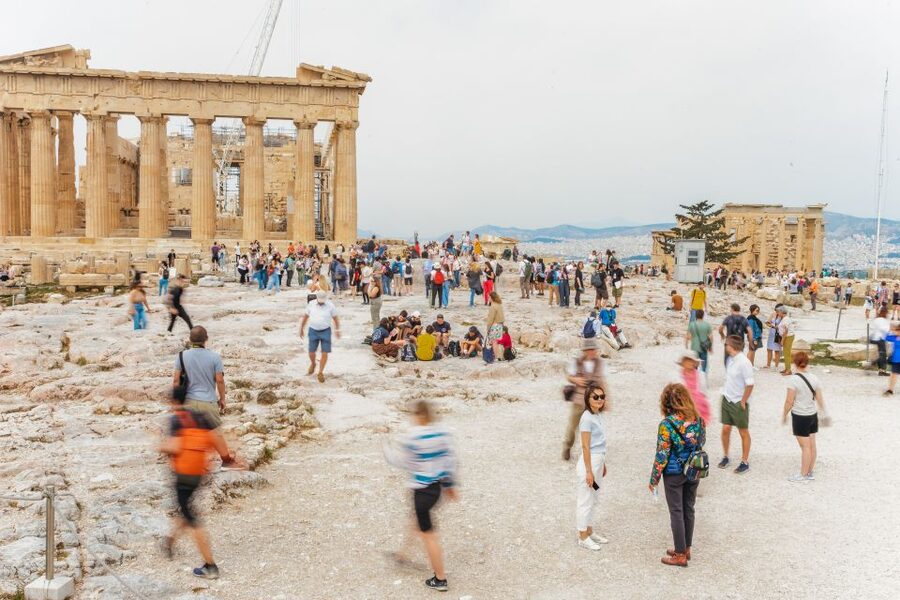
The Acropolis is crowded in high season. Reserved entry gets you into the correct queue, but it does not mean you walk straight through an empty gate. There may still be a line for people with reserved tickets, and the summit itself can be busy. An early start is one of the most useful choices you can make. The 8 a.m. option has been praised because even one hour can change the feel of the visit.
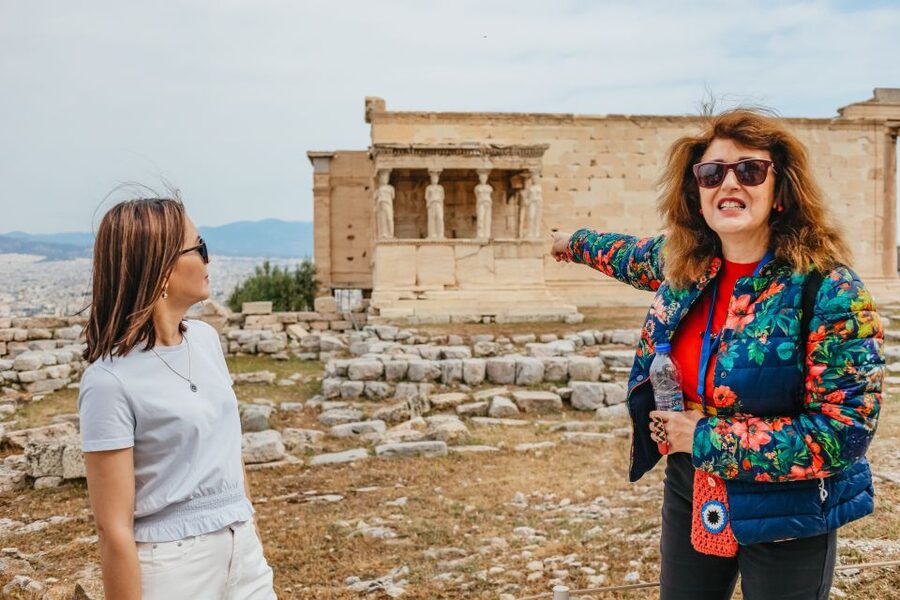
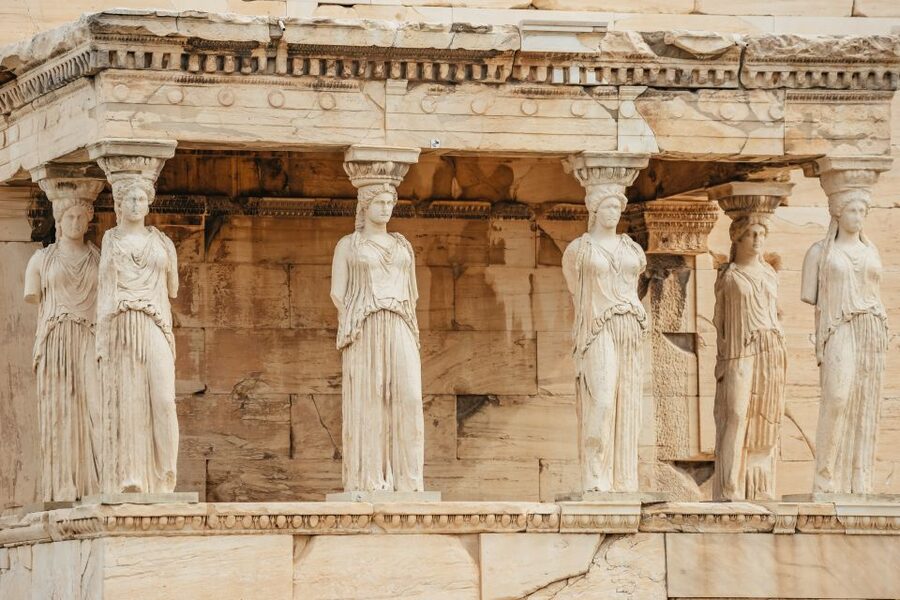
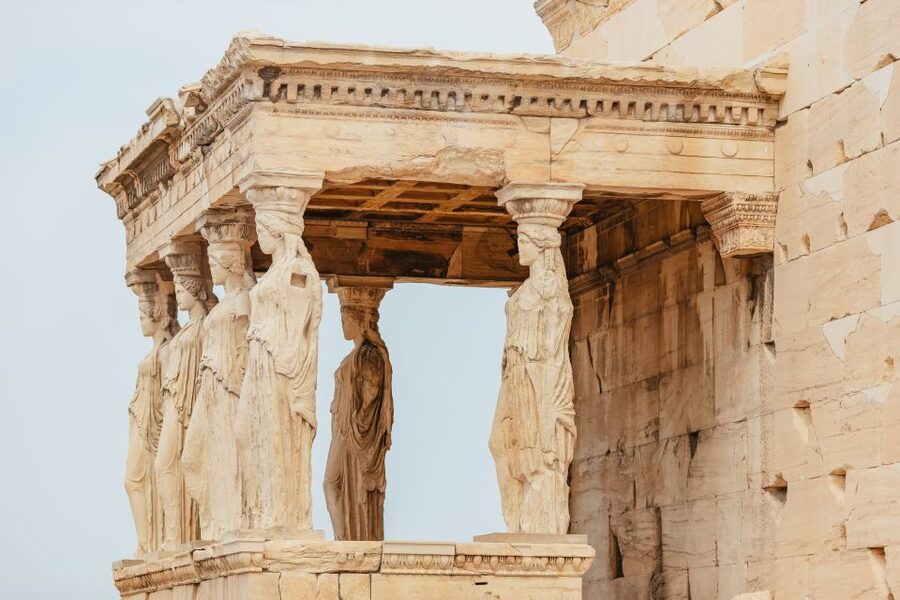
The other monuments are covered as part of this hilltop circuit. You pass the Temple of Athena Nike, a small but elegant shrine near the entrance. The Propylaea, the monumental gateway, frames the arrival at the sacred summit. The Erechtheion is known for its unusual layout and the famous female-shaped columns on its porch.
Do not expect long, separate lectures at every monument. The listed timing is about one hour for the Acropolis and 30 minutes for the Parthenon, with the Theater of Dionysus, Temple of Athena Nike, Propylaea, and Erechtheion integrated into the walk. That approach keeps the tour moving, but anyone wanting a slow architectural study may want a longer specialist visit.
More Athens museums and collections:
- Acropolis monuments & Parthenon Walking Tour with Optional Acropolis Museum
★ 5.0 · 2,678 reviews - Athens All Included: Acropolis and Museum Guided Tour with Ticket
★ 4.5 · 2,673 reviews - Athens: Acropolis Museum Ticket with optional Audio Guide
★ 4.4 · 2,652 reviews - From Athens: Small-Group Delphi, Museum & Arachova Day Trip
★ 4.8 · 2,476 reviews
Why the Acropolis Museum changes the visit
After the hilltop, the group enters the Acropolis Museum for about 90 minutes. This is the part I would not skip. The museum is not just an indoor add-on for a rainy afternoon. It holds original works found on and around the Acropolis, allowing you to compare the exposed ruins with the objects that once belonged to them.
The building is designed with natural light, which makes the marble sculpture easier to study than it would be in a dark, crowded gallery. Glass floors and walkways reveal excavations below, giving you a glimpse of the older settlement beneath the modern museum.
The museum is especially useful after the Parthenon because you have just seen the temple itself. The original Parthenon frieze is one of the key sights, and the guide can explain how the sculpted panels relate to the building and its decoration. The difference between surviving original marble and the weathered surfaces on the hill becomes much clearer.
Guides have also explained the museum’s architecture, not only its exhibits. That is a worthwhile detail you might miss alone. You can learn how the museum presents the archaeological remains below while giving the upper galleries a strong view toward the Acropolis.
Ninety minutes is enough for a guided introduction to the main rooms, but it is not enough for every object. If you are fascinated by sculpture, inscriptions, or the excavations, you may want to return on your own. The tour gives you a useful framework, then lets you decide what deserves a second look.
The guides are the heart of the experience
The repeated strength of this tour is the quality of its guides. Eva has been praised for her warmth, humor, clear organization, and close attention to safety. Vicky has a talent for telling facts as a story, while Frosso has been valued for her fluent, easy-to-understand English and calm group management.
Other guides, including Lisa and Maria, have also been singled out for explaining complicated material in plain language. The strongest guides connect the buildings to Greek culture, mythology, language, philosophy, writers, government, and ordinary life. That wider setting helps the stones feel less like isolated ruins.
A good guide also manages the physical side of the visit. In a crowded place, it is easy to lose the person speaking or drift away from the group. The supplied headsets help. You can hear the commentary while looking at a sculpture or moving around a monument, and one group found the system clear even when people were separated by crowds.
The tour is not only a lecture. Guides have made room for questions, photographs, rest stops, and restroom breaks. That matters if you are traveling with older family members or simply want to look around without being hurried. One guide was praised for noticing when a senior participant wandered off and making sure everyone stayed together.
The style can vary. One person found a guide’s repeated questions a little unusual, even though the rest of the tour was excellent. That is a minor concern, but it is a reminder that you are joining a live tour, not listening to a fixed recording.
Crowds, weather, and group size

Athens can be hot, bright, rainy, and crowded in the same week. The Acropolis offers limited shade, so the time of day has a direct effect on comfort. Early morning is the safest bet for cooler conditions and lighter crowds, though no time guarantees an empty site.
Rain does not cancel the historical importance of the place, but it can make the climb and stone surfaces harder. One guide kept a rain-soaked group engaged with stories and context, while others adjusted their pace during very hot weather. Bring water and sun protection, and dress for conditions rather than photographs.
The small-group format is useful because the guide can keep a closer eye on people and answer some questions. Still, small group does not always mean six or eight people. Groups of around 20 have occurred, especially when demand is high. The headsets reduce the problem, but you may still wait for people to regroup at popular viewpoints.
A private option is available for those who want a more tailored experience. It may suit families, photographers, or visitors who already know one site well and want the guide to spend more time on another. The standard group tour is the better value for most people who want a solid introduction in three hours.
Who should book this Athens tour?
I would choose this tour if you have limited time in Athens and want the two essential sights handled in one morning or afternoon. It is also a good fit if ancient Greek history feels confusing to you. The guide provides the thread that links the Acropolis buildings, Greek mythology, the Parthenon sculptures, and the museum displays.
It suits first-time visitors, couples, families with children over six, and anyone who prefers explanations to wandering alone with a map. It is particularly useful for people who want the original art in the museum to make sense rather than simply seeing it as a series of marble figures.
I would think twice if you have serious mobility limitations, heart problems, a pre-existing medical condition that makes uphill walking risky, or if you use a wheelchair or walker. There is no elevator access during the tour, and the site does not permit baby strollers. Families with infants should plan on a baby pouch instead.
Children under six are not suitable for this activity. Large bags and luggage are not allowed, so leave them at your accommodation or make another storage plan before meeting the guide.
The tour is offered in English and German. If you need another language, this is not the right booking. Also check whether your selected option includes tickets. The standard package includes reserved admission, but an option without tickets requires exact cash payment for the Acropolis and museum at the meeting point. Alternative tickets cannot be used.
Final verdict: worth $57?
For $57, this is a strong choice if you want the Acropolis and Acropolis Museum explained by an expert guide without spending half your day arranging tickets and finding your way through crowds. The museum is a major reason to book, and the sequence from ruins to original works makes the whole visit more rewarding.
Book it if you can take an early time slot, handle the uphill walk, and value clear historical context. Choose the private option if you want a more personal pace. Skip it if you prefer complete freedom, need step-free access, or plan to spend several hours studying every gallery at your own speed.
For most first visits, I would book the reserved-ticket small group version, arrive early, wear proper shoes, and treat the three hours as a focused introduction rather than the last word on Athens.
FAQ
Where does the tour meet?
The meeting point is outside Acropolis Metro Station at Makrigianni 7. Use the Makrygianni or Dionysiou Areopagitou exit, go to street level, and look for the guide with a sign displaying your names.
Are tickets included?
The standard tour includes pre-reserved tickets for both the Acropolis and the Acropolis Museum. If you select an option without tickets, you must bring the exact entry fee in cash and pay at the meeting point.
How long does the tour last?
The activity lasts three hours. About one hour is allocated to the Acropolis, about 30 minutes to the Parthenon, and about 90 minutes to the Acropolis Museum.
Is this a skip-the-line tour?
You use the reserved-ticket queue rather than the regular ticket-buying line. During high season, this queue can still be busy, so reserved entry does not guarantee immediate access.
What languages are available?
Live guided tours are available in English and German. A private group option is also offered.
Can I bring a stroller or wheelchair?
No. Baby strollers, wheelchairs, and walkers are not suitable for this tour, and there is no elevator access. Sandals, flip flops, luggage, and large bags are also not allowed.
Recently reviewed around Athens
- Small-Group Women History in Ancient Greece Walking Tour★ 5.0 · 38 reviews
- Ceramic and Pottery Creative Workshop with Two Local Artists★ 4.0 · 57 reviews
- Athens: Greek Wines Tasting with Sommelier and Acropolis Views★ 5.0 · 88 reviews
- Athens: Wine Workshop Create your Own Wine under the Acropolis★ 5.0 · 77 reviews
- Hydra Private Day Trip by Ferry from Athens with Transfers★ 4.0 · 30 reviews
- Small-Group Wine Tour in Athens with Tasting★ 5.0 · 33 reviews
- Wine Trails Private Tour/ Nemea visit 3 wineries from Athens or Nafplion (10 h)★ 5.0 · 44 reviews
- Private Athens Transfer Airport/Port -Greek Tours-Hourly service★ 5.0 · 88 reviews
Acropolis & Acropolis Museum Tours, compared.
Acropolis & up to 5 Archaeological Sites Combo Pass
Read our review →
Acropolis, Parthenon & Acropolis Museum Guided Tour
Read our review →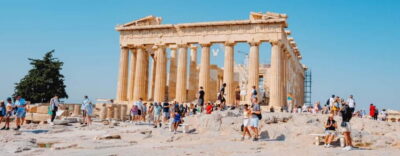
Acropolis, Parthenon & Acropolis Museum Guided Tour
Read our review →


Acropolis monuments & Parthenon Walking Tour with Optional Acropolis Museum
Read our review →Browse the lists this tour appears in