
Reviewed · MUSEUMS
Hellenic Motor Museum Entrance Ticket
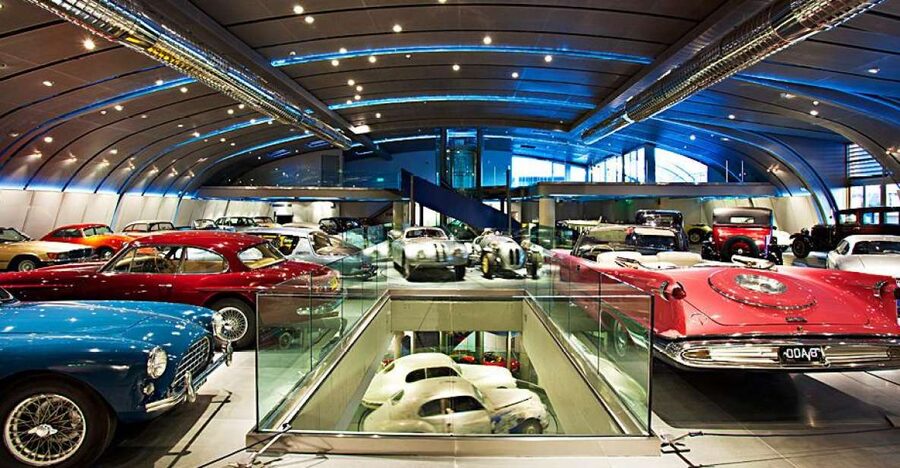
Athens’ Hellenic Motor Museum turns a car collection into a walk through transport history. I like the 110-plus vehicles, which include rare cars from makers that no longer exist, and the clever wheel display that begins as far back as 300 B.C. The old workshop adds a hands-on feel, even though you only look rather than work on a car.
I also like the one-day flexibility and the modest $14 price. You can spend an hour or so here, or take more time with the English audio guide. The main drawback is finding the entrance: the museum sits inside Capitol Mall, among offices, and outside signs are not especially clear. Give yourself a few extra minutes to get your bearings.
In This Review
- Key points at a glance
- Why this car museum belongs on an Athens day
- The wheel display begins the story
- More than 110 cars across three floors
- The old workshop adds atmosphere
- A closer look at the museum route
- What the $14 ticket buys you
- Finding the entrance in central Athens
- Opening hours and the best time to go
- Who will enjoy it most
- Small drawbacks to plan around
- Should you book the Hellenic Motor Museum?
- FAQ
- Where is the Hellenic Motor Museum located?
- How much does admission cost?
- How long is the ticket valid?
- How many cars are on display?
- Does the museum have an audio guide?
- What languages are available?
- What are the opening hours?
- When is the last admission?
- Is the museum wheelchair accessible?
Key points at a glance
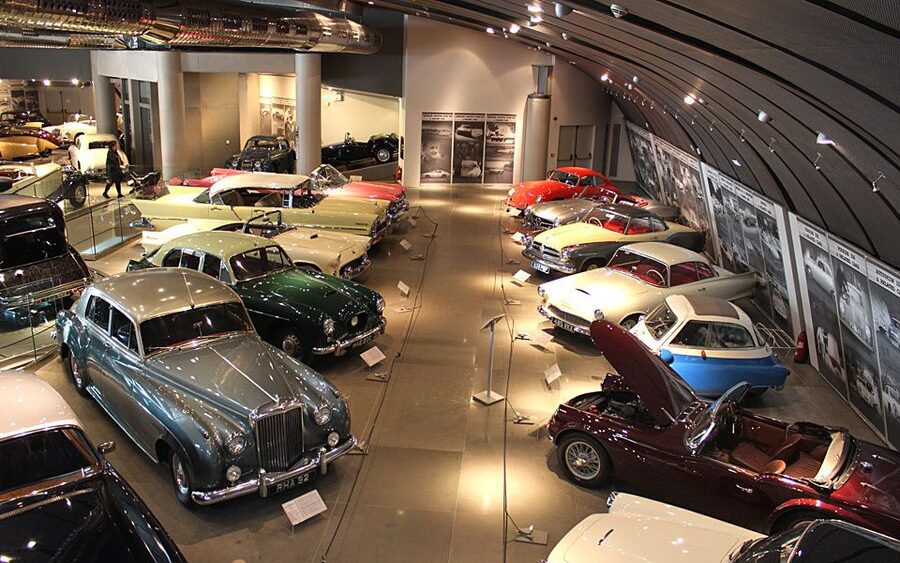
- More than 110 vehicles: See classic, unusual, and historic cars from across the world.
- Three floors in Capitol Mall: The displays are arranged through the building rather than in one large hall.
- Cars from vanished companies: The collection includes makes you are unlikely to see on a normal Athens sightseeing route.
- A workshop setting: Walk through an old car workshop filled with period features.
- Wheel history from 300 B.C.: Follow the basic invention that made the automobile possible.
- Practical Athens stop: Air conditioning, wheelchair access, and an English audio guide make this a useful break from the city.
Why this car museum belongs on an Athens day
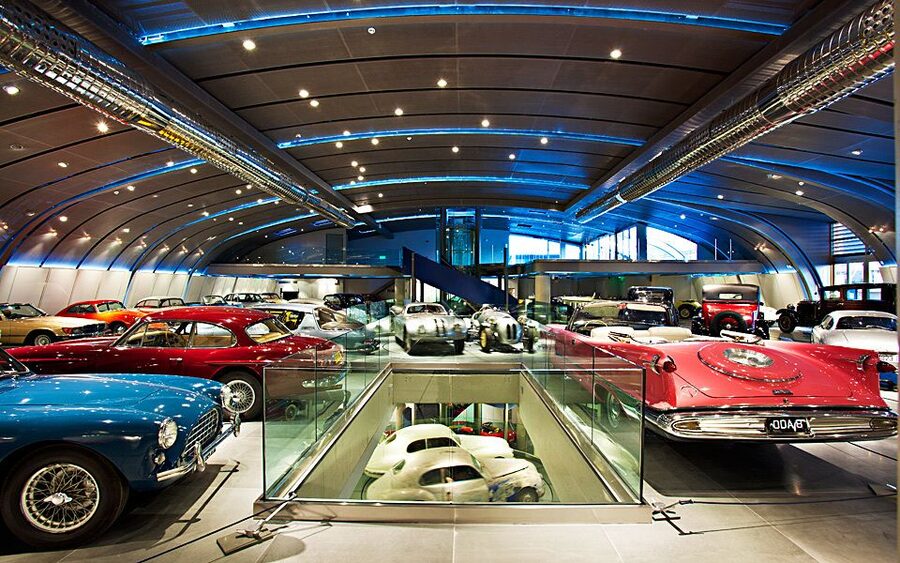
The Hellenic Motor Museum is not the sort of place you find by accident while strolling between the Acropolis and Plaka. It occupies three floors of Capitol Mall at Ioulianou 33 to 35 and C’ Septemvriou 74 to 78, in central Athens. That slightly out-of-the-way setting is part of its character, but it also explains why the entrance can be confusing.
Once inside, the museum gives you a clear subject: how the automobile changed over time. You are not simply looking at a row of polished cars. The collection links the vehicle to the history of the wheel, then moves through the development of automobile design and manufacturing.
I find that approach useful because it gives the cars a reason to be there. A very old vehicle is interesting on its own, but it becomes more meaningful when you can see how it relates to earlier ideas about wheels, movement, machinery, and transport.
The collection includes more than 110 examples from the global automotive industry. Some are classic models from companies still familiar today. Others come from manufacturers that have disappeared, giving the museum a special appeal for anyone interested in the less famous corners of motoring history.
More Museum Tours in Athens
- Athens: Acropolis, Parthenon & Acropolis Museum Guided Tour
★ 4.8 · 9,316 reviews - Athens: Mythology of Delphi, Museum and Arachova Guided Tour
★ 4.6 · 4,008 reviews - Athens: Acropolis, Parthenon & Acropolis Museum Guided Tour
★ 4.8 · 3,579 reviews
The wheel display begins the story
One of the more unusual parts of the museum is its presentation of the wheel. The display includes objects dating from 300 B.C. through the end of the 20th century, so the story begins long before the first modern automobile.
As you ascend the building’s spiral ramp, you can view 72 exhibits connected with the development of the wheel and the car. This layout gives your visit a natural upward movement. Instead of entering a room and scanning rows of cars at random, you gradually move through a timeline.
You do not need to be a mechanical expert to appreciate this section. The wheel is such a basic part of daily life that it is easy to forget how much design and engineering sit behind it. The display helps explain the long path from simple rolling technology to complex motor vehicles.
For families, this can be a useful way to keep younger visitors interested. The cars offer the visual appeal, while the wheel display supplies a simple question to follow: how did people get from early rolling objects to the automobile?
More than 110 cars across three floors
The main collection is the reason to visit. You will see more than 110 vehicles from the 19th and 20th centuries, with examples linked to automobile makers from around the world.
The rotating collection is important. It means the museum is not necessarily showing the exact same group of cars every time you visit Athens. If you have a particular model in mind, you should treat the collection as changeable rather than expect a fixed list.
The displays include cars from companies that no longer exist. That is one of the museum’s strongest features, since these vehicles can be harder to encounter than familiar models from famous current brands. You may also see classic examples from makers that remain part of modern motoring.
The cars are arranged neatly and the galleries are brightly lit. That makes it easier to inspect details such as body shapes, lamps, grilles, wheels, and cabin design. The setting is well maintained, which matters in a museum where the condition of the vehicles is part of the appeal.
Space can be a little tight around some cars. One visitor noted that certain vehicles could only be viewed well from the front. If you want a perfect all-around look at every car, you may find the arrangement limiting. If you are happy to focus on the overall collection and the details visible from the viewing route, the layout works well.
The old workshop adds atmosphere
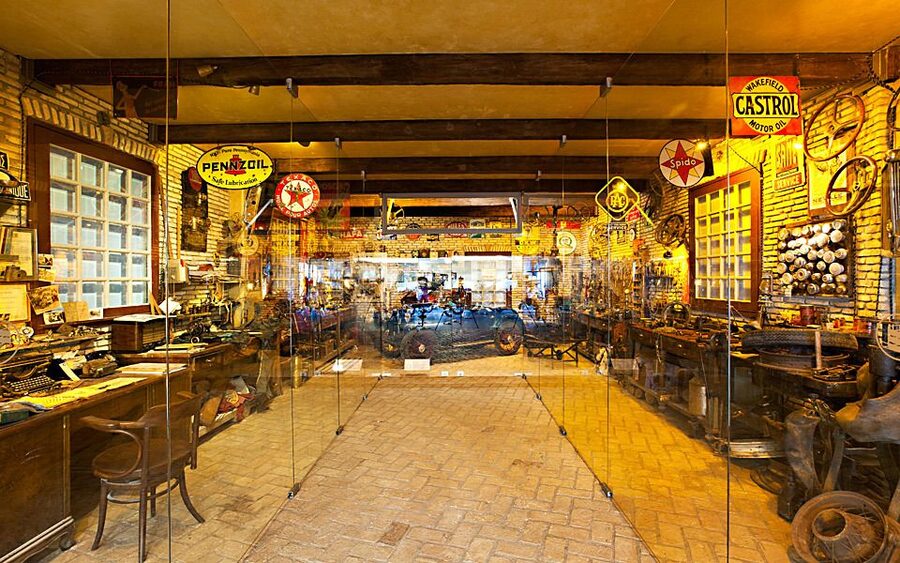
A walk through the old car workshop breaks up the display of finished vehicles. It gives you a look at the setting where cars were once repaired and maintained, complete with its associated features.
The workshop is valuable because it shifts your attention from design to use. A car museum can sometimes feel like a showroom, with every vehicle frozen in perfect condition. The workshop reminds you that cars are machines that required tools, skill, time, and regular attention.
You should not expect a modern interactive repair session. The attraction here is the period setting and the chance to see a workshop as part of the museum route. It is a compact but worthwhile part of the visit, especially if you are more interested in how cars function than in simply admiring their appearance.
The workshop also helps younger visitors understand that older cars were not just smaller versions of current vehicles. They belonged to a different world of maintenance and mechanical work.
More Athens museums and collections:
- Acropolis monuments & Parthenon Walking Tour with Optional Acropolis Museum
★ 5.0 · 2,678 reviews - Athens All Included: Acropolis and Museum Guided Tour with Ticket
★ 4.5 · 2,673 reviews - Athens: Acropolis Museum Ticket with optional Audio Guide
★ 4.4 · 2,652 reviews - From Athens: Small-Group Delphi, Museum & Arachova Day Trip
★ 4.8 · 2,476 reviews
A closer look at the museum route
Your visit is self-guided. An English audio guide is included, and English and Greek are the available languages for the museum experience. That gives you freedom to move at your own pace rather than follow a fixed group schedule.
You can make this a quick stop of roughly an hour, which suits a hot afternoon or a gap between other Athens plans. Several people found it useful as an air-conditioned place to escape the sun. If you want to listen carefully and inspect the vehicles, allow longer than an hour.
The spiral ramp and three-level arrangement mean that the museum is not a single flat gallery. You move upward through the building, taking in the wheel display and the collection as you go. Wheelchair access is available, though the multi-level layout means you may want to confirm the best route at the entrance if you need particular assistance.
The exhibits include some playful surprises as well as serious automotive history. One visitor specifically enjoyed seeing Lightning McQueen and the Flintstones Mobile. These make the museum more appealing to children and add a touch of popular culture to a collection otherwise focused on real vehicles.
What the $14 ticket buys you
At $14 per person, this is a reasonable Athens attraction if you have even a passing interest in cars, design, engineering, or social history. You are paying for entry to the museum only. Food, drinks, and hotel transfers are not included.
The value is strongest if you use the ticket as a flexible city stop rather than a full-day attraction. You can visit during the stated opening hours, take your time with the audio guide, and leave without committing an entire day to the museum.
A car enthusiast could spend considerably longer examining the vehicles. Someone less interested in cars may be satisfied after an hour. That difference is worth considering before you book. The museum has broad appeal, but it is still a specialist attraction, not a general history museum.
For families, the price can work well because the visit offers a mix of large objects, unusual designs, familiar fictional cars, and short explanations. Couples may also find it a good indoor break, especially during Athens’ hot summer months.
Finding the entrance in central Athens

The address is Ioulianou 33 to 35 and C’ Septemvriou 74 to 78, Athens. The museum is located in Capitol Mall, and the entrance can be easy to miss because the building also contains offices.
Do not assume the first mall entrance you see will make the museum obvious. The museum occupies the upper part of the building, and the internal setting can feel more like an office complex than a traditional cultural attraction. Allow extra time, especially if you are arriving close to the last admission.
Outside road signs are not especially strong, so keep the full address available on your phone. This is the one practical issue most likely to affect your visit. Once you locate the museum itself, the route is much more straightforward.
There is no hotel pick-up or drop-off. You arrange your own way to the meeting point, so this ticket works best for people already planning to be in central Athens and comfortable making their own way across the city.
Opening hours and the best time to go
The museum opens Monday through Friday from 10:00 to 17:00. On Saturday and Sunday, it opens from 11:00 to 18:00. Last admission is 30 minutes before closing, so a late arrival gives you less useful time than the closing hour suggests.
The museum is closed on January 1, January 6, Easter Sunday, Easter Monday, August 15, and December 25. Check the date carefully if your Athens visit falls near a public holiday or major religious celebration.
For comfort, I would choose the hottest part of the afternoon if you want an indoor break, but arrive well before last entry. The air conditioning was a welcome feature on hot days, and the museum can provide a calm change from walking outdoors.
You do not need to select a tightly fixed tour time. The ticket is valid for one day, with availability and starting times shown when you book. That flexibility is useful if your Athens schedule includes changing plans.
Who will enjoy it most
The obvious audience is the car enthusiast. If you enjoy classic shapes, old manufacturers, and the story of automotive design, you can easily spend more than an hour here.
You do not need to know the difference between every engine type or body style. The audio guide and displays give you a way into the subject, while the range of vehicles supplies plenty to look at. The museum also suits anyone interested in industrial design, engineering, or changing everyday life.
Families should consider it, particularly if children like cars or recognizable animated vehicles. The Lightning McQueen and Flintstones Mobile displays can provide an easy hook before you move on to the older and less familiar cars.
It is also a sensible choice for couples with different interests. You may arrive thinking the museum is mainly for your partner and find the design, workshop, or historical side more engaging than expected. Still, if neither of you has much interest in machines or transport, Athens has other attractions that may offer better value.
Small drawbacks to plan around
The museum’s biggest weakness is not the collection. It is the setting. Finding the entrance may require patience, and the road signage is not strong enough to make the building instantly obvious.
The close placement of some vehicles can also limit your viewing angle. You may not be able to walk fully around every car, and a few are easier to see from the front than the side or rear.
The museum does not include food or drinks, so plan to eat elsewhere. There is also no transfer service. These are normal limitations for an entrance ticket, but they matter if you are looking for a fully organized outing.
The collection rotates, so do not book with the assumption that a particular car will definitely be on display unless the museum confirms it. The variety is part of the fun, but the exact line-up may change.
Should you book the Hellenic Motor Museum?
Book it if you want a reasonably priced indoor attraction with more than 110 unusual cars, an old workshop, and a clear story about the automobile’s development. It is especially useful on a hot day, during a spare hour in central Athens, or for a family whose children like vehicles.
I would also recommend it to serious car fans because the vanished manufacturers and rotating collection give the museum more depth than a simple display of famous brands. The English audio guide lets you explore without rushing.
Skip it if your Athens schedule is already packed with major archaeological sites and you have no interest in cars, design, or engineering. Also allow time to locate the entrance, and avoid arriving during the final 30 minutes before closing.
For $14, this is a fair-value museum ticket. You get a well-maintained collection, three floors to explore, air conditioning, wheelchair access, and enough variety to make a short visit worthwhile. Just keep the address handy and arrive ready to look beyond the most famous cars.
FAQ
Where is the Hellenic Motor Museum located?
The museum is at Ioulianou 33 to 35 and C’ Septemvriou 74 to 78 in Athens, inside Capitol Mall.
How much does admission cost?
The entrance ticket costs $14 per person.
How long is the ticket valid?
The ticket is valid for one day.
How many cars are on display?
The museum displays more than 110 unique examples from the global automotive industry.
Does the museum have an audio guide?
Yes. An English audio guide is included.
What languages are available?
The host or greeter languages are English and Greek. The included audio guide is in English.
What are the opening hours?
The museum is open Monday through Friday from 10:00 to 17:00, and Saturday and Sunday from 11:00 to 18:00.
When is the last admission?
Last admission is 30 minutes before closing.
Is the museum wheelchair accessible?
Yes, the museum is wheelchair accessible.
Recently reviewed around Athens
- Small-Group Women History in Ancient Greece Walking Tour★ 5.0 · 38 reviews
- Ceramic and Pottery Creative Workshop with Two Local Artists★ 4.0 · 57 reviews
- Athens: Wine Workshop Create your Own Wine under the Acropolis★ 5.0 · 77 reviews
- Athens: Greek Wines Tasting with Sommelier and Acropolis Views★ 5.0 · 88 reviews
- Hydra Private Day Trip by Ferry from Athens with Transfers★ 4.0 · 30 reviews
- Small-Group Wine Tour in Athens with Tasting★ 5.0 · 33 reviews
- Wine Trails Private Tour/ Nemea visit 3 wineries from Athens or Nafplion (10 h)★ 5.0 · 44 reviews
- Private Athens Transfer Airport/Port -Greek Tours-Hourly service★ 5.0 · 88 reviews
Museums, compared.

Acropolis, Parthenon & Acropolis Museum Guided Tour
Read our review →
Mythology of Delphi, Museum and Arachova Guided Tour
Read our review →Acropolis, Parthenon & Acropolis Museum Guided Tour
Read our review →
Acropolis monuments & Parthenon Walking Tour with Optional Acropolis Museum
Read our review →
Athens All Included: Acropolis and Museum Guided Tour with Ticket
Read our review →
Acropolis Museum Ticket with optional Audio Guide
Read our review →
Small-Group Delphi, Museum & Arachova Day Trip
Read our review →
Parthenon & Acropolis Museum with Audio or Live Tour Option
Read our review →Browse the lists this tour appears in