
Reviewed · ACROPOLIS & ACROPOLIS MUSEUM TOURS
Parthenon & Acropolis Guided Tour in Spanish -Option Tickets
The best thing about this Acropolis tour is its early-morning route through nearly every major monument on the hill. You begin at the southern slope, then follow a clear path from the Theatre of Dionysus to the Parthenon and Erechtheion, finishing with time at the top for photographs and wide views over Athens.
I like the tour’s Spanish-only guiding, which lets the guide explain Greek myths, architecture, politics, and daily life without switching between languages. I also like the practical pace: guides such as Efi and Simon are praised for keeping groups moving, finding shade in hot weather, and still leaving time for pictures. The main consideration is the two-hour limit. It is enough for a strong overview, but not for a slow, solitary examination of every stone.
In This Review
- Key points at a glance
- Why the morning start matters on the Acropolis
- Theatre of Dionysus: begin where Greek drama began
- Asklepieion and the Odeon of Herodes Atticus
- Propylaea: the grand entrance to the sacred hill
- Temple of Athena Nike and the first major views
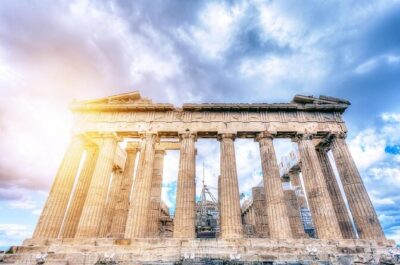
- The Parthenon: architecture, politics, and Athena
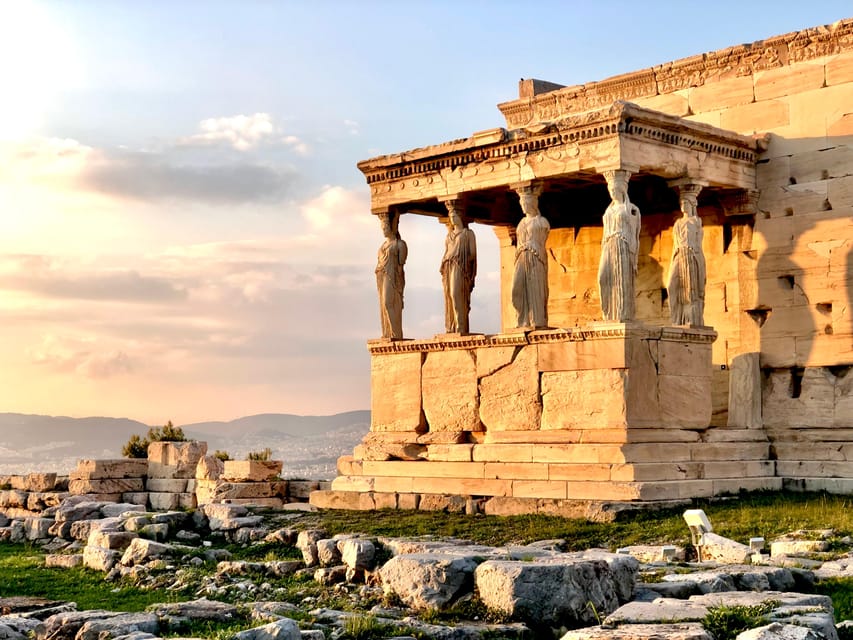
- Erechtheion and the famous Caryatids
- What the two-hour pace feels like
- Spanish guidance and the human difference
- Is $33 a fair price?
- Who should book this Acropolis tour?
- Practical advice before you go
- Should you book it?
- FAQ
- Where does the Acropolis tour meet?
- How long does the tour last?
- Is the tour conducted in Spanish?
- Is the Acropolis entrance ticket included?
- Which Acropolis monuments are included?
- Are headphones provided?
- Is hotel pickup included?
- Can I cancel the booking?
- Is the tour suitable for wheelchair users or strollers?
Key points at a glance
- Early access helps: Morning entry can mean cooler temperatures and a better chance of avoiding the thickest crowds.
- A full Acropolis route: The walk includes the Theatre of Dionysus, Asklepieion, Odeon of Herodes Atticus, Propylaea, Temple of Athena Nike, Parthenon, and Erechtheion.
- Spanish-speaking guidance: An officially qualified guide explains both historical events and myths, including Athena and Poseidon’s contest for Athens.
- The Caryatids get proper attention: You will see the famous female-shaped columns at the Erechtheion and learn why this building matters.
- Headphones are supplied: You can hear the guide more clearly while moving around the busy hilltop.
- Good value at $33: The price is attractive if it includes the entrance ticket option you select, but check the booking choice carefully.
Why the morning start matters on the Acropolis
The Acropolis is exposed, paved, and short on shade. Starting early is not just a scheduling trick. It can make the two-hour walk much more comfortable, especially in summer, when the stone absorbs heat and the hill offers little relief.
The meeting point is at the Tourist Information Center near the southern entrance, across from the Acropolis Museum and a few steps from the Acropolis metro station. Look for the TOP TOURS GREECE sign. This is a sensible location because you do not waste time crossing central Athens before the visit begins.
Your guide leads you uphill from the southern slope. The route is on foot and includes uneven ground and sloping surfaces, so comfortable shoes are important. Strollers, bags, food, drinks, non-folding wheelchairs, and electric wheelchairs are not allowed. The tour is not suitable for wheelchair users.
More Athens trips worth a second look
- Athens: Acropolis & up to 5 Archaeological Sites Combo Pass
★ 4.4 · 12,619 reviews - Athens: Acropolis Ticket with Optional Audio or Live Guide
★ 4.2 · 11,055 reviews - Athens: Acropolis, Parthenon & Acropolis Museum Guided Tour
★ 4.8 · 9,316 reviews
Theatre of Dionysus: begin where Greek drama began
The first stop is the Theatre of Dionysus, with about ten minutes of guided explanation. Built in the fifth century BC and dedicated to Dionysus, the god of wine and theatre, it could hold around 17,000 spectators.
This opening stop gives the Acropolis a human setting. Before you reach the famous temples, you see where Athenians gathered for performances and civic events. I find this useful because it shifts the visit away from the idea that the Acropolis was only a collection of sacred buildings. It was linked to public life, festivals, performance, and the city’s identity.
Ten minutes is enough to understand the theatre’s purpose and position, but not enough for a detailed study of ancient drama. That is part of the tradeoff throughout the tour: you get a lively introduction to each place, not an academic seminar at every monument.
Asklepieion and the Odeon of Herodes Atticus
Next comes the Asklepieion of Athens, also called the sanctuary of Asclepius. The guide spends about ten minutes here, explaining the site’s connection with the ancient god of medicine and pointing out discoveries tied to health and healing.
This is one of the less famous stops, which makes it valuable. The Parthenon gets all the attention, but the sanctuary helps you picture the practical side of ancient worship. People did not visit sacred places only to admire architecture. They also came seeking help with illness and physical suffering.
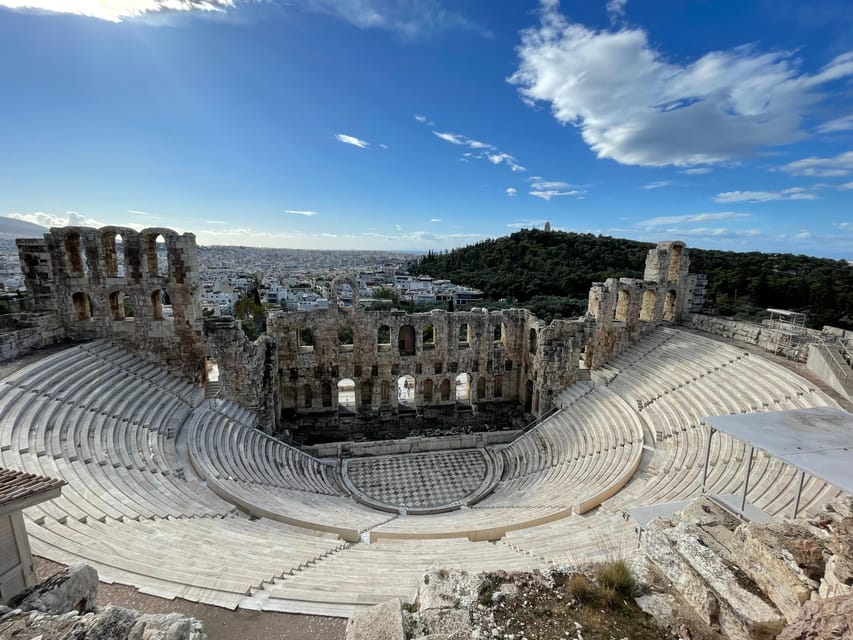
The route then reaches the Odeon of Herodes Atticus. Allow another ten minutes for this impressive structure, which is still used for performances and concerts. It once had a roof, a detail that helps you picture how different the building looked in antiquity.
The Odeon is usually admired from outside during this kind of visit, and the guide’s explanation gives it context without taking too much time. Its continuing use also connects ancient Athens with the modern city. You are not looking at a completely silent ruin. The building still has a role in Greek cultural life.
Propylaea: the grand entrance to the sacred hill
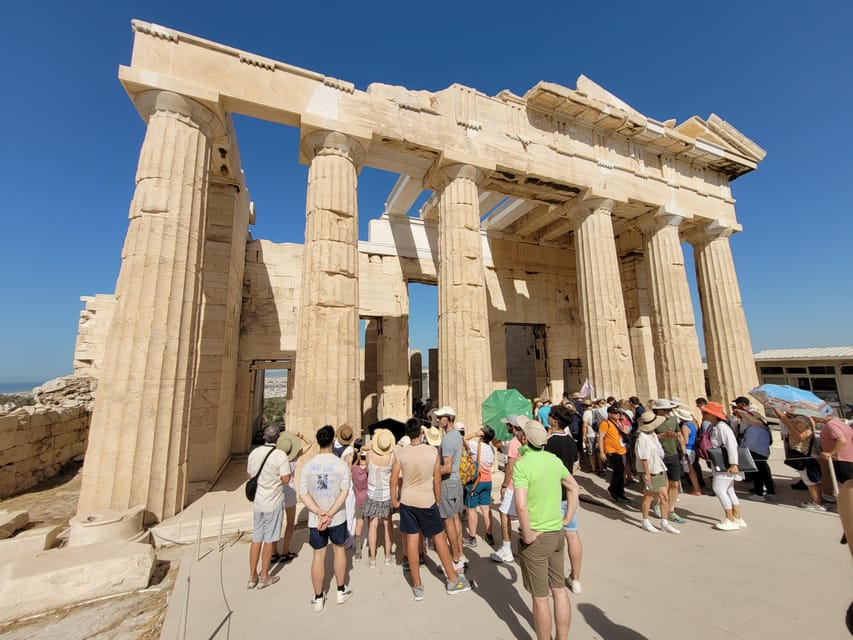
The Propylaea forms the monumental gateway to the Acropolis. Here the guide explains the entrance’s Doric and Ionic features, with roughly ten minutes devoted to the stop.
This is where the climb begins to feel more ceremonial. The gateway was designed to mark a transition from ordinary city space to the sacred precinct above. Even in a damaged state, its scale helps explain the importance of arriving at the Acropolis in ancient times.
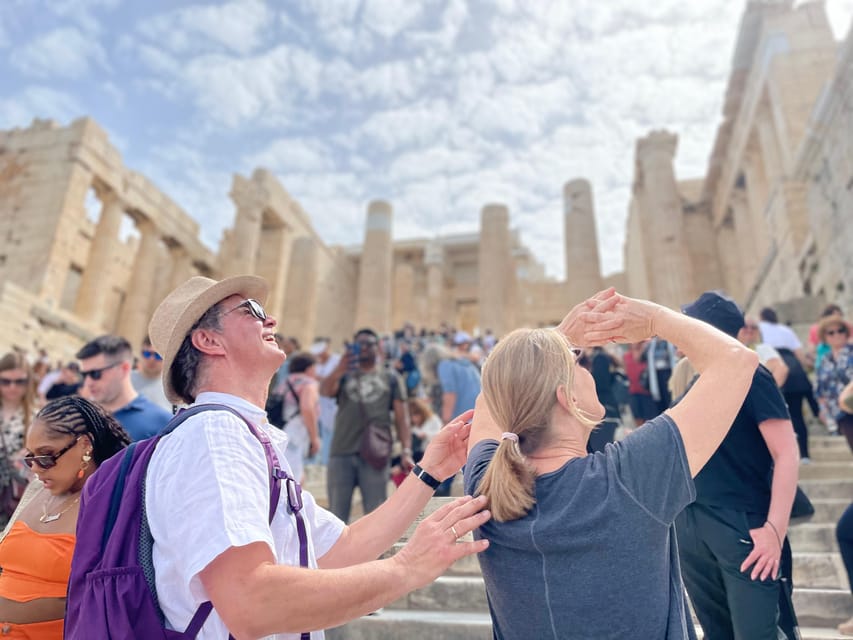
The Propylaea can also be one of the more crowded and physically awkward points on the route. You may need to pay attention to where you stand while listening. The supplied headphones are useful here, since you can keep close to the group without needing to hear the guide at full volume.
A different kind of day out, same corner of Greece:
- Athens: Cape Sounion & Poseidon Temple Sunset Half-Day Trip
★ 4.8 · 8,241 reviews - Athens: Acropolis and Parthenon Guided Walking Tour
★ 4.6 · 5,882 reviews - All Day Cruise -3 Islands to Agistri,Moni, Aegina with lunch and drinks included
★ 5.0 · 4,958 reviews - Athens, Piraeus, and Coastline: Blue Hop-On Hop-Off Bus
★ 3.9 · 4,849 reviews
Temple of Athena Nike and the first major views
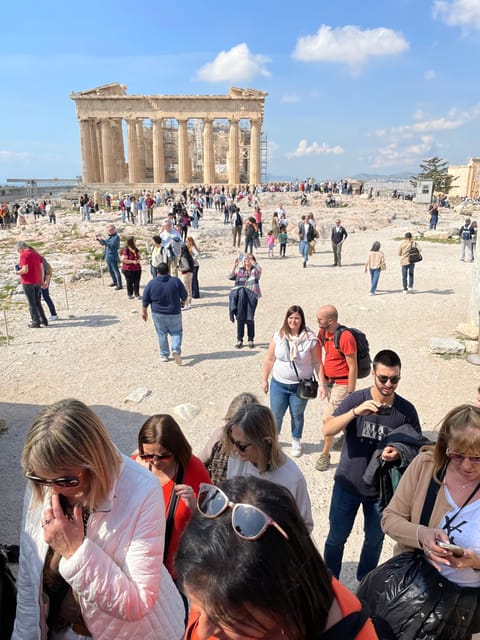
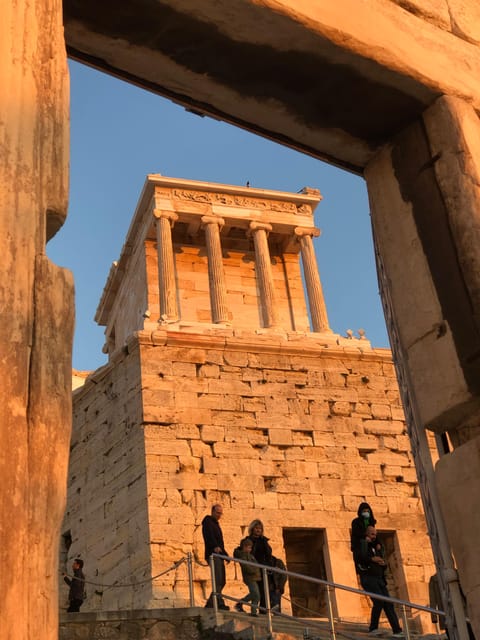
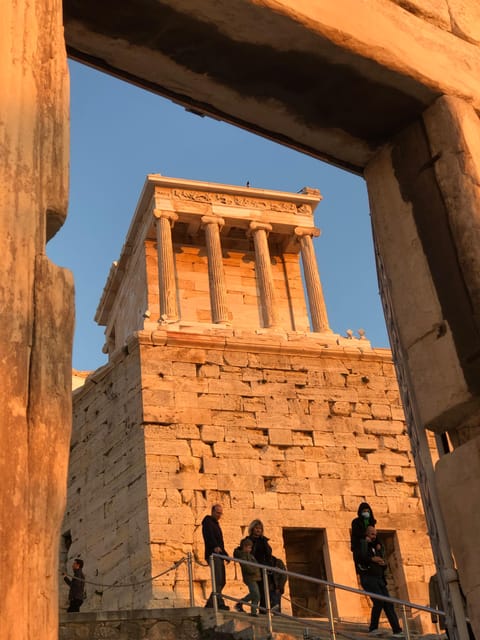
The Temple of Athena Nike receives about five minutes of explanation. It is a small temple compared with the Parthenon, but its position near the entrance makes it an important part of the approach.
The guide connects the temple with Athena, the city’s protective goddess, and helps you understand why different buildings were devoted to different aspects of the gods. This short stop works best as part of the larger story rather than as a separate visit.
As you climb, the views begin to open across Athens. The tour does not treat the city panorama as an afterthought. The guide points out viewpoints, and the final portion allows you to remain at the top after the formal walk ends. Bring your camera, but also take a moment to look beyond the monuments. The 360-degree view is one of the tour’s strongest rewards.
The Parthenon: architecture, politics, and Athena
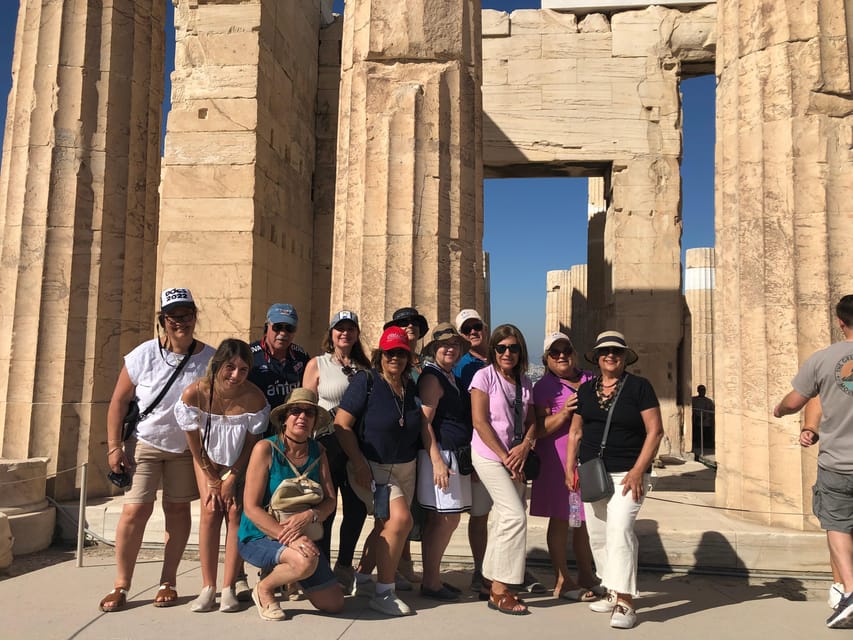
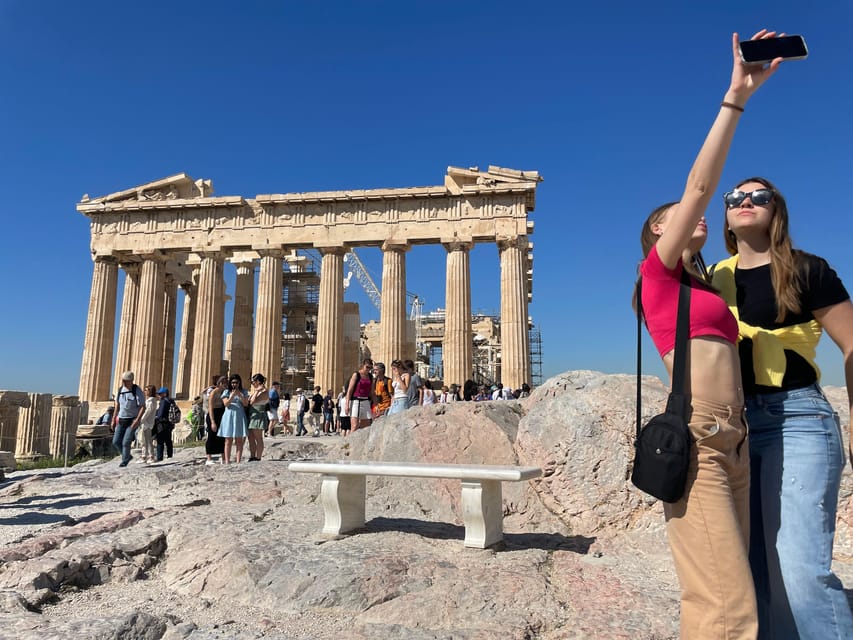
The Parthenon gets about twenty minutes, the longest single explanation on the route. That makes sense. This is the building most people come to see, and it deserves more than a quick photograph.
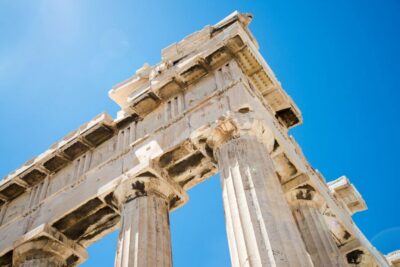
The guide explains the temple’s role as a monument to Athena and discusses why its proportions have long been admired. You will hear about its Doric and Ionic elements and the way ancient Athenians used architecture to express religious devotion and civic power.
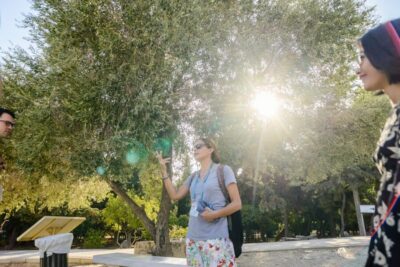
The tour’s historical and mythological approach is especially helpful here. Greek mythology is not presented as a list of disconnected stories. You hear about Athena and Poseidon competing for the city, the olive tree associated with Athena’s gift, and the way these myths shaped Athenian identity.
I would not expect a close examination of every sculptural fragment or a detailed account of the Parthenon’s later history. The guide has only twenty minutes, and the site is often crowded. Still, the explanation gives you a framework that makes the stones easier to read. Afterward, you can stay at the summit for more photographs and personal time.
Erechtheion and the famous Caryatids
The Erechtheion receives about ten minutes, followed by another ten minutes focused on the Porch of the Caryatids. For many people, this is the most memorable part after the Parthenon.
The building is tied to the old religious stories of Athens, including the contest between Athena and Poseidon. The guide explains the marks associated with the gods’ struggle and the olive tree connected with Athena. These stories give the irregular shape and unusual layout of the Erechtheion more meaning.
Then come the Caryatids, the graceful female-shaped columns supporting the porch. Their design is instantly recognizable, but the guide’s explanation helps you see them as architectural figures rather than simple decorations.
The stop is short, so you will want to listen first and take pictures when the group moves on. The famous porch can draw a crowd, and the best viewing position may not remain open for long. Even so, ten minutes focused on the Caryatids is better than passing them with only a name and a snapshot.
What the two-hour pace feels like
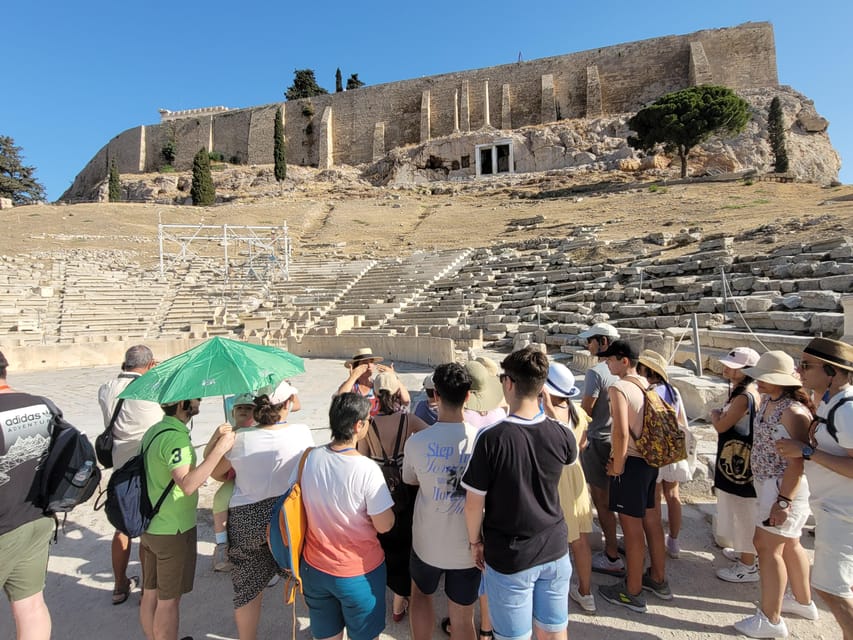
This is a moderate walking tour, but it is still a hilltop visit with several stops. You move steadily from one monument to the next, listening for roughly five to twenty minutes at each point.
The pace has received particular praise for being neither rushed nor too long. Guides are described as keeping children engaged, explaining complex subjects in an entertaining way, and finding shaded spots when possible. That practical care matters in Athens, especially during hot months.
The group size is not specified, so I would not book this expecting a private experience. You should expect to share the guide’s attention with other Spanish-speaking participants. Headphones help, but staying within sight of the guide remains important.
The final location is at the top of the hill. This is a good design choice. You finish the structured part before taking your own pictures, rather than trying to listen while the group is already scattering toward the best viewpoints.
Spanish guidance and the human difference
A certified Spanish-speaking guide is the central reason to choose this tour over simply entering on your own. The monuments are powerful, but without context, it is easy to see only columns, steps, and broken marble.
Guides named in the feedback include Efi and Simon. Efi is repeatedly praised for clear storytelling, strong command of Greek and Athenian history, and the ability to keep children involved. She is also noted for helping people find shade and offering suggestions about what to do next. Simon is described as kind, engaging, and very well prepared.
The best descriptions of the guiding emphasize enthusiasm, not just facts. That distinction matters. A guide who explains geopolitics, art, religion, and myth in a connected way can help you understand why the Acropolis mattered to ancient Athenians and why it still matters to Greece.
The tour is exclusively in Spanish, so it suits Spanish-speaking visitors who want a full explanation without translation. If you are comfortable only in English or another language, this is not the right choice.
Is $33 a fair price?
At $33 per person, this is a strong price for a two-hour guided visit, provided you select the entrance-ticket option that includes admission. The value comes from combining access to the main Acropolis monuments with a live Spanish-speaking guide and headphones.
The ticket choice deserves attention when you book. The information lists entrance tickets as included if that option is selected, so do not assume every price arrangement works the same way. If you already have an eligible ticket, compare the available choices before paying.
The price does not include hotel pickup, transfers, food, or drinks. That is not a serious weakness because the meeting point is close to the Acropolis metro station, but you need to make your own way there. Bring water for before or after the visit, since food and drinks are not allowed inside the activity.
Free cancellation is available up to 24 hours before the start time, and you can reserve now and pay later. Those terms are useful if your Athens schedule is still changing.
Who should book this Acropolis tour?
I would choose this tour if you want the main monuments explained in Spanish and prefer a structured visit over wandering alone. It is especially useful for a first visit, a short stay in Athens, or a cruise stop when you need to make your time count.
It also suits families. The guides have shown an ability to keep children interested, vary the stories, and manage the heat. The early start is a real advantage for anyone who dislikes intense sun or long waits.
History and mythology fans will get the most from the explanations of Athena, Poseidon, Asclepius, Dionysus, and the sacred buildings. You will also appreciate the connections between architecture, religion, theatre, health, and civic life.
I would hesitate if you want a private tour, extensive time for photography, or a detailed examination of individual sculptures. Two hours is enough for orientation and interpretation, but you will not cover every scholarly question about the Acropolis.
Practical advice before you go
Meet at the Tourist Information Center by the southern entrance, opposite the Acropolis Museum. The Acropolis metro stop is only a few meters away, making the location easy to reach by public transport.
Arrive early enough to find the TOP TOURS GREECE sign and join the group without stress. Since the tour starts in the morning, check the exact time when booking rather than assuming a fixed departure.
Wear shoes suited to walking on ancient stone surfaces. The route includes a climb, and the hill is exposed. Summer visitors should take the early timing seriously, since shade is limited even when the guide works hard to find it.
Leave restricted items behind. Baby strollers, bags, food, drinks, non-folding wheelchairs, and electric wheelchairs are not allowed. The experience is not designed for wheelchair users.
After the guided portion, stay at the top as long as permitted to photograph the Parthenon, Erechtheion, and the city. You can also plan the Acropolis Museum separately, since it is across from the meeting area, but museum admission is not part of this tour.
Should you book it?
Book this tour if you want a well-paced Spanish explanation of the Acropolis rather than a quick entry and a few photographs. The route covers the major monuments, the guides bring energy to the myths and history, and the early start helps with both heat and crowds.
The $33 price is appealing, especially when the ticket option includes admission. Just confirm which option you are choosing, remember that transport and refreshments are your responsibility, and accept that the two-hour schedule favors coverage over lingering.
For a first Acropolis visit in Spanish, I would make this a strong choice. For a private, slower, highly specialized archaeological tour, look for something with more time and a smaller format.
FAQ
Where does the Acropolis tour meet?
The meeting point is the Tourist Information Center beside the southern entrance of the Acropolis, across from the Acropolis Museum and a few meters from the Acropolis metro stop. The guide holds a TOP TOURS GREECE sign.
How long does the tour last?
The guided visit lasts two hours. After the tour finishes at the top of the hill, you can stay as long as you like to take photographs and enjoy the views.
Is the tour conducted in Spanish?
Yes. The tour has a live, officially qualified guide who speaks Spanish.
Is the Acropolis entrance ticket included?
The entrance ticket is included if you choose the ticket option when booking. Check the selected option carefully before completing your reservation.
Which Acropolis monuments are included?
The route includes the Theatre of Dionysus, Asklepieion of Athens, Odeon of Herodes Atticus, Propylaea, Temple of Athena Nike, Parthenon, Erechtheion, and Porch of the Caryatids.
Are headphones provided?
Yes. Headphones are included so you can hear the guide more clearly during the walking tour.
Is hotel pickup included?
No. Hotel pickup and transfers are not included. You must reach the meeting point independently.
Can I cancel the booking?
You can cancel up to 24 hours in advance for a full refund. The activity also allows you to reserve now and pay later.
Is the tour suitable for wheelchair users or strollers?
No. The tour is not suitable for wheelchair users. Baby strollers, non-folding wheelchairs, electric wheelchairs, and bags are not allowed.
Recently reviewed around Athens
- Small-Group Women History in Ancient Greece Walking Tour★ 5.0 · 38 reviews
- Ceramic and Pottery Creative Workshop with Two Local Artists★ 4.0 · 57 reviews
- Athens: Wine Workshop Create your Own Wine under the Acropolis★ 5.0 · 77 reviews
- Athens: Greek Wines Tasting with Sommelier and Acropolis Views★ 5.0 · 88 reviews
- Wine Trails Private Tour/ Nemea visit 3 wineries from Athens or Nafplion (10 h)★ 5.0 · 44 reviews
- Hydra Private Day Trip by Ferry from Athens with Transfers★ 4.0 · 30 reviews
- Small-Group Wine Tour in Athens with Tasting★ 5.0 · 33 reviews
- Private Athens Transfer Airport/Port -Greek Tours-Hourly service★ 5.0 · 88 reviews
Acropolis & Acropolis Museum Tours, compared.
Acropolis & up to 5 Archaeological Sites Combo Pass
Read our review →
Acropolis, Parthenon & Acropolis Museum Guided Tour
Read our review →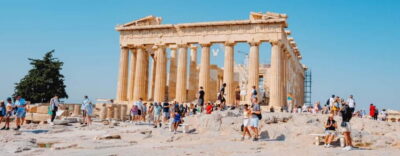
Acropolis, Parthenon & Acropolis Museum Guided Tour
Read our review →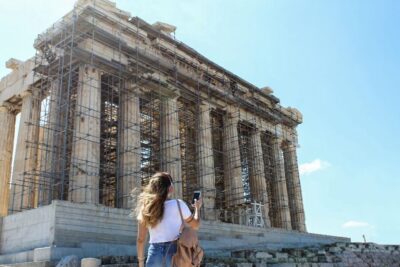
Acropolis monuments & Parthenon Walking Tour with Optional Acropolis Museum
Read our review →Browse the lists this tour appears in