
Reviewed · MUSEUMS
Athens: National Archaeological Museum Ticket w/ Opt. Audio
The National Archaeological Museum is where ancient Greek art stops being a picture in a history book and becomes something you can see up close. The Mask of Agamemnon, Antikythera mechanism, Cup of Nestor, and great statues of Zeus and Poseidon are the headline pieces, but the museum’s real strength is the long story linking them.
I like the pre-booked entry and the freedom to set your own pace. I also like the way the collection moves through prehistoric, Mycenaean, Classical, and later Greek periods, with major finds from Athens, Crete, Santorini, and other parts of Greece. The main caution is that the museum is large, and the optional audio app has received mixed reports about navigation and reliability.
In This Review
- Key points to know before you go
- Why this museum deserves time in Athens
- Entering with the timed ticket
- A sensible route through the collection
- Prehistoric Greece and the Mycenaean world
- Santorini and the Bronze Age Aegean
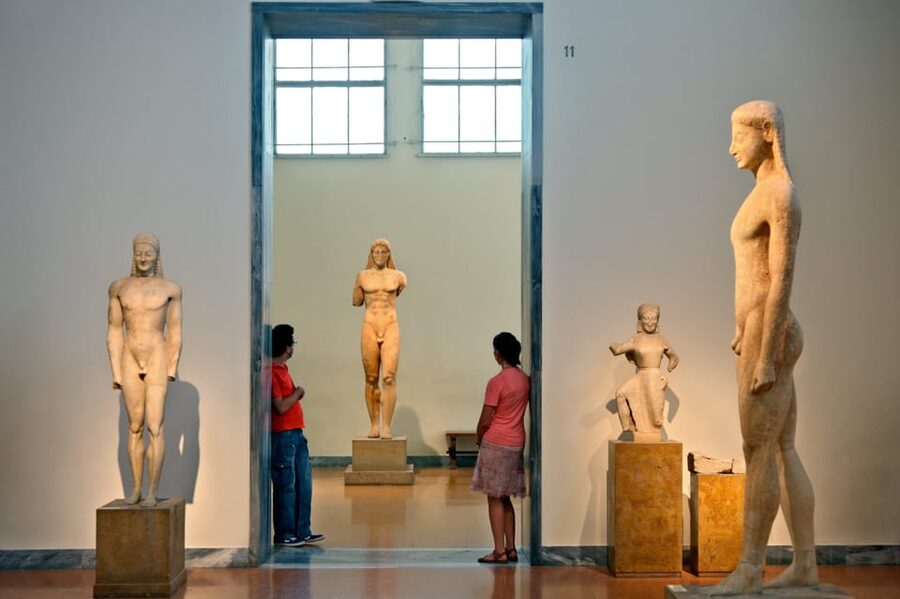
- Sculpture galleries and the gods
- The Antikythera mechanism
- Pottery, steles, jewelry, and daily life
- How much time should you allow?
- The optional English audio guide
- Crowds, comfort, and opening times
- What you get for the price
- Who will enjoy this museum most?
- Should you book the National Archaeological Museum ticket?
- FAQ
- Where is the National Archaeological Museum located?
- How long is the ticket valid?
- Is an audio guide included?
- Is there a live guide?
- What should I bring?
- Can children receive a reduced ticket?
- What are the museum’s opening hours?
Key points to know before you go
- See famous originals: The Mask of Agamemnon, Antikythera mechanism, Cup of Nestor, and Ring of Theseus are among the most memorable objects.
- Allow more than a quick glance: You can see a great deal in an hour, but three hours still may not cover every gallery.
- Use the ticket line carefully: Ticket holders, ticket buyers, and visitors collecting an electronic narrator device may use different lines.
- Choose the audio option with care: The English self-guided tour adds background, but it is not a live guide and may not always direct you smoothly.
- Check the Tuesday hours: Tuesday opening begins at 1 PM, not in the morning.
- Bring headphones and ID: Headphones are needed for the audio tour, and a passport or ID card may be requested.
Why this museum deserves time in Athens
Athens is packed with ancient sites, but the National Archaeological Museum gives you the objects themselves rather than only the places where they were found. You can study a statue from several angles, compare pottery from different periods, and see how Greek art changed over centuries.
The collection is often described as one of the most important in the world for ancient Greek art. That is not just a grand label. The museum brings together sculpture, vases, jewelry, burial objects, bronze works, wall paintings, and everyday items from across Greece.
That range matters. A famous statue may catch your eye first, but a small cup, gold ornament, or carved stone can tell you how people lived, worshipped, traded, and buried their dead. I find that this makes the museum useful even if you are not an ancient-history expert.
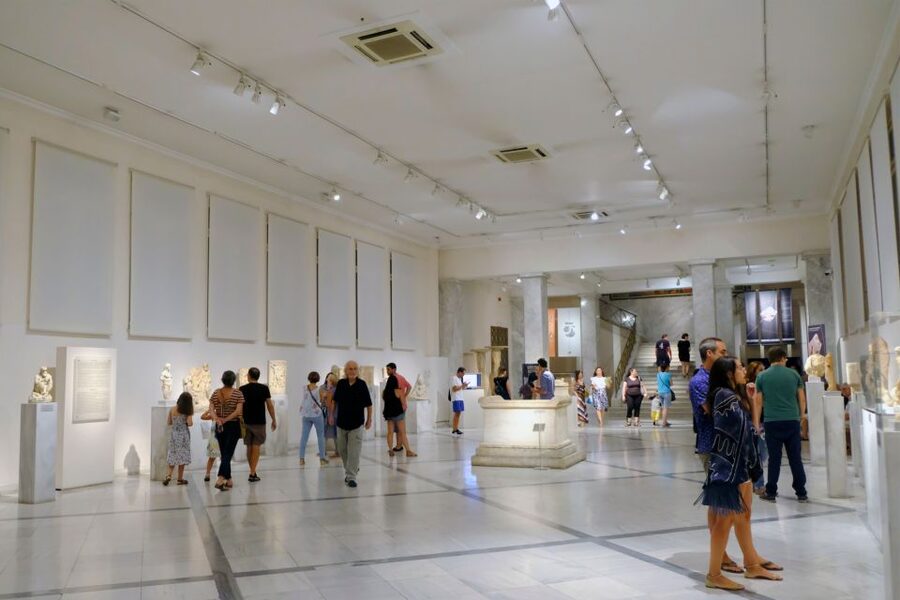
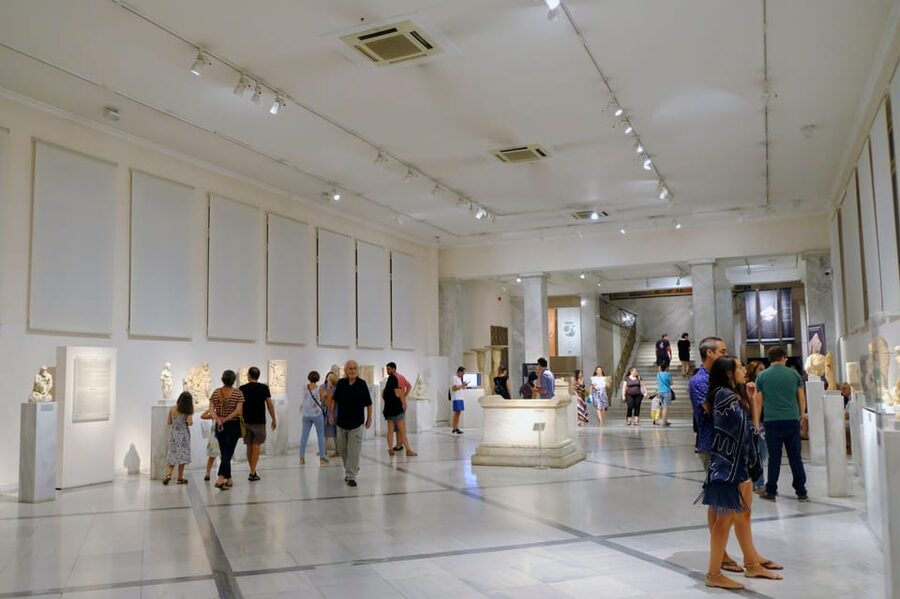
The building itself is spacious, with natural light in many areas. Several exhibition rooms are arranged by time period or civilization, which helps you follow the broad sequence from prehistoric cultures into Classical Greece and beyond. Still, the layout is not always obvious, so do not expect every room to form a perfectly clear route.
More Museum Tours in Athens
- Athens: Acropolis, Parthenon & Acropolis Museum Guided Tour
★ 4.8 · 9,316 reviews - Athens: Mythology of Delphi, Museum and Arachova Guided Tour
★ 4.6 · 4,008 reviews - Athens: Acropolis, Parthenon & Acropolis Museum Guided Tour
★ 4.8 · 3,579 reviews
Entering with the timed ticket
Your entry ticket is sent by email and is valid for the selected date and time slot. At the gate, you scan the e-ticket rather than buying a standard admission ticket on site. This can save time, especially when the museum is busy.
The ticket process is simple, but the entrance area may have several lines. One line can be for buying tickets, another for people who already hold tickets, and another for visitors who have already checked in and are collecting an electronic narrator device. Look for signs before joining a queue.
The nearest metro station is Omonoia. The activity does not include hotel pickup or drop-off, so you make your own way to the museum. That is easy enough for an independent day in central Athens, but leave time to find the correct entrance and pass through any bag checks.
The ticket costs about $30 per person. For an adult who wants a set time and does not want to spend part of the day arranging admission, that price can be reasonable. It is less compelling in the quiet winter months, when the ticket line may be short and the time-saving benefit smaller.
Age rules also matter. This online ticket is intended for people over 25. Reduced-price tickets are not available online, and children under five, EU citizens under 25, and non-EU citizens under 25 during the April to October period may receive free or reduced admission at the ticket booth when they show suitable ID. Check your eligibility before paying the adult price.
A sensible route through the collection
You can wander freely, but a loose plan helps. Start with the early material so the later masterpieces have more meaning. The exact rooms open to the public can vary, and one section may occasionally be closed, so treat any route as a guide rather than a promise.
Prehistoric Greece and the Mycenaean world
The early galleries take you far beyond the familiar image of Classical Athens. Here you may see objects from prehistoric periods and the Mycenaean world, including the gold funerary mask traditionally linked with Agamemnon.
The mask is one of the museum’s great draws. Its bright gold surface and solemn face make it easy to understand why it became so famous. At the same time, it is worth looking past the big name. Smaller gold pieces, pottery, tools, and burial objects help explain the society that produced such elaborate funeral goods.
The Cup of Nestor and Ring of Theseus add another layer to this section. They connect the grand stories of Greek mythology with the material culture of people who lived thousands of years ago. If you are short on time, this early section is one of the areas I would not skip.
More Athens museums and collections:
- Acropolis monuments & Parthenon Walking Tour with Optional Acropolis Museum
★ 5.0 · 2,678 reviews - Athens All Included: Acropolis and Museum Guided Tour with Ticket
★ 4.5 · 2,673 reviews - Athens: Acropolis Museum Ticket with optional Audio Guide
★ 4.4 · 2,652 reviews - From Athens: Small-Group Delphi, Museum & Arachova Day Trip
★ 4.8 · 2,476 reviews
Santorini and the Bronze Age Aegean
The Santorini displays are especially rewarding. Preserved by volcanic ash, objects from the island include painted vessels, jugs, amphorae, and other remains that give you a rare look at Bronze Age life.
The displays also connect the objects with the great volcanic eruption associated with Santorini. You see not only beautiful decoration, but evidence of a society interrupted and preserved by a natural disaster.
This area can be easy to rush past if you came only for Classical statues. Give it time. The colors and scenes on the pottery offer a more personal view of the ancient Aegean than a row of marble figures usually can.
Sculpture galleries and the gods
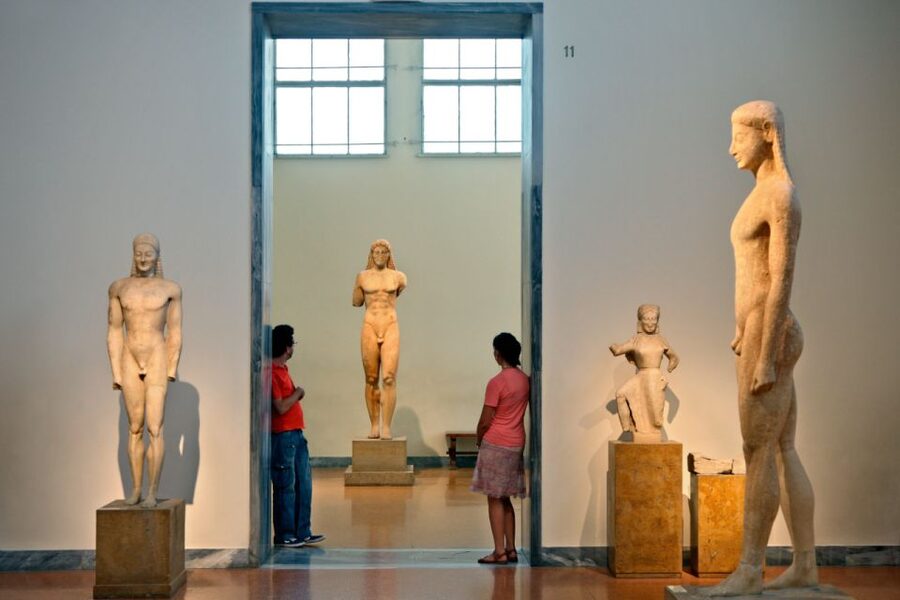
The sculpture rooms contain the works most people picture when they think of ancient Greece. Look for statues associated with Zeus, Poseidon, Aphrodite, and other gods and mythic figures.
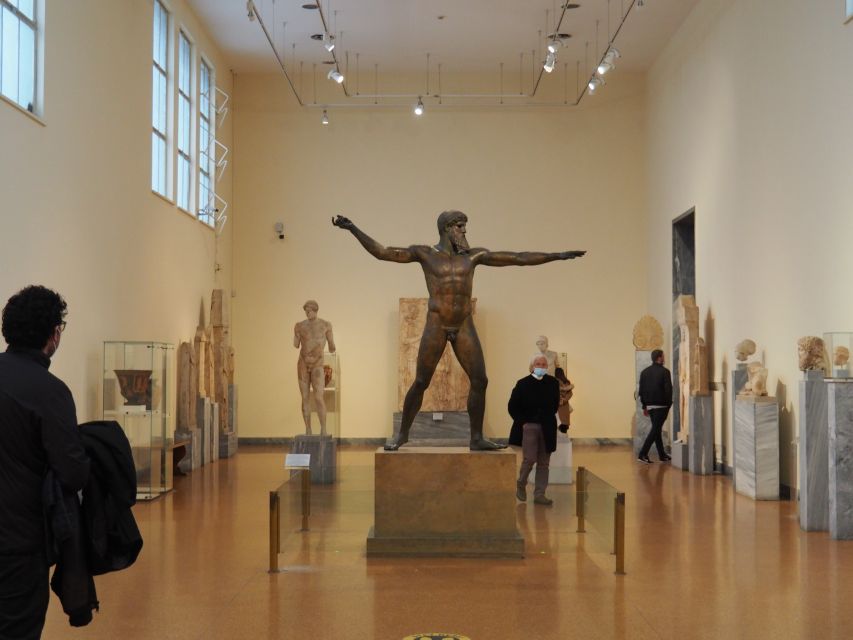
The Poseidon statue is a major highlight, with its powerful stance and sense of movement. The Zeus figure provides another chance to consider how artists represented divine power. These works are not just attractive objects. Their size, posture, and surviving detail show how Greek sculptors explored the human body, motion, balance, and ideal beauty.
Some people expect even more statues of the gods, given Greece’s mythology and artistic legacy. The museum’s collection is broad, so sculpture is only one part of the visit. If your main goal is a particular divine figure, check the gallery plan or ask at the entrance rather than assuming every famous work is on display.
The Antikythera mechanism
The Antikythera mechanism is among the museum’s most fascinating objects. Recovered from a shipwreck, this complicated ancient device is often described as an early form of astronomical calculator.
Its importance comes from what it reveals about ancient technical skill. The object is small compared with a monumental statue, yet it can hold your attention longer because it raises so many questions about calculation, astronomy, craftsmanship, and lost knowledge.
If this is your main reason for visiting, allow time to read the explanations. One visitor specifically planned a museum visit around the mechanism and found it worthwhile. It is the sort of exhibit that rewards patience instead of a quick photograph.
Pottery, steles, jewelry, and daily life
The museum is not only about famous masterpieces. Vases, grave markers, jewelry, coins, tools, and domestic objects fill out the picture of Greek life.
Pottery is particularly useful because it often preserves scenes of work, ritual, sport, music, and myth. Steles and burial objects show how people remembered the dead. Jewelry and small decorative items reveal craftsmanship at a scale you can inspect closely.
Many displays are set near eye level, making it easier to study details without standing far back. Some labels can be low or difficult to read in dimmer rooms, so you may need to bend down or use your phone light carefully without disturbing other people.
How much time should you allow?
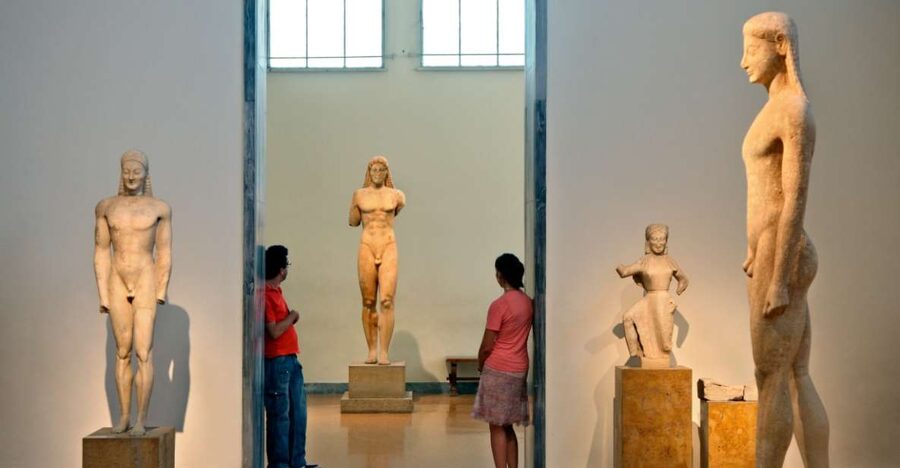
A fast visit can take about an hour. That works if you want the major highlights before lunch or need a short indoor break. You will see the famous objects, but you will skip much of the collection’s value.
I would plan on two to three hours for a first visit. That gives you time for the major sculpture rooms, the early Greek galleries, the Santorini material, and the Antikythera mechanism without racing.
Even three hours may not be enough to see everything. The museum is large, and its size is both its strength and its main drawback. A first pass through every room can leave you feeling that the objects blurred together.
A practical approach is to choose three priorities before entering:
- Early Bronze Age and Mycenaean finds
- Classical sculpture
- The Antikythera mechanism
Then add pottery, jewelry, and later galleries according to your energy. Comfortable shoes help, since you will spend much of the visit standing and walking. Seating can be limited, so plan a pause before you become tired rather than waiting until the end.
The optional English audio guide
The optional audio tour is self-guided and delivered in English. It is designed by professional guides and can provide useful background on the objects and the wider story of Greek art.
You need your own headphones. The app also uses your phone battery, so a portable charger is a sensible addition if you intend to listen throughout the museum.
The audio guide is not the same as joining a live guide. You will not have someone beside you to answer questions, adjust the route, or explain an object that suddenly catches your attention. That independence is useful if you like to pause, skip sections, or move at your own speed.
The main weakness is route direction. Some audio stops may not make it clear where an object is located, and references may not activate properly. At times, the sequence can send you across the museum instead of leading you through a simple path.
I would treat the audio as an optional layer, not the backbone of the visit. Download or open everything before you enter, bring headphones, and keep the printed or digital museum information available as a backup. If the app works well, it adds context. If it does not, the collection is still worth seeing without it.
The booking options also include a self-guided audio tour for Athens Old Town and Plaka. The museum audio is included only when that option is selected, so read the exact package details before booking.
Crowds, comfort, and opening times
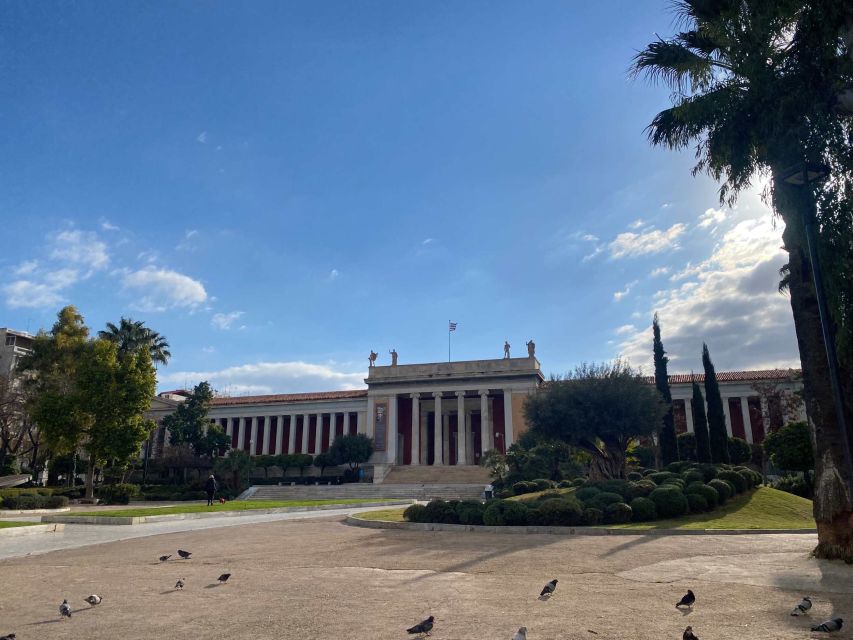
The museum can feel calm even when Athens outside is hot and busy. Morning visits are a good choice if you want a quieter start, and arriving around opening time may help you avoid larger groups, including cruise crowds.
The building is active but not always crowded inside. Rooms can give you enough space to look closely, though conditions vary by season and gallery. In July and August, some rooms may feel hot and air conditioning may be limited.
The operating schedule changes by season:
- From November 1 to March 31, the museum is open Wednesday through Monday from 8:30 AM to 3:30 PM, with Tuesday hours from 1 PM to 8 PM.
- From April 16 to October 31, it is open Wednesday through Monday from 8 AM to 8 PM, with Tuesday hours from 1 PM to 8 PM.
Special occasions can change these hours. The supplied schedule does not state the hours for April 1 through April 15, so check before setting your plans. The Tuesday afternoon opening is easy to miss, especially if you assume the museum opens at 8 AM every day.
Bag scanning and cloakroom procedures can add time, even with a pre-booked ticket. Keep your ID handy. A passport or ID card may be requested, and a copy is accepted according to the activity information.
The museum is wheelchair accessible. The activity does not include personal expenses, transport, or a live guide.
What you get for the price
At roughly $30, this is an adult admission product with convenience added. The strongest part of the value is not a special backstage feature. It is the chance to arrive with a valid ticket and avoid buying admission at the counter.
That convenience matters more during busy periods than in winter. If the museum is quiet, buying directly may be cheaper or just as easy. If you have a fixed schedule, a pre-booked time slot can protect your plans.
The audio option changes the calculation. If you prefer to read labels and make your own connections, you may not need it. If you want more historical explanation but do not want to join a group, the English self-guided tour may be useful, provided your phone and the app cooperate.
I would not book this mainly because of the audio guide. I would book it for the museum, then regard the audio as a possible bonus.
Who will enjoy this museum most?
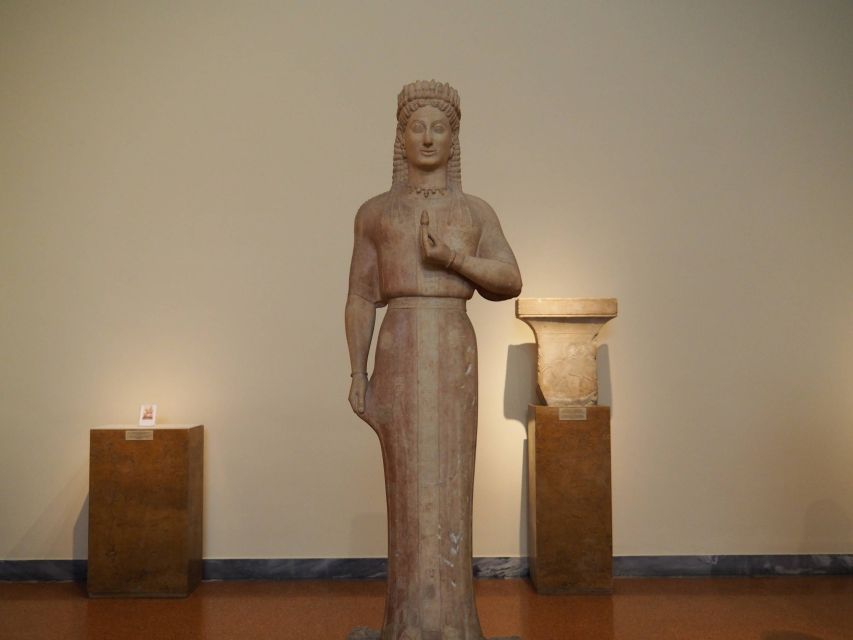
This visit suits anyone who wants a serious look at Greek antiquity beyond the Acropolis. It is particularly good for people interested in archaeology, sculpture, mythology, Bronze Age cultures, ancient technology, and the development of Greek art.
Families can tailor the visit to their children’s attention span by focusing on masks, statues, gold objects, and the Antikythera mechanism. Younger children may not manage the full collection, but the open pace makes it easier to stop before the visit becomes tiring.
It also works well as a rainy-day or hot-weather plan. You control the timing, and you do not need to commit to a long guided group. On the other hand, people who want a tightly structured tour with a guide explaining every room may find the self-guided format less satisfying.
If you have only one hour, visit the headline galleries and do not try to cover the whole building. If you have half a day, slow down and include the smaller objects. They are often what turns a display of famous art into a picture of real ancient life.
Should you book the National Archaeological Museum ticket?

Book it if you want a convenient adult ticket, have a fixed Athens schedule, or prefer to explore independently. The museum’s major works are genuinely important, and the full collection gives you far more than a quick parade of famous statues.
The optional audio guide is worth considering, but keep expectations modest. It can add useful information, yet its navigation and app performance may be uneven. Bring headphones, charge your phone, and be ready to continue with the museum’s own displays if needed.
Skip the pre-booked option if you are visiting in a quiet winter period and want the cheapest, simplest admission. In every season, check the Tuesday hours, confirm which audio option you selected, and allow at least two hours if you want the visit to feel worthwhile.
FAQ
Where is the National Archaeological Museum located?
The nearest metro station is Omonoia. Hotel pickup and drop-off are not included, so you make your own way to the museum.
How long is the ticket valid?
The ticket is valid for one day, on the selected date and time slot.
Is an audio guide included?
The National Archaeological Museum audio tour is included only if you select that option. It is self-guided, in English, and requires your own headphones. A self-guided audio tour for Athens Old Town and Plaka is included with all options.
Is there a live guide?
No. This activity provides museum admission and, if selected, a self-guided audio tour. It does not include a live guide.
What should I bring?
Bring headphones if you are using the audio tour, along with a passport or ID card. A copy of your ID is accepted.
Can children receive a reduced ticket?
This online ticket is for people over 25. Children under five and EU citizens under 25 may receive free or reduced admission at the ticket booth with ID. Non-EU citizens under 25 may receive reduced admission from April through October with ID.
What are the museum’s opening hours?
From November 1 to March 31, the museum is open Wednesday through Monday from 8:30 AM to 3:30 PM, and Tuesday from 1 PM to 8 PM. From April 16 to October 31, it is open Wednesday through Monday from 8 AM to 8 PM, and Tuesday from 1 PM to 8 PM. Hours may change for special occasions, so check before visiting.
More Audio Tours in Athens
- Athens: Acropolis Ticket & Optional Self-Guided Audio Tours
★ 4.1 · 2,542 reviews - Parthenon & Acropolis Museum with Audio or Live Tour Option
★ 4.1 · 2,446 reviews - Athens: Peloponnese Highlights Day Trip and V.R. Audio Guide
★ 4.5 · 1,425 reviews - Athens: National Archaeological Museum Ticket & Audio Guide
★ 4.3 · 1,330 reviews
More Self-Guided Tours in Athens
- Athens: Acropolis Ticket with Optional Audio or Live Guide
★ 4.2 · 11,055 reviews - Athens: Cape Sounio & Poseidon Temple Trip with Audio Guide
★ 4.4 · 4,521 reviews - Athens: Acropolis Ticket with Audio Guide
★ 4.0 · 3,575 reviews - From Athens: Delphi Full Day V.R. Audio Guided Tour
★ 4.6 · 3,028 reviews
Recently reviewed around Athens
- Ceramic and Pottery Creative Workshop with Two Local Artists★ 4.0 · 57 reviews
- Small-Group Women History in Ancient Greece Walking Tour★ 5.0 · 38 reviews
- Athens: Wine Workshop Create your Own Wine under the Acropolis★ 5.0 · 77 reviews
- Athens: Greek Wines Tasting with Sommelier and Acropolis Views★ 5.0 · 88 reviews
- Hydra Private Day Trip by Ferry from Athens with Transfers★ 4.0 · 30 reviews
- Small-Group Wine Tour in Athens with Tasting★ 5.0 · 33 reviews
- Wine Trails Private Tour/ Nemea visit 3 wineries from Athens or Nafplion (10 h)★ 5.0 · 44 reviews
- Private Athens Transfer Airport/Port -Greek Tours-Hourly service★ 5.0 · 88 reviews
Museums, compared.
Acropolis, Parthenon & Acropolis Museum Guided Tour
Read our review →
Mythology of Delphi, Museum and Arachova Guided Tour
Read our review →Acropolis, Parthenon & Acropolis Museum Guided Tour
Read our review →
Acropolis monuments & Parthenon Walking Tour with Optional Acropolis Museum
Read our review →
Athens All Included: Acropolis and Museum Guided Tour with Ticket
Read our review →
Acropolis Museum Ticket with optional Audio Guide
Read our review →
Small-Group Delphi, Museum & Arachova Day Trip
Read our review →
Parthenon & Acropolis Museum with Audio or Live Tour Option
Read our review →Browse the lists this tour appears in